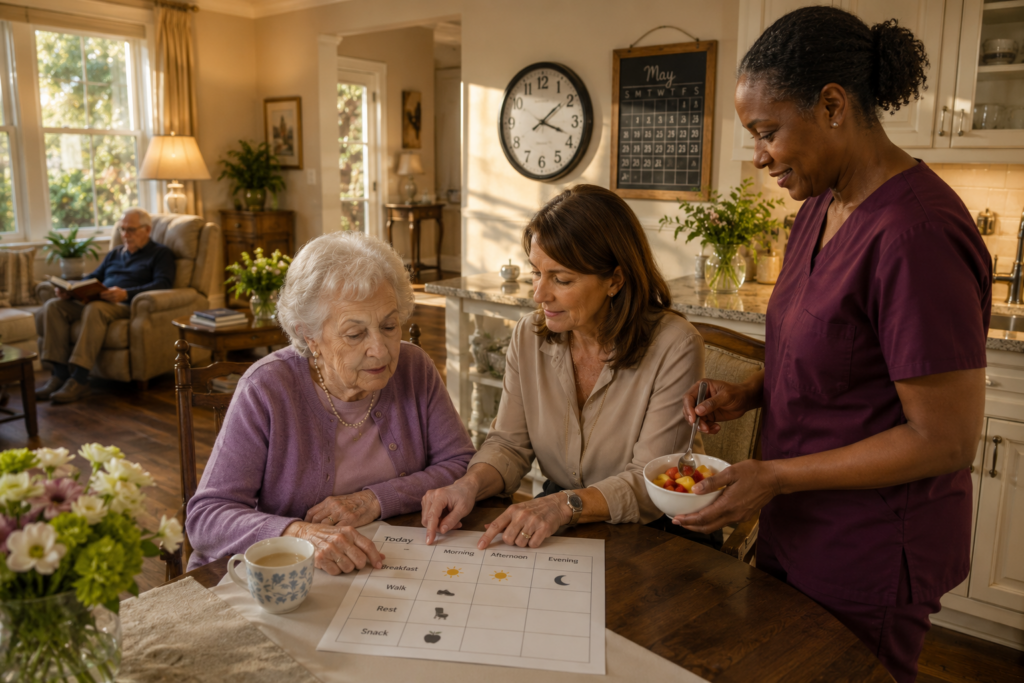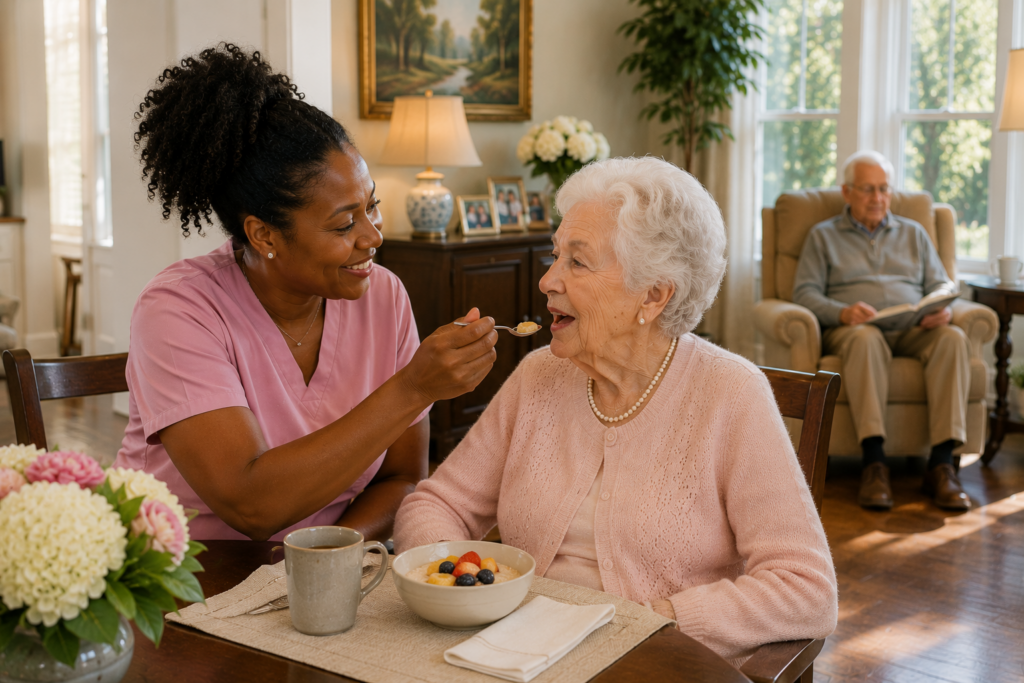
Test

“But She’s Still So High-Functioning.” When Is It Too Early for Memory Care?

Families ask me this all the time when they are considering memory care for someone who can still walk, dress beautifully, carry on a conversation, and appear surprisingly capable.

And I understand the hesitation. Moving someone with dementia is a major decision. Nobody wants to take away independence before it is necessary.

But I think we sometimes define “too early for memory care” by the wrong measure.

The question is not only how much help someone needs. It is also how much life they are still living.

A Phone Call From One of Our Nurses

One of our nurses called me recently because she wanted to share some good news about a woman who had moved into one of our homes the week before.

Before the move, her family had worried that she might be too high-functioning for memory care. She could converse well. She was physically capable. Compared with someone in the later stages of dementia, it would have been easy to look at her and think: surely we can wait.

But our nurse had assessed her before the move and saw something else. This woman was spending most of her time alone at home. She was not participating in much of anything. Her world had become smaller, and her family could see that she was deteriorating.

When she first moved in, she was very clear about what she planned to do.

“I’m not doing activities. I don’t want to draw. I don’t want to play games. I’m not doing music. I’m just going to stay in my room.”

Nobody forced her.

A few days later, our nurse returned to the home and could hardly believe the change. The same woman came out beautifully dressed, her hair blown out, with a pep in her step. She walked over and gave our nurse a hug. Then she went back to the living area, where she was happily participating with the other residents.

Our nurse called her family and said, essentially, “I told you. It wasn’t too early. She needed this.”

That story stayed with me because it captures something families often cannot see until after a move: sometimes a person with dementia has not lost the ability to enjoy life. She has lost the ability to initiate it on her own.

High-Functioning Dementia Does Not Always Mean High Quality of Life

When families describe someone as “high-functioning,” they are usually talking about what that person can still do.

·        She can still dress herself.

·        He can still walk independently.

·        She can still have a good conversation.

·        He knows who everyone is.

·        She can still make herself a simple meal.

·        He does not need much hands-on personal care.

Those abilities matter. But they do not tell us what an ordinary Tuesday looks like.

Does Mom get dressed because she has somewhere to go? Does she see people besides the person who briefly checks on her? Does she go outside? Does anyone invite her to help make lunch? Does she laugh? Does she have something to anticipate? Is she using the abilities she still has?

A person can be relatively independent in activities of daily living and still be profoundly isolated.

That is why I think quality of life has to be part of the conversation about when it is too early for memory care.

People With Dementia Can Lose Initiative Before They Lose Ability

One of the most important things families can watch for is the difference between ability and initiation.

Someone may still be perfectly capable of doing a puzzle once it is placed in front of her. She may enjoy baking if someone says, “Come help me stir this.” She may love sitting on the porch once someone invites her outside. She may sing every word when a musician begins playing a song she knows.

But she may no longer independently think: I’m bored. I should find something to do.

Dementia can affect planning, initiation, sequencing, judgment, and executive function. As those abilities change, the person’s world can become smaller without anyone consciously choosing it.

From the outside, that can look like preference: “Mom just likes sitting at home.” Sometimes that is true. But sometimes what looks like preference is actually a loss of initiation.

Being at Home Is Not the Same as Having Quality of Life

Home matters. Familiar surroundings can be comforting, especially for someone living with dementia. I would never minimize that.

But home is a location. Quality of life is an experience.

If someone spends most of the day alone in front of a television, rarely has meaningful conversation, has stopped doing things she once enjoyed, eats poorly unless prompted, and has very little reason to get dressed in the morning, we should not automatically call that the better life simply because it is happening in her own house.

The question is not “Can Mom technically remain at home?”

A better question may be: “What is Mom’s life actually like at home?”

Memory Care Should Be About More Than an Activity Calendar

When I talk about stimulation and engagement, I do not mean filling every hour with scheduled activities.

In fact, some of the most meaningful engagement in a small residential home is incredibly ordinary.

·        Helping stir cookie dough while someone makes dessert.

·        Sitting at the kitchen counter talking while lunch is prepared.

·        Watering flowers outside.

·        Folding towels together.

·        Doing part of a puzzle and walking away when you have had enough.

·        Listening to a musician and suddenly remembering every word of a favorite song.

·        Having coffee with a caregiver who knows your children’s names.

·        Sitting on the porch while other people move naturally through the day.

These moments provide something that can be difficult to manufacture when someone lives alone: invitations.

Someone is there to say, “Come sit with me.” “Help me with this.” “Do you want to go outside?” “Look who’s here.”

For a person whose ability to initiate has diminished, those invitations can reopen parts of life that seemed to have disappeared.

When Is It Too Early for Memory Care?

There is no single stage of dementia at which memory care suddenly becomes appropriate. The decision depends on the person, the home situation, available support, safety, and quality of life.

But I would broaden the usual checklist. Do not look only for crisis-level signs.

Ask yourself:

·        Is my loved one safe when alone?

·        Is she becoming increasingly isolated?

·        Has her world become noticeably smaller?

·        Has she stopped initiating activities she used to enjoy?

·        Is she eating and drinking well without significant prompting?

·        Does she have meaningful interaction throughout the day?

·        Is she still using the abilities she has, or mostly sitting passively?

·        Would more structure, companionship, cueing, and purpose improve her day?

·        Are we waiting because her current life is genuinely working well—or because moving feels emotionally difficult for us?

A person does not have to be in crisis before additional support can improve her life.

Moving Earlier Can Sometimes Preserve More Independence

There is another reason I do not think families should automatically wait until dementia is extremely advanced.

When someone moves while she can still participate in the transition, she may be able to learn the rhythm of the home, form relationships with caregivers, recognize familiar faces, establish routines, and make meaningful choices about her day.

She can tell us what she likes. She can participate. She can become part of the household while she still has more ability to adapt.

That does not mean earlier is always better. But waiting until a crisis is not inherently kinder simply because it postpones the move.

How We Think About This at The Sanctuary

At The Sanctuary, our RN assesses prospective residents individually. We do not decide that someone is “too high-functioning” or “ready” based on one diagnosis or one checklist.

We look at the whole person: cognition, safety, personal care needs, mobility, behavior, social engagement, nutrition, routines, and what daily life currently looks like.

For someone who is relatively high-functioning, the goal is not to take over the things she can still do. It is the opposite.

We want to create enough structure, cueing, companionship, and opportunity that she keeps doing as much as she can for as long as she can.

That may mean formal activities. But just as often it means ordinary household life: helping in the kitchen, walking outside, sitting with other residents, talking with familiar caregivers, listening to music, doing a puzzle, or simply having people around who notice when she has been quiet all morning.

Good dementia care should not make someone’s world smaller. Whenever possible, it should help make that world fuller again.

One Thing I’d Tell My Own Family

If I ever have dementia, please do not judge my quality of life only by what I can still technically do.

If I can dress myself but have nowhere I want to go, that matters.

If I can hold a conversation but spend most of my day alone, that matters.

If I insist I do not want to participate in anything, please consider whether I truly do not want to—or whether I have simply lost the ability to get myself started.

I would want you to preserve my independence. But I would also want you to preserve my life around that independence: people, purpose, laughter, routine, movement, attention, and reasons to get up in the morning.

Key Takeaways

·        Being high-functioning does not automatically mean it is too early for memory care.

·        Functional ability and quality of life are different questions.

·        People with dementia may lose the ability to initiate activities before they lose the ability to enjoy or participate in them.

·        Living at home can preserve familiarity, but familiarity alone does not guarantee companionship, stimulation, nutrition, purpose, or engagement.

·        A good dementia care environment should support remaining independence rather than unnecessarily replace it.

·        Families should consider safety and care needs, but also ask whether their loved one is truly thriving in the current environment.

Frequently Asked Questions

Can someone be too high-functioning for memory care?

Yes, depending on the individual and the community. But being conversational, mobile, or relatively independent does not automatically mean memory care is inappropriate. A clinical assessment should consider cognition, safety, daily functioning, social engagement, nutrition, behavior, and the person’s overall quality of life.

How do I know if it is too early for memory care?

Look beyond physical care needs. Consider whether your loved one is safe, socially connected, eating well, using the abilities she still has, participating in meaningful daily life, and able to manage without increasing family or caregiver intervention.

What if my mom says she does not want to participate in activities?

Her preference should be respected, but it is worth observing what happens when activities are offered naturally and without pressure. Some people with dementia have difficulty initiating activities yet enjoy them once someone helps them get started.

Does moving to memory care mean giving up independence?

It should not. Good dementia care supports the abilities a person still has while providing help where cognition or safety makes assistance necessary.

Is staying home always better for someone with early or moderate dementia?

Not necessarily. Home can provide familiarity, but the quality of the person’s actual day matters too. For some people, isolation, poor nutrition, lack of stimulation, or safety concerns can make another setting more supportive.

Can moving earlier make the transition easier?

Sometimes. A person who still has greater ability to engage and adapt may have more opportunity to form relationships, learn routines, and participate in the life of the home before dementia becomes more advanced.

You May Also Find These Helpful

Helping New Residents with Dementia Adjust to Their New Home

The transition families fear is often much more active, social, and supported than they imagine. Read this for a closer look at how familiar routines, favorite foods, relationships, and engagement can soften the first days after a move.

The Biggest Mistake Families Make: Waiting Too Long to Move a Loved One With Dementia

Waiting can feel like the kinder choice until a crisis removes the family’s choices. Read this for the safety side of deciding when it may be time for more support.

Memory Care vs. Skilled Nursing: What’s the Difference?

Needing more support does not automatically mean someone needs a medical setting. Read this to understand the difference between dementia-focused daily care and skilled nursing.

Have Questions About Your Loved One?

If you are wondering whether it is too early for memory care or whether your loved one could benefit from more support, contact The Sanctuary. Our RN can help assess whether our setting is an appropriate fit.
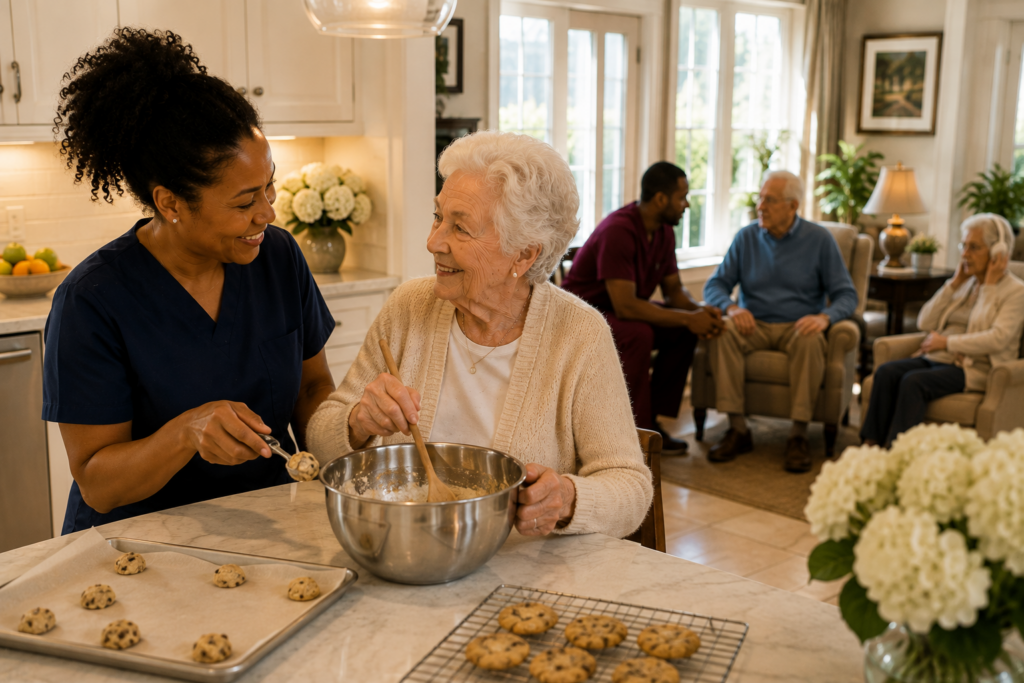

A high-functioning woman with dementia becomes socially engaged after moving to memory care, showing why it may not be too early for memory care.

When Siblings Disagree About Mom’s Dementia Care: Everyone Gets a Voice, but Someone Has to Drive

I recently spoke with a woman who was trying to decide what kind of care her mother needed.

Her mother has mid-stage dementia. She no longer reliably knows what day it is or what time of day it is. Sometimes she doesn’t know where she is. She sleeps quite a bit during the day. And there had already been a frightening incident: after a relatively gentle fall, she wasn’t badly hurt, but she couldn’t figure out how to get herself back up. She stayed on the floor all night and eventually made herself comfortable there.

Her daughter had moved her from Arizona to her home in Charlotte because it was clear that Mom should no longer be living alone.

The daughter believed her mother now needed a setting designed for someone living with dementia. Her brother, who lived farther away, thought Mom should be in something more like an independent-living apartment. One of his concerns was that when relatives visited, they would want private space to spend time with her.

His opinion mattered to his sister. So did their mother’s. She wasn’t trying to steamroll either of them.

But she was stuck.

And I told her something I find myself telling families more and more:

Everyone gets a voice. But someone has to drive.

When Siblings Disagree About Dementia Care, They May Be Seeing Two Different People

When siblings disagree about dementia care, it can become deeply emotional because everyone believes they are advocating for the same person. Usually, they are.

The brother in this family wasn’t being uncaring. Wanting his mother to have privacy and independence isn’t unreasonable. He was thinking about things his mother had valued throughout her life.

But his sister was working with a different set of information.

She was seeing the woman who didn’t know whether it was morning or evening. She knew her mother sometimes didn’t know where she was. She knew that when Mom fell, she couldn’t problem-solve her way off the floor. She was experiencing dementia as it existed today.

Her brother may still have been seeing some combination of the mother he remembered and the mother he encountered during visits.

The disease can progress faster than a family’s mental picture of the person progresses.

That doesn’t mean the local sibling is automatically right, or that the distant sibling’s observations don’t matter. It means the family needs a way to get beyond competing impressions and look at the same evidence.

The Person Who Sees Tuesday Morning Knows Something the Holiday Visitor Doesn’t

A sibling comes into town. Mom is excited. She gets dressed. Everyone goes to lunch. She tells a funny story from 30 years ago. She knows everyone’s names. For two hours, she seems surprisingly good.

And the visiting sibling thinks: Why are we talking about memory care? Mom seems fine.

A good visit is real. But it isn’t necessarily representative.

The sibling who lives nearby may have seen that Mom called at 2:00 a.m. because she thought it was lunchtime. She may know Mom has stopped showering unless someone prompts her. She may have found spoiled food in the refrigerator. She may know Mom says she ate when she didn’t. Or she may have found Mom on the floor after a fall because Mom couldn’t figure out how to get back up.

A particularly good afternoon should not outweigh the other 166 hours of the week.

Step 1: Stop Arguing About Whether Mom Is “Fine”

Words like fine, independent, confused, difficult and high-functioning mean different things to different people. When siblings disagree about dementia care, replace those labels with observable facts.

For one or two weeks, create a simple shared record. Track:

·        Orientation: Does Mom know where she is, the day, and roughly the time of day?

·        Meals and hydration: Did she actually eat and drink, or was food simply available?

·        Medication: Can she take the correct medications at the correct times without supervision?

·        Personal care: Is she bathing, changing clothes and managing toileting reliably?

·        Falls and mobility: Has she fallen, become stuck, or needed help transferring or getting up?

·        Safety: Is she wandering, leaving appliances on, getting lost, or opening the door at unsafe times?

·        Sleep: Is she sleeping much of the day, awake at night, or reversing day and night?

·        Engagement: Does she initiate anything meaningful, or spend most of the day alone and inactive?

·        Problem-solving: If something unexpected happens, can she recognize the problem and get help?

Now the conversation becomes less about “I think Mom is fine” versus “I think Mom is unsafe” and more about what is actually happening.

Step 2: Make Sure Everyone Is Working From the Same Information

I would not try to settle a major dementia-care disagreement through scattered texts, emotional phone calls, and stories passed from sibling to sibling.

Instead, get the important people into one conversation and use the same information.

Before the meeting, gather:

·        A current medication list

·        Recent physician or specialist notes when available

·        A list of falls, wandering episodes, missed medications, weight changes or other safety events

·        A realistic description of an ordinary day

·        Information about how much supervision and cueing is already being provided

·        Any advance directives, health-care proxy documents or powers of attorney that may be relevant

·        Written questions you want a physician, RN or dementia-care professional to answer

If one sibling lives far away, consider having that person spend more than a pleasant afternoon with Mom. A full day—or several days—can provide a very different picture of what daily care actually requires.

Step 3: Separate Preferences From Safety Requirements

This was the issue underneath the conversation I had with the daughter.

Her brother wanted their mother to have an apartment partly because relatives would have private space when they visited. That’s a preference worth considering.

But it has to be weighed against questions such as: Can Mom safely be alone? Can she find help? Does she understand where she is? What happens after a fall? Can she respond appropriately in an emergency?

Not every preference deserves equal weight in every stage of dementia.

That doesn’t mean preferences stop mattering. It means safety requirements create the boundaries within which we try to honor them.

If Mom values privacy, find a care setting where she has a private bedroom. If she values family visits, make sure there are comfortable spaces for visits. If she values independence, preserve meaningful choices throughout her day.

The goal isn’t to choose between dignity and safety. It’s to preserve as much dignity and autonomy as possible inside a plan that is actually safe.

Step 4: Define the Decision Before You Debate the Solution

Families often jump immediately to facility A versus facility B, home versus memory care, or apartment versus residential care.

Back up.

First agree on the needs the solution must meet.

For example:

·        Mom cannot safely be alone overnight.

·        Someone needs to manage medications.

·        She needs meals to be observed, not simply delivered.

·        She needs cueing for personal care.

·        She needs an environment where getting disoriented does not leave her without help.

·        She needs social contact and meaningful engagement during the day.

·        Family needs regular communication about what is actually happening.

Once siblings agree on the requirements, comparing care options becomes much easier. Instead of arguing from emotion, you can ask which option actually satisfies the list.

Step 5: Bring in a Neutral Professional

Sometimes siblings simply cannot resolve the disagreement by themselves.

That’s when an outside assessment can be extremely helpful—not because the professional gets to “vote,” but because the family needs a common set of facts.

Depending on the situation, that person might be a physician, geriatrician, neurologist, RN, geriatric care manager, social worker, occupational therapist, or another qualified dementia-care professional.

Ask the professional specific questions: What level of supervision does Mom need? Can she safely be alone? What risks concern you most? What abilities are intact? What support would allow her to retain as much independence as possible?

The Alzheimer’s Association emphasizes person-centered care planning that includes the person with dementia when possible, family members, and the professionals involved in care. That kind of shared assessment can be particularly useful when family members are working from different pictures of the person’s abilities.

Step 6: Give Mom a Voice Without Giving Her a Burden She Can No Longer Carry

What happens when Mom herself says, “I don’t need help” or “I want my own apartment”?

Her opinion should not simply be dismissed because she has dementia.

Ask what matters underneath the answer. Does she want privacy? Her own furniture? Quiet? A place for family to visit? The ability to choose when she wakes up? Those preferences should shape the care plan.

Dignity means preserving as much choice as possible. It doesn’t mean asking someone with dementia to carry the burden of a decision she may no longer be capable of fully understanding.

Decision-making capacity is individualized and can be complex. If there is uncertainty, families should involve the appropriate clinical professionals. Questions about legal authority, powers of attorney, guardianship or health-care proxies should be reviewed with a qualified attorney because the answer depends on the documents and applicable law.

Step 7: Decide Who Is Responsible for the Final Decision

This is the part families sometimes avoid because it feels uncomfortable.

Ideally, everyone reaches consensus. But unanimity cannot always be the requirement, particularly when safety is changing.

Everyone should be heard. Everyone should have access to the same information. The person with dementia should remain involved to the extent she can participate meaningfully.

But at some point, input has to become a decision.

The family should be clear about who has the practical and, where applicable, legal responsibility to make that decision. If the documents are unclear or siblings dispute the authority, get legal guidance rather than letting the argument continue indefinitely.

The Alzheimer’s Association notes that having an appropriately designated proxy decision-maker can help reduce complications from family disagreement, and that mediation can sometimes help families resolve care disputes when disagreement persists.

A ship with three people simultaneously turning the wheel doesn’t become more democratic. It becomes impossible to steer.

How We Think About This at The Sanctuary

When a family comes to us divided about what Mom or Dad needs, I don’t think our job is to decide which sibling wins.

Our job is to help everyone get clearer about the person in front of us.

That’s one reason our RN assessment matters. We look at the person’s current cognitive and functional needs, safety risks, behaviors, mobility, routines, personal-care needs and overall situation.

I think families should keep returning to two questions:

What does this person want?

What does this person need to remain safe and have a good quality of life?

Sometimes the answers align beautifully. Sometimes they don’t.

When they don’t, we try to meet the need while preserving as much of the preference as possible. That may mean privacy within a more supportive environment, meaningful choices within a structured day, or independence in the things someone can still safely control.

The answer doesn’t have to be, “Mom has dementia, so her preferences no longer matter.” But it also can’t always be, “Mom said no, so there’s nothing we can do.”

Good dementia care lives somewhere in between.

A Practical Family Meeting Agenda

If your siblings disagree about dementia care, use this agenda for one focused meeting:

1. Start with the shared goal. Agree on one sentence: “We want Mom to be safe, treated with dignity, and able to have the best quality of life possible.”

2. Review facts, not conclusions. Go through the shared log of meals, medications, falls, sleep, orientation, personal care, safety and engagement.

3. Let each person name the three things they are most worried about. Do this without interruption or rebuttal.

4. Ask what Mom values most. Identify the preferences you want the eventual plan to preserve.

5. Agree on non-negotiable care needs. For example: 24-hour supervision, medication management, help after a fall, or dementia-specific support.

6. Compare options against those needs. Use the same criteria for every option instead of changing the standard depending on which option someone prefers.

7. Identify what information is still missing. Schedule an assessment or professional consultation rather than continuing to argue about something nobody actually knows.

8. Set a decision date. Do not let “we need more time” become an indefinite strategy when safety concerns are already present.

9. Clarify who will make the final decision if consensus is impossible. Review the relevant legal documents and obtain legal advice if authority is unclear.

This doesn’t guarantee that everyone will feel happy with the decision. Dementia sometimes forces families to choose among imperfect options.

The goal is not perfect agreement. The goal is a thoughtful, informed decision that doesn’t leave the person with dementia unsafe while the family waits for unanimity.

Key Takeaways

·        When siblings disagree about dementia care, they may be working from very different observations of the same parent.

·        A good visit can be completely genuine without representing how someone functions during an ordinary week.

·        Replace labels like “fine” or “unsafe” with specific observations about meals, medication, orientation, falls, personal care, sleep, engagement and problem-solving.

·        Agree on care requirements before arguing about a particular facility or living arrangement.

·        Use a neutral professional assessment when family members cannot agree on the person’s current needs.

·        Preserve the person with dementia’s meaningful preferences while recognizing that safety decisions may eventually require someone else to take responsibility.

·        Everyone should have a voice, but families need clarity about who will make the final decision if consensus is impossible.

Frequently Asked Questions

What should we do when siblings disagree about dementia care?

Start by replacing opinions with observable facts. Track how your parent is functioning across an ordinary week, gather medical and care information, agree on the needs any solution must meet, and bring in a neutral professional assessment if necessary. Set a date for the decision so disagreement does not become indefinite delay.

Should the sibling who lives closest have more say?

Not automatically. But the sibling who manages day-to-day care may have information other family members do not. The goal is not to rank siblings; it is to make sure everyone is making the decision from the fullest possible picture of the parent’s daily functioning.

What if my sibling doesn’t think our parent needs memory care?

Ask what evidence each of you is relying on. Compare specific observations about safety, medication, meals, orientation, falls, personal care and supervision. If you still disagree, ask a qualified clinician or dementia-care professional to assess current needs.

What if Mom says she doesn’t want memory care?

Her preferences matter and should shape the plan wherever possible. But as dementia progresses, families may need professional guidance about whether she can understand and weigh the risks involved in the decision. Preserve meaningful choices even when larger safety decisions must be made for her.

Does having power of attorney mean I decide where my parent lives?

Not necessarily. Authority depends on the type and language of the document, whether it is effective, the decision involved and applicable law. Have a qualified attorney review the actual documents if there is disagreement or uncertainty.

What if we cannot reach agreement at all?

Use a neutral assessment, review any advance directives and decision-making documents, and consider a professional mediator when appropriate. If legal authority is disputed, seek legal advice. The important thing is not to let unresolved family conflict leave a person with dementia in an unsafe situation.

You May Also Find These Helpful

The Biggest Mistake Families Make: Waiting Too Long to Move a Loved One With Dementia

Waiting can feel like the kinder choice when family members are not yet convinced a move is necessary.

Read this if your family keeps postponing a decision because you are waiting for everyone to feel completely certain.

“But She’s Still So High-Functioning.” When Is It Too Early for Memory Care?

Someone can still be conversational and mobile while quietly losing safety, engagement and quality of life.

Read this if the phrase “She’s not bad enough yet” keeps coming up in your family’s conversations.

What If Mom Doesn’t Want to Move—but You Know It’s the Right Thing?

One of the hardest dementia-care decisions happens when someone you love says no to the support you believe she needs.

Read this for a thoughtful way to balance autonomy, dignity and safety when your loved one’s wishes and care needs no longer align perfectly.

Have Questions About Your Loved One?

If your family is trying to understand what level of dementia care a loved one needs, contact The Sanctuary. We are happy to talk through what you are seeing and the questions worth asking.


Daily dementia care can reveal needs that distant family members may not see during occasional visits, including cueing, orientation and supervision.

You Can’t Advocate for Someone When You Don’t Know What’s Going On: Communication in Memory Care

Communication in memory care is not a customer-service extra. When someone living with dementia can no longer reliably explain what happened during the day, what they ate, why they were frightened, or what changed, the family often becomes an essential part of understanding and advocating for that person.

I was reminded of this recently during a conversation with a gentleman whose father lives in a large memory care community.

He was very sharp and very direct, which I appreciated.

“They keep telling me my dad is problematic,” he said.

His father was apparently wandering and exit-seeking.

So I asked the question I almost always ask when someone describes a dementia “behavior” to me:

“Tell me what he’s actually doing.”

That turned out to be much more useful than the labels.

His dad sometimes walks into other residents’ rooms. He has dementia and gets confused about where he is, so that made sense to me.

And the “exit-seeking” was interesting. His father apparently believes he’s staying in a hotel. He walks to the front desk, tells the person there that he’s ready to check out, and asks to go home.

Maybe we call that exit-seeking. But knowing exactly what he is doing gives us much more information than the label does. He isn’t necessarily trying to bolt through a secured door. Within the reality he believes to be true, he may be doing something perfectly logical: checking out of a hotel when he’s ready to leave.

What struck me most, though, wasn’t the terminology. His son didn’t really know what was happening.

When Communication in Memory Care Becomes a Barrier to Advocacy

His son lives locally. He visits often. He is involved in his father’s life and clearly wants to advocate for him.

Yet he felt as though he was getting labels instead of useful information.

His father’s brother was even planning to stay with him for a week, in part so the family could observe what was actually happening and report back.

Think about that.

A devoted family member should not have to conduct his own investigation to understand what his father’s daily life looks like.

This is something I hear from families more often than I wish I did. They visit. They call. They attend meetings. They are trying very hard to stay involved. Yet they still don’t feel they understand what is happening between visits.

And if your parent can no longer reliably tell you, that information has to come from somewhere.

“Problematic” Isn’t Enough Information

Words like “problematic,” “difficult,” “wandering,” “exit-seeking,” “agitated,” or “refusing care” may be useful shorthand between professionals. But they are not enough information for a family trying to understand what is happening.

If Dad is “exit-seeking,” what does that actually look like?

·        Is he repeatedly pushing on secured doors?

·        Is he pacing near an exit?

·        Is he calmly asking someone to take him home?

·        Does he believe he’s at work and his shift has ended?

·        Does he think he’s in a hotel and wants to check out?

·        Does it happen at a particular time of day or after a particular trigger?

Those distinctions matter because behavior in dementia often makes more sense when we understand the person’s perspective.

The same is true if Mom is described as refusing a shower. Did she simply say no? Did she become frightened when an unfamiliar caregiver entered her room? Was she rushed? Does she usually shower happily at a different time of day?

A label tells you what someone called the behavior. A description helps you understand the person.

No, You’re Not Asking for Too Much

There is a sentence I hear surprisingly often from adult children:

“Maybe I’m asking for too much, but…”

And almost every time, I want to stop them right there.

No. You’re not asking for too much.

I spoke with another daughter whose mother had lost around 20 pounds. Her mother was already a small woman, so the weight loss was significant and understandably frightening.

The daughter kept asking a very basic question:

“Is my mom eating?”

She was being told yes.

But then she would visit and see food still sitting on the plate. Her mother continued losing weight. She asked for clearer information and tried to arrange meetings because what she was being told did not seem to match what she was seeing.

Eventually, like many deeply involved family members I speak with, she began questioning herself.

Was she being difficult? Was she calling too often? Was she expecting too much?

Wanting to understand why your mother has lost 20 pounds is not asking for too much.

Wanting to know whether your father is eating, sleeping, taking his medications, participating in daily life, or behaving differently is not asking for too much.

Those are exactly the kinds of things you need to understand if you are going to advocate for someone who may no longer be able to reliably explain what is happening himself.

What Families Should Reasonably Expect From a Memory Care Community

This does not mean families need a minute-by-minute report.

Caregivers need to care for residents. They cannot spend their shifts texting or answering phone calls. There are reasonable boundaries around communication, and there are privacy considerations when other residents are involved.

But there is an enormous amount of space between constant reporting and being kept in the dark.

An involved family should be able to get meaningful information about questions such as:

·        Is Mom actually eating and drinking adequately?

·        Has her appetite or weight changed?

·        Is Dad sleeping reasonably well?

·        What exactly happened when you say he had a behavior?

·        Is she participating in daily life or spending most of her time alone?

·        Has his mobility changed?

·        Are caregivers having new difficulty with bathing, dressing, toileting, or medications?

·        Has something changed from her usual baseline?

·        What approaches are working well right now?

·        If there is a concern, who can I speak with who actually knows what is happening?

You may not get every answer instantly. But there should be a path to an answer, and there should be someone who can help you understand the larger picture.

Communication Is Part of Dementia Care

I think it is a mistake to treat family communication as though it is simply a hospitality feature.

When someone has dementia, the family may hold information that caregivers need, while caregivers hold information the family needs.

A caregiver knows what happened at breakfast this morning. A daughter may know that Mom has eaten oatmeal every morning for 30 years and that suddenly refusing it is unusual.

A caregiver may notice that Dad asks to go home every afternoon. His son may explain that Dad worked until 5:00 p.m. for decades and still believes he needs to leave at the end of the workday.

Neither person necessarily has the whole picture alone.

Good dementia care works better when families and caregivers aren’t standing on opposite sides trying to extract information from one another. They should be sharing what they know about the same person.

Why Knowing the Caregivers Changes the Conversation

This is also why caregiver consistency matters so much.

If you ask, “How has Mom been eating this week?” someone who has actually sat beside her at breakfast several mornings can give you a different kind of answer than someone simply reviewing a chart.

If you ask, “Is Dad more confused lately?” a caregiver who knows what Dad looked like two weeks ago has a baseline for comparison.

The longer caregivers know a resident, the more context they accumulate: routines, preferences, patterns, triggers, subtle changes, and the little things that may never make it into a formal note.

Familiarity creates information. And access to the people who have that information makes it much easier for families to advocate intelligently instead of guessing.

How We Think About Communication at The Sanctuary

In our homes, families often know the caregivers personally. They know our nurses. They know our management team. They know who operates The Sanctuary.

Families may have direct contact information for the people involved in their loved one’s care. That does not mean every question gets an immediate answer or that caregivers should be on their phones throughout the day.

It means there should not be a giant institutional wall between the family and the people who actually know the resident.

If something changes, I want families to know who to ask.

If they are worried, I want them to be able to say so.

And if what we are seeing is different from what they are seeing, I want us to talk about it.

Families aren’t an inconvenience to the care process. When the relationship is healthy, they’re part of the care team.

What to Ask About Communication When Touring Memory Care

Families spend a lot of time asking about rooms, activities, meals, and staffing ratios when they tour. I would add communication to that list.

Ask:

·        Who will be my primary point of contact?

·        If I have a question about something that happened today, can I speak with someone who was actually there?

·        How are meaningful changes in appetite, weight, behavior, sleep, mobility, or medications communicated to families?

·        How often do families receive updates?

·        How do caregivers share information with one another between shifts?

·        If I raise a concern and still don’t understand what is happening, who is the next person I can speak with?

·        Will I have opportunities to know the caregivers who spend the most time with my parent?

And pay attention to how those questions are received.

You are not looking for unlimited access or perfect communication. You are looking for a culture that sees thoughtful family involvement as useful rather than irritating.

One Thing I’d Tell My Own Family

If I ever have dementia, please ask questions.

If someone tells you I’m “having behaviors,” ask what I actually did.

If they tell you I’m eating but I’m losing weight, keep asking.

If something about me has changed, don’t assume someone else has noticed.

And if you start feeling embarrassed because you’ve asked the same question three times and still don’t understand what is happening, don’t decide that you’re being difficult.

You are my eyes and ears when I may no longer be able to tell you what’s happening myself.

I hope the people caring for me see you as their partner – not as a problem to manage.

Because you can’t advocate for someone when you don’t know what’s going on.

Key Takeaways

·        Communication in memory care is an important part of helping families advocate for someone who may no longer be able to reliably explain what is happening.

·        Labels such as “problematic,” “wandering,” or “refusing care” are less useful than specific descriptions of what actually occurred.

·        Families do not need minute-by-minute updates, but they should be able to understand meaningful changes in eating, weight, behavior, sleep, mobility, medications, and daily functioning.

·        Caregiver consistency improves communication because caregivers who know a resident have a baseline for recognizing changes.

·        Families and caregivers often hold different pieces of the same puzzle; good dementia care brings that information together.

·        A family member asking thoughtful questions should be treated as a partner in care, not as a problem to manage.

Frequently Asked Questions

How much communication should families expect from memory care?

Families should not expect continuous updates throughout the day, but they should have a clear point of contact and a reliable way to learn about meaningful changes in health, behavior, appetite, weight, mobility, medications, and daily functioning.

What should I do if a facility says my parent is “having behaviors”?

Ask for a specific description. What happened? When did it happen? What was happening immediately beforehand? How did caregivers respond? What helped? Specific information is much more useful than a label when trying to understand behavior in dementia.

Am I asking too much if I frequently have questions about my parent?

Thoughtful questions about meaningful changes in your parent’s condition or care are reasonable. Communication also needs practical boundaries so caregivers can focus on residents, but families should not be made to feel unreasonable for trying to understand significant concerns.

Why does caregiver consistency improve family communication?

Caregivers who repeatedly care for the same resident learn that person’s normal routines, preferences, behaviors, and baseline. That makes it easier to notice changes and give families meaningful context rather than simply report isolated events.

What communication questions should I ask when touring memory care?

Ask who your point of contact will be, how changes are communicated, whether you can speak with people who directly care for your parent, how information passes between shifts, and what happens if you raise a concern that is not resolved.

You May Also Find These Helpful

Why People with Dementia Wander

Wandering is often more complicated than simply trying to leave. Read this to understand what different walking and exit-seeking behaviors may be communicating and why the distinction matters.

How We Approach Challenging Behaviors

A behavior label rarely tells the whole story. This article explores how understanding triggers, unmet needs, and the resident’s perspective can lead to more compassionate responses.

The Caregiver Equation: Enough People + the Right People + the Same People

Communication is only as useful as the knowledge behind it. This companion article explains why caregiver quantity, quality, and consistency shape how well caregivers can truly know a resident.

Have Questions About Your Loved One’s Care?

If you’re trying to understand changes you’re seeing in a loved one with dementia or comparing care options in Charlotte, contact The Sanctuary. We’re always happy to talk through what you’re seeing and the questions worth asking.

Memory care family communication about a resident's eating habits between her daughter and a consistent caregiver.