Parent With Dementia Refuses Memory Care: What Should You Do?
By The Sanctuary
Posted November 9, 2026
I had a conversation with a daughter recently who asked me a question that gets to the heart of one of the hardest parts of choosing dementia care.
Her mom has mid-stage dementia, and things are becoming unsafe. Recently, her mother wandered outside into the backyard at night. Thankfully, her caregiver found her.
Her daughter knows they are reaching the point where Mom needs more support. She has started touring care communities and thinking seriously about what comes next.
But she asked me: “What if Mom doesn’t want to move, even though I know it’s the right thing?”
There is no easy answer to that question. But I told her what I would tell someone in my own family.
A person with dementia should have as much voice and choice as she can meaningfully and comfortably exercise. But there may come a point when loving someone also means carrying responsibility for a decision she can no longer fully understand.
Should You Bring a Parent With Dementia on a Memory Care Tour?
The first question this daughter asked was whether she should bring her mom on the tours.
Her mom had actually asked to come. She knew her daughter was looking at places and wanted to see them too.
My answer was yes – if her daughter believed the experience would not create significant anxiety or distress.
If Mom wants to participate and can tolerate the experience emotionally, I think there is dignity in including her. Let her walk through the home. Let her meet people. Ask what she thinks. Notice whether she likes the porch, the kitchen, the bedroom, or a particular caregiver.
You can even show her several options, despite having a fairly strong sense of which environment is likely to be best.
The goal should be to preserve as much agency as possible – not to take it away simply because someone has dementia.
But there is another side to this.
If touring is likely to make Mom extremely anxious – if she is going to suddenly realize, “Oh my God, they’re moving me,” and spend the next several weeks frightened or agitated when a move is not even imminent – then bringing her simply because you feel obligated to may not actually be the kinder choice.
Inclusion should benefit the person with dementia. It should not simply relieve the family’s guilt about having to make a difficult decision.
Participation Is Not the Same as Responsibility
This is the distinction I think families struggle with most.
There is a difference between saying:
“Mom deserves to participate in decisions about her life.”
and saying:
“Mom must make the final decision about whether she can safely continue living at home.”
Those are not the same thing.
A diagnosis of dementia does not erase someone’s preferences. But dementia can eventually affect judgment, insight, memory, reasoning, and the ability to appreciate risk.
If Mom genuinely believes she is perfectly safe living alone while her family knows she is wandering outside at night, both experiences can feel completely real at the same time.
Asking her to make the final decision may sound respectful. But if she can no longer understand or weigh the consequences of the alternatives, it can also place an impossible responsibility on her.
Include her in the decision as much as she can comfortably participate – but don’t ask her to carry a decision she may no longer be capable of making.
What Does “I Don’t Want to Move” Actually Mean?
If your mother says, “I don’t want to go there,” listen. Her feelings matter.
But also try to understand what she may actually be communicating.
· I don’t like this particular place.
· I don’t want to leave my house.
· I’m afraid.
· I don’t understand why this is necessary.
· I don’t believe I need help.
· I don’t want my life to change.
· I don’t want this right now.
Those statements are not interchangeable.
And frankly, of course she may not want to move. Most of us would not.
If someone told me tomorrow that I could no longer safely live in my own home, I would probably object too. I would want my familiar bed, my routines, my independence, and the life I recognize.
The question is not simply whether Mom wants to move. The harder question is whether she can still understand and weigh the risks of the available alternatives.
Sometimes There Is No Option Mom Is Going to Choose
This is something I think families need permission to acknowledge.
Sometimes families tour community after community because they are hoping to find the place Mom will enthusiastically choose.
And sometimes that place does not exist.
Not because the communities aren’t good. Because Mom doesn’t want memory care. She wants her old life back.
She wants her house. Her independence. Her routines. Maybe her car. Maybe the ability to make decisions without her children worrying about her.
And unfortunately, dementia may already have taken some of those choices away.
If Mom says no to one community, it may make perfect sense to keep looking. If she points to something specific that makes a place wrong for her, listen to that.
But if she says no to every option because she does not believe she needs care at all, eventually the family has to ask a different question:
Are we looking for the best place for Mom – or are we looking for a place Mom won’t object to?
Those can become very different searches.
Waiting Is Still a Decision
This is where I was very direct with the daughter I spoke with.
Let’s say she tours several communities. She does her homework. She concludes that a small residential environment is the best fit for her mom. She believes her mother is no longer safe at home.
Then Mom says no.
The daughter can absolutely keep looking. But she also has to recognize what she is choosing while she does.
She is not choosing between this community and nothing. She is choosing between moving Mom somewhere she has thoughtfully determined can care for her safely and continuing the situation she has already determined is becoming unsafe.
Maybe nothing happens while they wait.
But maybe Mom wanders again. Maybe there is a fall. Maybe a caregiver can no longer manage a new behavior. Maybe the eventual move happens after a hospitalization or another crisis instead of being thoughtfully planned.
Doing nothing doesn’t freeze dementia where it is today.
Waiting is still a decision.
Dignity and Safety Are Not Opposites
Families sometimes worry that making a decision for a parent means they have stopped respecting her.
I don’t believe that.
There are many ways to preserve dignity and autonomy even when a family has to assume more responsibility for safety.
Maybe Mom cannot safely decide whether she needs 24-hour care anymore. But she may still be able to decide:
· Which bedroom feels more comfortable.
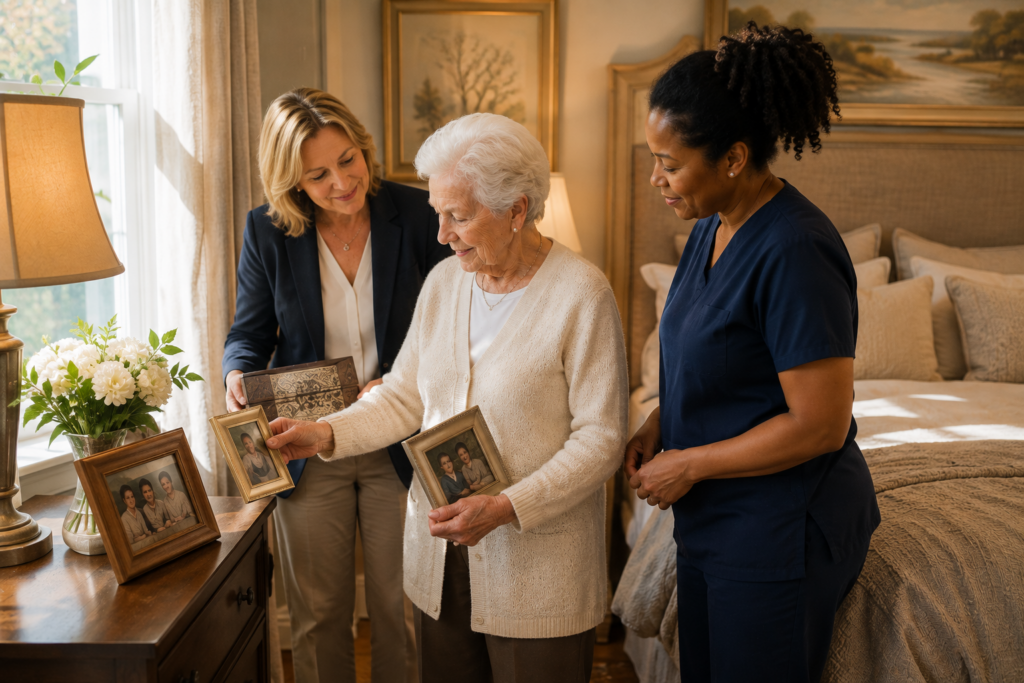
· Which chair she wants to bring from home.
· What photographs should go on the wall.
· Whether she wants to sit outside or in the living room.
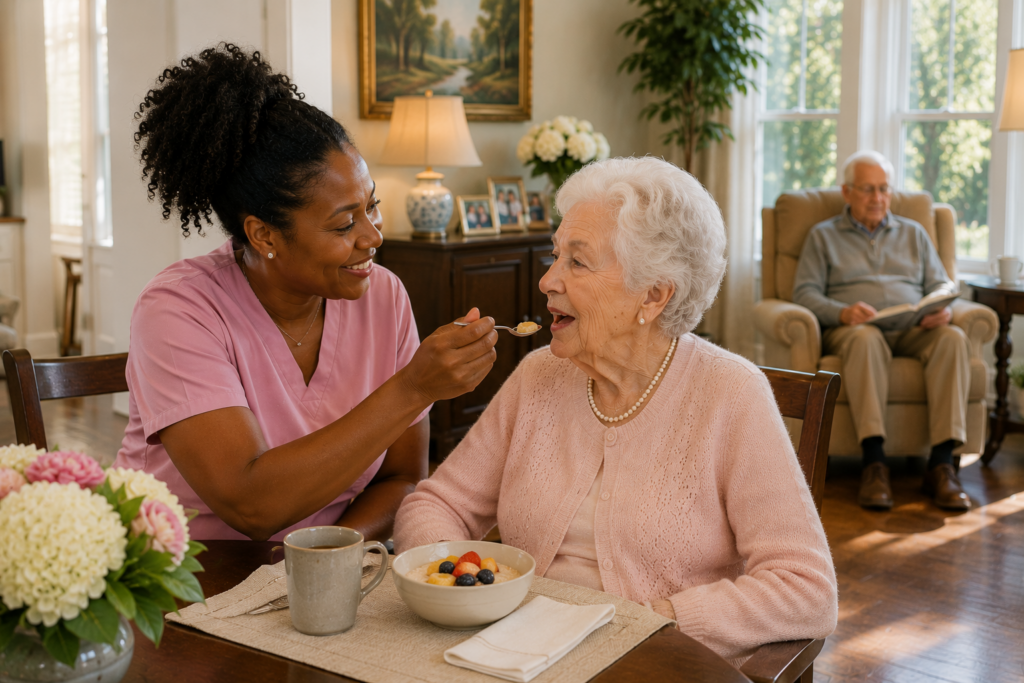
· What she wants for breakfast.
· What clothing she wants to wear.
· Which activities she enjoys.
· When she wants quiet time and when she wants company.
Losing the ability to safely make one major decision does not mean losing the right to make every decision.
Good dementia care should preserve choice wherever choice remains meaningful and safe.
How We Think About This at The Sanctuary
When families call us, I don’t think our job is to tell them that every person with dementia needs to move or that every objection should be ignored.
Our job is to help families think clearly about the actual situation in front of them.
What is happening at home? What has changed? What risks are emerging? What can still be supported safely? What does the person understand about those risks? And what environment is most likely to preserve both quality of life and dignity?
Sometimes the right answer is to wait.
Sometimes the right answer is to put more support in place at home.
And sometimes the family already knows, deep down, that the current situation is no longer sustainable. What they are really looking for is certainty that Mom will agree.
Unfortunately, dementia does not always give families that reassurance.
That is one reason these decisions can feel so lonely. You may have to make a loving decision that the person you love cannot fully understand or thank you for making.
One Thing I’d Tell My Own Family
If I ever develop dementia, I hope my family listens to me.
I hope they include me in decisions for as long as possible.
I hope they never dismiss what I want simply because I have dementia.
Let me choose what I can choose. Preserve my independence wherever it is still safe. Let me have preferences, opinions, routines, and a voice.
But if the day comes when I can no longer understand the risks around me, I hope they don’t ask me to make decisions I’m no longer capable of making simply because they are afraid of upsetting me.
When I can no longer carry the responsibility for keeping myself safe, I hope they love me enough to carry it for me.
Because sometimes caring for someone with dementia means honoring her choices.
And sometimes it means carrying the burden of the choice so she doesn’t have to.
Key Takeaways
· A person with dementia should retain as much voice, choice, and independence as she can meaningfully and safely exercise.
· Including someone in a decision is not necessarily the same as asking her to make the final decision.
· “I don’t want to move” may reflect fear, confusion, loss, or resistance to change rather than a reasoned rejection of one particular community.
· Sometimes families are searching for an option Mom will not object to rather than the option they believe is safest and best.
· Waiting is also a decision; dementia and safety risks do not remain frozen while a family searches for certainty.
· Taking responsibility for safety does not require taking away every other form of choice.
Frequently Asked Questions
Should someone with dementia be involved in choosing memory care?
Whenever possible, yes. A person with dementia can often participate meaningfully by touring, expressing preferences, meeting caregivers, and choosing among appropriate options. How much responsibility she should carry for the final decision depends on her ability to understand and weigh the risks and alternatives.
What if my parent with dementia refuses memory care?
First, try to understand what the refusal means. Is there something specific she dislikes about the community, or is she rejecting the idea of needing care at all? Families should take objections seriously while also considering safety, cognitive insight, and whether remaining at home is still a realistic option.
Should I bring my mom with dementia on memory care tours?
If she wants to participate and the experience is unlikely to cause significant anxiety, bringing her can preserve dignity and help you learn what feels comfortable to her. If touring would create severe distress when a move is not imminent, it may be kinder to limit her involvement until there is a more concrete decision.
How do I know when safety should outweigh independence?
There is no single test. Repeated wandering, medication problems, falls, unsafe cooking, inability to respond appropriately in an emergency, or care needs that can no longer be reliably met may all signal that the balance has changed. Families should also involve appropriate medical and care professionals when evaluating capacity and safety.
What if I make the move and my mom is angry with me?
That possibility is emotionally difficult, but an initial objection does not necessarily predict long-term adjustment. A thoughtful transition plan, familiar routines, consistent caregivers, and time can help. The goal is not to eliminate every difficult emotion; it is to make the safest, most compassionate decision possible with the information you have.
You May Also Find These Helpful
The First 72 Hours: What Really Happens After a Loved One Moves Into Memory Care
Families often fear the transition more than the resident ultimately experiences it. Learn what those first days can actually look like when familiarity, engagement, and consistent caregivers begin building a new normal.
The Biggest Challenge When Choosing Dementia Care
There is rarely one perfect community, one perfect time, or one decision without trade-offs. This article offers a practical way to think about the next right step when certainty is impossible.
Helping New Residents with Dementia Adjust to Their New Home
A difficult transition does not have to become a traumatic one. Learn how familiar routines, personal preferences, and thoughtful support can help a new environment begin to feel safe.
Have Questions About Whether It’s Time?
If you’re trying to balance a loved one’s wishes with growing concerns about safety, we’re always happy to talk through what you’re seeing and help you understand what different care options can realistically provide.

“We’re Probably Six to Nine Months Away”: How Finding the Right Dementia Care Environment Can Change the Timeline
A woman called me recently about her husband. We talked about what was happening at home, what she was looking for, and whether The Sanctuary

10 Questions to Ask When Touring a Memory Care Facility
What questions should you ask when touring a memory care facility? Learn 10 questions that reveal staffing, caregiver consistency, engagement, safety and quality of care.

You Can’t Advocate for Someone When You Don’t Know What’s Going On: Communication in Memory Care
Communication in memory care helps families advocate for loved ones with dementia. Learn what families should know, ask, and reasonably expect.