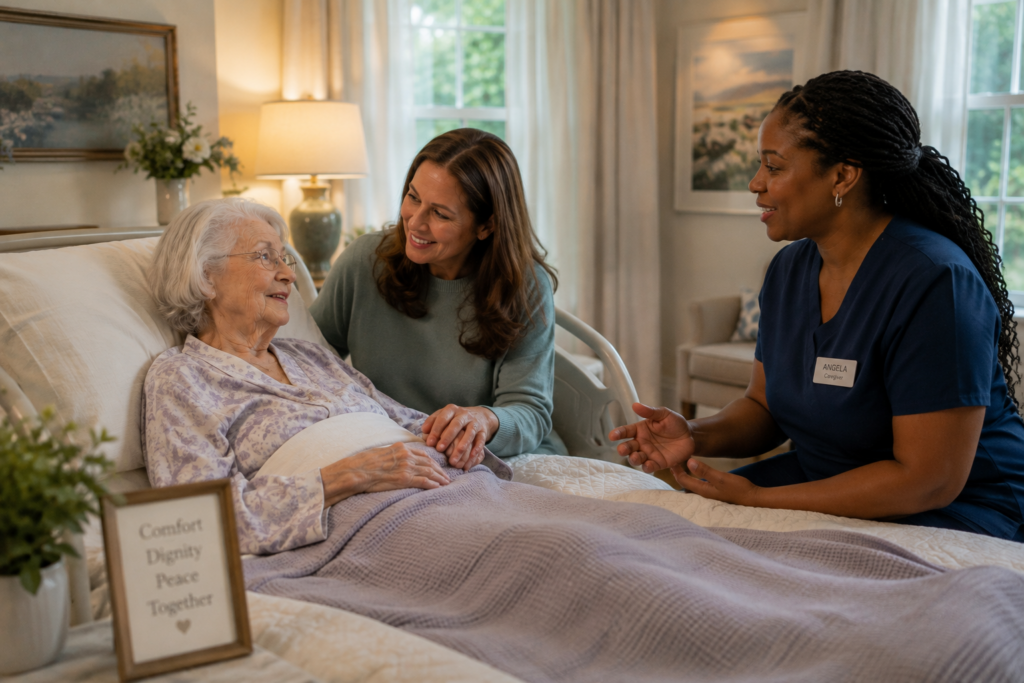
One of the most common questions families ask us is, “What happens when Mom eventually needs hospice?” Many people imagine hospice as a place or believe it means giving up. In reality, hospice for dementia is an added layer of support focused on comfort, dignity, and quality of life. It works alongside your assisted living team and often allows someone to remain in the place they already know and love.
What Is Hospice for Dementia?
Hospice is specialized medical support for people with a
life-limiting illness whose goals have shifted from curing disease to
maximizing comfort. A hospice team typically includes nurses, aides, social
workers, chaplains, and physicians who visit the resident where they live.
Hospice Is Not a Place
One of the biggest misconceptions is that someone must leave
assisted living. In reality, hospice comes to the resident. At The Sanctuary,
our caregivers continue providing daily hands-on care while the hospice team
adds medical oversight, symptom management, equipment, and emotional support.
When Does Someone Qualify?
Eligibility is based on medical criteria and physician
assessment rather than a single diagnosis. Advanced dementia may qualify when
meaningful decline has occurred, but every individual is different.
A Story We Frequently See
Families often worry they will have to move their loved one
yet again. One of the greatest gifts hospice can provide is allowing someone to
remain in familiar surroundings with caregivers who already know their
routines, preferences, and personality.
Key Takeaways
- Hospice focuses on comfort and quality of life, not giving up.
- Many residents remain in their familiar assisted living home while receiving hospice services.
- Hospice supports both the resident and the family.
- Beginning hospice earlier often allows families to receive more benefit.
- Hope changes throughout the dementia journey, but it never disappears.
Frequently Asked Questions
Does hospice mean death is imminent?
No. Many people receive hospice services for weeks or months.
Can hospice be provided in assisted living?
Yes. Hospice providers often partner with assisted living communities.
Does hospice stop all medical care?
No. The focus shifts to comfort and symptom management rather than cure.
Can someone leave hospice?
Yes, if their condition improves or they no longer qualify, hospice can be discontinued.
You May Also Find These Helpful
The Biggest Mistake Families Make: Waiting Too Long to Move a Loved One with Dementia
Many families don’t move too early; they wait until a crisis forces the decision. Learn why earlier planning often leads to a smoother transition.
Memory Care vs. Skilled Nursing: Understanding the Difference
Many people assume skilled nursing is the next step after memory care. Here’s why that’s usually not the case.
The Reality of Dementia Care: Why Home Care Often Isn’t the Best Option
Though many families want to keep their loved one at home for as long as possible, learn why that isn’t always what’s best option for the resident and the famil