
By The Sanctuary
Posted January 29, 2025
One of the most common questions families ask me when comparing residential dementia care is, “Aren’t all of the small homes basically the same?” It is a fair question. From the outside, several options may look similar: a private house, a small number of residents, home-cooked meals, and a more intimate atmosphere than a large assisted living community. But the size of the building tells you surprisingly little about the depth of the care organization behind it.
A six-resident home can be supported by a mature clinical and operational team, established staffing systems, dedicated activity programming, maintenance resources, and years of experience—or it can depend heavily on one or two people to manage nearly everything. Both may feel warm and personal during a tour. The differences often become visible later, when a caregiver calls out, a resident’s needs change, a medication issue arises, or a family needs help navigating a difficult transition.
That is why I encourage families not to compare small dementia care homes by atmosphere alone. The more useful question is: What systems, people, and resources are behind the home when care becomes complicated?
Residential Dementia Care Is More Than a Beautiful Home
The home environment matters. For many people living with dementia, a smaller residential setting can feel more familiar and easier to navigate than a large institutional building. But a home-like environment is the setting for care; it is not the care itself.
When you tour, look beyond furnishings and finishes. Ask who is responsible for clinical oversight, who trains the caregivers, how staffing gaps are covered, who coordinates with physicians and hospice, how activities are planned, and what happens as mobility and personal-care needs increase.
Our care team at The Sanctuary includes caregivers and Medication Aides supported by registered nurses and dedicated activity leadership. The point is not that every provider must be structured exactly the same way. It is that families should understand who is actually responsible for each part of a resident’s care.
1. Experience Matters Most When Something Changes
Dementia care is rarely static. A resident who walks independently today may later need a walker, hands-on assistance, hospice support, or much more cueing with meals and personal care. Behaviors can change. Sleep can change. Medications change. Families need a provider that knows how to adapt rather than simply operate well when everything is routine.
The Sanctuary opened its first home in 2017. Over the years, operating multiple small residences has given our team repeated experience with the transitions that families often encounter as dementia progresses. That history matters less as a marketing milestone than as an operational one: experience creates opportunities to refine training, staffing, communication, safety protocols, and care coordination.
2. Ask What Happens When a Caregiver Calls Out
A small home can offer wonderful caregiver consistency, but small staffing models can also become vulnerable if there is no larger team behind them. If one caregiver is sick, who covers the shift? If someone leaves unexpectedly, is there an established pool of trained staff who already understand the organization’s standards?
At The Sanctuary, our scale across multiple residences gives us a broader staffing base while preserving the intimacy of six residents per home. That combination is important to us: residents still live in a small household, while the individual house is not operating as an island.
When touring any residential dementia care option, ask specifically about call-outs, turnover, overnight coverage, training, and how often residents are cared for by unfamiliar staff. The answer tells you a great deal about how resilient the care model will be on an imperfect day.
3. Look for Clinical Oversight Beyond Daily Caregiving
Excellent caregivers are the heart of dementia care, but caregiving and clinical oversight are not the same job. Families should understand who is monitoring changes in condition, communicating with medical providers, reviewing care needs, and helping the team respond when something seems different.
At The Sanctuary, registered nurses support our residents and staff, communicate with families and providers, and help monitor changing needs. That layer of oversight is especially valuable because dementia can make medical problems difficult to recognize. A resident may not be able to explain pain, infection, constipation, dehydration, or another source of distress in the way a cognitively intact adult would.
Families can learn more about the clinical and caregiving structure on our Charlotte dementia care page.
4. Activities Should Be a Real Function, Not an Afterthought
In a small home, it is tempting to assume that meaningful engagement will simply happen because the environment is intimate. Sometimes it does. A good caregiver may naturally invite a resident to bake, fold laundry, sit outside, listen to music, or work on a puzzle.
But caregivers also have essential responsibilities: bathing, toileting, dressing, meals, medications, laundry, documentation, and supervision. If no one owns the responsibility for engagement, activities can easily become whatever there is time for after everything else is finished.
The Sanctuary has dedicated activity leadership that creates personalized enrichment around residents’ interests and abilities. That does not mean every minute should be programmed. Quiet time is valuable too. It means engagement is treated as part of quality of life rather than an optional extra.
Our services and amenities overview explains how individualized activities, routines, social interaction, and one-on-one engagement fit into the larger care model.
5. A 1:3 Caregiver-to-Resident Ratio Changes What Is Possible
Staffing ratios are one of the most useful questions families can ask because they affect nearly everything else. At The Sanctuary, our homes maintain a 1:3 caregiver-to-resident ratio: two caregivers for six residents during most hours and a 1:6 ratio during the night when residents are asleep.
That ratio creates time for more than completing tasks. It makes it more realistic for a caregiver to notice subtle changes, spend time redirecting someone without rushing, assist with meals, provide one-on-one attention, and build the kind of familiarity that is especially important in dementia care.
Do not stop at the number, however. Ask who is included in the ratio, whether it changes overnight, what happens during call-outs, and whether the staff members providing hands-on care are consistent. A ratio is meaningful only when you understand how it works in practice.
6. Think About the Needs Your Loved One May Have Later
Families naturally choose care based on what a parent or spouse needs today. But one of the most important questions in residential dementia care is how much the setting can accommodate as those needs change.
Can the home safely support residents who use walkers or wheelchairs? Are bathrooms designed for hands-on assistance? What happens if a resident becomes non-ambulatory? Can hospice come into the home? Under what circumstances would a resident have to move again?
The Sanctuary’s residences include private, handicap-equipped bathrooms and safety features designed around changing mobility needs. Our goal is generally for residents to remain with us through the end of life when their needs remain appropriate for our licensed setting, and we work with hospice when that support becomes appropriate.
Our frequently asked questions include more information about hospice, move-in, and circumstances in which a higher level of skilled nursing care might eventually be necessary.
7. The Physical Home Needs Ongoing Attention Too
A residential care home is still a heavily used care environment. Bathrooms, flooring, furniture, lighting, safety equipment, outdoor areas, HVAC systems, and countless small details need regular attention.
At The Sanctuary, dedicated maintenance support allows us to address the physical environment as an ongoing operational responsibility rather than something handled only when there is time. We also refresh resident rooms between occupants so that a new resident arrives to a clean, welcoming space.
When touring, look closely. Do not just notice whether the house was beautiful when it opened. Look at how it is being maintained now.
8. Small Should Still Feel Personal
There is an important caution here: organizational depth should not come at the expense of intimacy. The reason many families seek a residential model in the first place is that they want their loved one to be known.
Our goal at The Sanctuary is to combine both: six residents in a true home environment, supported by the resources of a larger organization. We want caregivers to know how a resident likes to be approached, what foods she enjoys, what makes him laugh, what causes anxiety, and which routines make the day easier.
That is the standard I would use when comparing providers. You should not have to choose between a small home and a professionally supported care organization. Look for evidence of both.
What to Ask When Comparing Small Dementia Care Homes
If you are touring residential options in Charlotte or elsewhere, these questions can reveal much more than a brochure:
· How many residents live in each home, and what is the caregiver-to-resident ratio?
· Who provides clinical oversight, and how often are nurses involved?
· What happens when a caregiver calls out or leaves unexpectedly?
· How are caregivers trained specifically for dementia?
· Who is responsible for planning and delivering meaningful activities?
· Can the home support residents as mobility and personal-care needs increase?
· Are bathrooms private and designed for accessibility and hands-on assistance?
· Can hospice provide care in the home?
· Under what circumstances would a resident need to move out?
· Who is responsible for maintenance, safety systems, and ongoing improvements?
· How does management communicate with families when a resident’s condition changes?
· How long has the organization been operating this model?
For a broader touring checklist, see 10 Questions to Ask When Touring a Memory Care Facility.
How We Think About Residential Dementia Care at The Sanctuary
We built The Sanctuary around a simple idea: people living with dementia can benefit from the familiarity and intimacy of a real home without giving up the systems and professional support families expect from an established care organization.
That is why each Charlotte residence remains intentionally small while the organization behind the homes includes nursing oversight, activity leadership, staffing depth, management, maintenance, and established operating systems. The resident experiences a household. The family gets the support of a team.
We do not believe every small operator is the same, and we would not tell families to dismiss a newer or independently operated home simply because it is small. Some provide excellent care. The point is to look beneath the surface. A beautiful six-resident home is a beginning. What matters is the care infrastructure behind it.
Key Takeaways
· Small residential dementia care homes can look similar while having very different staffing, clinical, activity, and operational resources behind them.
· Ask how the provider handles caregiver call-outs, turnover, and backup coverage.
· Clinical oversight matters because people with dementia may communicate illness or discomfort through behavior rather than words.
· Meaningful engagement should have clear ownership rather than being left to whatever time remains after care tasks.
· A 1:3 caregiver-to-resident ratio can support individualized attention, but families should ask how the ratio works in practice.
· Consider future mobility, hospice, personal-care, and safety needs—not only what your loved one needs today.
· Look for the combination of intimacy and infrastructure: a small home where residents are truly known, supported by a dependable organization.
Frequently Asked Questions
Are all small dementia care homes basically the same?
No. Two homes may each serve six residents and feel similarly residential, while differing substantially in staffing depth, nursing oversight, caregiver training, activity programming, backup coverage, maintenance resources, and experience. Ask about the organization behind the home, not just the home itself.
What caregiver-to-resident ratio should I look for?
There is no single number that answers every quality question, but the ratio is important because it affects how much individualized attention is realistically available. Ask who counts toward the ratio, how it changes by shift, and what happens when a staff member calls out.
Why does nursing oversight matter in assisted living specializing in dementia care?
Dementia can make changes in health difficult to recognize or describe. Nursing oversight can help identify changes, coordinate with providers, support caregivers, and communicate with families. It does not replace a physician or skilled nursing facility when that level of care is required.
Can someone stay in a small residential care home through the end of life?
That depends on the home’s license, the resident’s needs, and what services can safely be provided. At The Sanctuary, residents generally remain through the end of life when their needs remain appropriate for the setting, and hospice can provide services in the homes. Families should ask every provider this question before move-in.
You May Also Find These Helpful
10 Questions to Ask When Touring a Memory Care Facility — The practical questions that help reveal what daily care actually looks like.
You Can’t Optimize for Everything When Choosing Dementia Care — A framework for deciding which priorities matter most when no care option wins on every dimension.
The Reality of Dementia Home Care: When Staying Home Stops Working — How to evaluate whether a home-care arrangement is still safe, engaging, and sustainable.
Want to See What This Model Looks Like in Practice?
If you are comparing residential dementia care options in Charlotte, contact The Sanctuary to ask questions, learn about availability, or schedule a tour. A tour should help you understand not only what the home looks like, but how the care system behind it actually works.
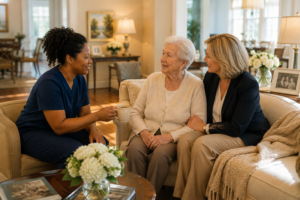
The First 72 Hours: What Really Happens After a Loved One Moves Into Memory Care
The first 72 hours in memory care can worry families. Learn what really happens after move-in and how familiarity, activity and routine help.
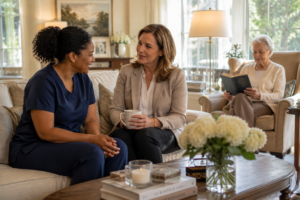
You Can’t Optimize for Everything When Choosing Dementia Care
Learn how choosing dementia care involves balancing difficult trade-offs and why waiting for the perfect solution often makes decisions harder.

What Should a Memory Care Assessment Really Evaluate?
A memory care assessment should reveal more than physical ability. Learn what families and communities should evaluate before a dementia-care move.