Test

Why People with Dementia Wander (and Why It Isn’t the Same as Exit Seeking)

One of the questions I hear from families all the time is, “I’m worried Mom is going to wander away.”

Understanding why people with dementia wander is important because wandering and “exit seeking” are not always the same thing. The words are often used interchangeably, but the behavior we see may have very different causes—and understanding the difference changes how we respond.

After caring for hundreds of residents living with dementia, I’ve learned that most people are not simply trying to escape. Much more often, they are trying to solve a problem that feels completely real and urgent to them. They may believe they need to get to work, find their children, go home, use the bathroom, look for a spouse, or simply keep moving because sitting still feels uncomfortable.

When we understand the problem they are trying to solve, we can often respond with empathy instead of simply saying “no.” We can also make better decisions about safety, supervision, routines, and the environment around them.

Why People With Dementia Wander

“Wandering” can sound as though a person is moving aimlessly. In reality, movement in dementia is often purposeful from the person’s perspective, even when the purpose is not obvious to us. The Alzheimer’s Association describes wandering as common in dementia and notes that it can occur at any stage. It also lists signs such as pacing, trying to fulfill former obligations, looking for people from the past, becoming lost in familiar places, or saying they want to “go home” even when they are already home.

For families, the important shift is to stop asking only, “How do we make the walking stop?” and begin asking, “What might this person be trying to do or communicate?” See the Alzheimer’s Association guidance on wandering and dementia for additional safety guidance.

Wandering Is Not the Same as Exit Seeking

A person can walk repeatedly through a house, pace a hallway, move from room to room, or explore a safe outdoor space without necessarily trying to leave. Movement itself is not always a problem. In fact, walking can provide exercise, stimulation, a sense of purpose, and an outlet for restlessness.

Exit seeking is more specific. It describes behavior focused on getting through a door or leaving the current setting. A resident may stand at an exterior door, repeatedly test the handle, pack belongings, put on a coat, or insist that someone is waiting for them.

The distinction matters because the response should match the need. Someone who simply needs to move may benefit from a safe place to walk. Someone who is actively trying to leave requires closer supervision and an understanding of what is pulling them toward the door.

Common Reasons a Person With Dementia May Wander

There is rarely one universal cause. The same person may wander for different reasons on different days.

They are following an old routine

Dementia may weaken recent memory while older habits remain deeply familiar. A retired teacher may believe she needs to get to school. A man who spent forty years leaving for work at 7:30 may become restless around that same time every morning. A parent may think children are waiting to be picked up, even though those children are now adults.

From our perspective, the task does not exist anymore. From theirs, it may feel overdue and important. Correcting them repeatedly—“You retired twenty years ago”—may not remove the urgency. It can simply create a new problem: now they feel that nobody is listening.

They are looking for something or someone

A person may walk through rooms looking for a spouse, parent, child, bathroom, bedroom, purse, pet, or familiar object. If memory and visual processing are impaired, even a familiar environment can become difficult to navigate.

Sometimes the repeated walking is the search itself. Instead of stopping the person, it may help to identify what they seem to be looking for and respond to that need.

They need the bathroom, food, water, movement, or relief from discomfort

Behavior can be communication, particularly when a person can no longer clearly explain what is wrong. Restlessness may accompany hunger, thirst, constipation, urinary urgency, pain, being too hot or cold, fatigue, or the need to use the bathroom.

This is why I do not like treating every episode of wandering as a behavioral problem. Sometimes the most effective intervention is remarkably ordinary: a snack, a drink, a bathroom trip, a walk outside, a quieter room, or attention to pain.

They are bored or under-stimulated

Imagine being told to sit in the same chair for most of the day without understanding why. Many of us would get up too.

Meaningful activity does not have to mean constant entertainment. It can be folding towels, setting a table, watering plants, listening to music, walking outside, looking through photographs, helping prepare food, or simply sitting and talking with someone. The point is to give the day rhythm and purpose.

They are anxious, overstimulated, or trying to get somewhere that feels safer

Noise, unfamiliar people, a crowded room, a change in caregivers, or an unfamiliar environment can increase confusion. A person may move because remaining where they are feels uncomfortable.

This is one reason wandering sometimes increases after a move. The person has lost familiar visual cues and may be trying to orient themselves. Calm repetition, predictable routines, familiar belongings, and consistent caregivers can help the new environment gradually make sense.

They are experiencing changes later in the day

Some people become more restless or confused in the late afternoon or evening, a pattern often described as sundowning. If walking or door-focused behavior reliably occurs at the same time each day, that pattern is useful information.

Rather than waiting for the difficult period to begin, families and caregivers can plan ahead: offer movement earlier, make sure the person has eaten and used the bathroom, reduce noise, improve lighting, and provide a familiar activity or companion during the time when restlessness usually increases.

Start Looking for the Pattern

When wandering becomes frequent, I encourage families to become detectives. You do not need a complicated tracking system. A few notes can reveal patterns that are easy to miss when every episode feels like a separate crisis.

·        What time did the walking or exit-seeking begin?

·        What happened immediately before it?

·        Where was the person trying to go?

·        What were they saying or asking for?

·        Had they eaten, had something to drink, and used the bathroom?

·        Was the environment noisy, crowded, unfamiliar, or unusually quiet?

·        Did a caregiver or family member just leave?

·        Did redirection work? If so, what helped?

·        Is the behavior new, or is it part of an established pattern?

Over time, you may discover that Dad heads for the door every afternoon when he once left work, or that Mom begins pacing whenever the house becomes noisy. Once you see the pattern, you can often intervene before the distress becomes intense.

What to Do in the Moment

The first priority is safety, but the way we create safety matters. Arguing, scolding, physically blocking someone unnecessarily, or repeatedly explaining why their belief is incorrect can escalate distress.

A more useful sequence is often:

·        Approach calmly and from the front so you do not startle the person.

·        Listen for the need underneath the words. Are they looking for someone? Going to work? Trying to get home?

·        Validate the emotion without debating the facts: “You’re worried you’re late,” or “You want to get home.”

·        Meet any obvious physical need—bathroom, food, water, pain relief, rest, movement.

·        Redirect toward something connected to the need: a walk, snack, familiar task, music, photograph, or conversation.

·        Give the person time. Redirection is often less effective when it feels like a command.

For example, if a resident says, “I have to pick up my children,” telling her that her children are fifty years old may leave her confused or embarrassed. A caregiver might instead say, “You’re thinking about the kids. Tell me about them,” and begin walking with her toward the kitchen for a cup of tea. The concern has been acknowledged, and the momentum has shifted without a confrontation.

What Not to Do

Families are often understandably frightened by wandering, especially after a close call. Fear can make us want to control every movement. But eliminating movement is not the goal.

·        Do not assume every instance of walking is dangerous or meaningless.

·        Do not argue repeatedly about facts the person cannot retain.

·        Do not shame the person for trying to leave or for becoming lost.

·        Do not rely on a single lock, alarm, camera, or GPS device as a substitute for appropriate supervision.

·        Do not leave a person with known wandering risk unattended simply because the environment is familiar.

·        Do not ignore a sudden, unexplained change in behavior.

A Sudden Change Deserves Attention

If a person who rarely wanders suddenly becomes markedly restless, agitated, confused, or determined to leave, I would not automatically attribute it to dementia progression.

Sudden behavior changes can sometimes accompany infection, pain, constipation, dehydration, medication effects, sleep disruption, or other medical problems. The Alzheimer’s Association advises seeking medical evaluation when there is a sudden change in behavior so other causes can be considered.

You can read more about changes in confusion and behavior from the Alzheimer’s Association.

Making the Environment Safer Without Making It Feel Like a Lockdown

Good dementia care balances safety with dignity and freedom of movement. The goal is not to make a person feel trapped. It is to make safe choices easier and dangerous exits less likely.

Depending on the person and setting, useful strategies may include:

·        Door alerts or monitoring systems that let a caregiver know when an exterior door opens.

·        Locks or latches positioned appropriately while preserving emergency egress and following applicable safety rules.

·        Good lighting, especially at night and along routes to the bathroom.

·        Clear visual cues or labels for bathrooms, bedrooms, and common spaces.

·        Reducing clutter and confusing visual patterns.

·        Keeping items associated with leaving—such as car keys or a frequently used coat—out of sight when they trigger exit-seeking.

·        Providing safe indoor and outdoor walking routes whenever possible.

·        Using GPS or location-sharing technology as an additional safeguard when appropriate.

·        Keeping a recent photograph and identifying information readily available in case the person becomes missing.

The National Institute on Aging and Alzheimer’s Association both provide practical wandering-safety recommendations for families.

If Someone With Dementia Goes Missing

This is the part families hope they never need, but it is worth planning for before an emergency.

Begin looking immediately. Check the immediate area and places the person may associate with former routines, such as a previous home, workplace, place of worship, favorite store, or familiar walking route. The Alzheimer’s Association recommends calling 911 if the person is not found within 15 minutes and telling authorities that the missing person has dementia.

Families should also consider informing trusted neighbors about the wandering risk, keeping a current photograph available, and having identifying information or a location device appropriate for the person. A plan made calmly in advance is much easier to follow than one invented during a frightening moment.

When Wandering Becomes a Sign That the Care Plan Needs to Change

Wandering does not automatically mean someone needs to move out of their home. Many families can reduce risk with better supervision, environmental changes, routines, activities, and additional caregiver support.

But the care plan deserves another look when the person can no longer safely be left alone, exits the home unnoticed, becomes lost in familiar places, wakes and walks at night, repeatedly defeats safety measures, or requires more supervision than the family can realistically provide.

This is one of the points where our article on the reality of dementia home care may also be helpful. The issue is not whether staying home is good or bad; it is whether the care system still matches the person’s needs.

How We Think About Wandering at The Sanctuary

At The Sanctuary, our Charlotte assisted living homes specialize in dementia care, and we do not view movement itself as something that must automatically be stopped. If a resident wants to walk, we want to understand why and, whenever possible, give that person a safe way to move.

Because each home has only six residents and a 1:3 caregiver-to-resident ratio, caregivers have more opportunity to learn individual patterns: who tends to become restless before dinner, who is looking for a spouse, who needs to walk after breakfast, and who becomes anxious when the house is noisy.

That familiarity can make redirection more personal. The answer is not always “sit down.” It might be, “Come help me set the table,” “Let’s check the garden,” or “Tell me about where you used to work.”

We also distinguish ordinary movement from true exit risk. A resident who enjoys walking through the house is different from a resident who is actively trying to leave unnoticed. Both deserve dignity, but the safety response may be very different.

The Bigger Lesson: Behavior Is Information

One of the most useful shifts in dementia care is to stop seeing every difficult behavior as something to extinguish.

Pacing, searching, asking to go home, repeatedly opening a door, or walking from room to room may be telling us something: “I’m bored.” “I’m uncomfortable.” “I’m looking for someone.” “I don’t recognize this place.” “I have somewhere I believe I need to be.”

We will not always figure out the exact reason. Dementia is complicated, and sometimes even an excellent caregiver cannot identify the trigger. But beginning with curiosity changes the interaction. Instead of asking only how to stop the behavior, we ask what the person might need.

That approach is not just kinder. Very often, it is more effective.

Key Takeaways

·        Wandering in dementia is often purposeful from the person’s point of view, even when the purpose is not obvious to us.

·        Wandering and exit seeking are related but not identical; a person may need safe movement without actually trying to leave.

·        Common triggers include old routines, searching for someone or something, unmet physical needs, boredom, anxiety, overstimulation, and changes in the environment.

·        Look for patterns in time of day, preceding events, words, physical needs, and what kinds of redirection work.

·        Respond first to the emotion or need rather than arguing about facts.

·        Sudden new wandering or agitation deserves attention because medical or physical problems can sometimes contribute to abrupt behavior changes.

·        Environmental safeguards, supervision, meaningful activity, and an emergency plan can reduce risk while preserving dignity and movement.

·        If wandering risk exceeds what the current care arrangement can safely support, it may be time to reassess the overall care plan.

Frequently Asked Questions

Why do people with dementia wander?

People with dementia may wander for many reasons, including following an old routine, searching for someone or something, needing food or the bathroom, experiencing pain or discomfort, feeling bored or anxious, or becoming confused in an unfamiliar environment. The movement may look aimless to an observer while still feeling purposeful to the person.

Is wandering the same as trying to escape?

No. Some people walk or pace because they need movement, stimulation, or something to do. Exit seeking is more specifically focused on leaving through a door or getting away from the current setting. Understanding which behavior is occurring helps caregivers choose a safer and more respectful response.

Should I stop a person with dementia from pacing?

Not automatically. If the person is safe and not becoming exhausted or entering unsafe areas, walking may provide useful exercise and stimulation. The goal is often to create safe opportunities for movement while monitoring for signs of distress or exit risk.

What should I say when someone with dementia says they want to go home?

Try responding to the feeling rather than immediately correcting the facts. Acknowledge that they are thinking about home or missing someone, ask a simple question, offer reassurance, and gently redirect toward a familiar activity, snack, walk, or conversation.

When should wandering behavior concern me medically?

If wandering, agitation, or confusion appears suddenly or changes dramatically from the person’s usual pattern, contact the appropriate healthcare professional. Sudden behavior changes can sometimes be associated with pain, infection (e.g., UTI), medication effects, dehydration, constipation, or other medical issues.

You May Also Find These Helpful

The Reality of Dementia Home Care: When Staying Home Stops Working — How to evaluate whether a home-care system still provides enough supervision, engagement, and support.

Helping a Loved One With Dementia Adjust to a New Home — Why unfamiliar environments can temporarily increase confusion and how families can support a calmer transition.

You Can’t Optimize for Everything When Choosing Dementia Care — A framework for deciding which priorities matter most as care needs change.

Have Questions About Wandering or Safety?

If wandering, exit seeking, or increasing supervision needs are making you question whether your loved one’s current care arrangement is still working, contact The Sanctuary. We are happy to talk through what you are seeing and the questions worth considering as dementia care needs change.

Caregiver gently redirecting a man experiencing dementia wandering inside a luxury residential assisted living home.

Hospice for Dementia: What Hospice Really Means for Families (And Why It Isn’t Giving Up)

One of the most common questions families ask us is, “What happens when Mom eventually needs hospice?” Many people imagine hospice as a place or believe it means giving up. In reality, hospice for dementia is an added layer of support focused on comfort, dignity, and quality of life. It works alongside your assisted living team and often allows someone to remain in the place they already know and love.

What Is Hospice for Dementia?

Hospice is specialized medical support for people with a
life-limiting illness whose goals have shifted from curing disease to
maximizing comfort. A hospice team typically includes nurses, aides, social
workers, chaplains, and physicians who visit the resident where they live.

Hospice Is Not a Place

One of the biggest misconceptions is that someone must leave
assisted living. In reality, hospice comes to the resident. At The Sanctuary,
our caregivers continue providing daily hands-on care while the hospice team
adds medical oversight, symptom management, equipment, and emotional support.

When Does Someone Qualify?

Eligibility is based on medical criteria and physician
assessment rather than a single diagnosis. Advanced dementia may qualify when
meaningful decline has occurred, but every individual is different.

A Story We Frequently See

Families often worry they will have to move their loved one
yet again. One of the greatest gifts hospice can provide is allowing someone to
remain in familiar surroundings with caregivers who already know their
routines, preferences, and personality.


Key Takeaways

  • Hospice focuses on comfort and quality of life, not giving up.
  • Many residents remain in their familiar assisted living home while receiving hospice services.
  • Hospice supports both the resident and the family.
  • Beginning hospice earlier often allows families to receive more benefit.
  • Hope changes throughout the dementia journey, but it never disappears.

Frequently Asked Questions

Does hospice mean death is imminent?

No. Many people receive hospice services for weeks or months.

Can hospice be provided in assisted living?

Yes. Hospice providers often partner with assisted living communities.

Does hospice stop all medical care?

No. The focus shifts to comfort and symptom management rather than cure.

Can someone leave hospice?

Yes, if their condition improves or they no longer qualify, hospice can be discontinued.

You May Also Find These Helpful

The Biggest Mistake Families Make: Waiting Too Long to Move a Loved One with Dementia

Many families don’t move too early; they wait until a crisis forces the decision. Learn why earlier planning often leads to a smoother transition.

Memory Care vs. Skilled Nursing: Understanding the Difference

Many people assume skilled nursing is the next step after memory care. Here’s why that’s usually not the case.

The Reality of Dementia Care: Why Home Care Often Isn’t the Best Option

Though many families want to keep their loved one at home for as long as possible, learn why that isn’t always what’s best option for the resident and the famil

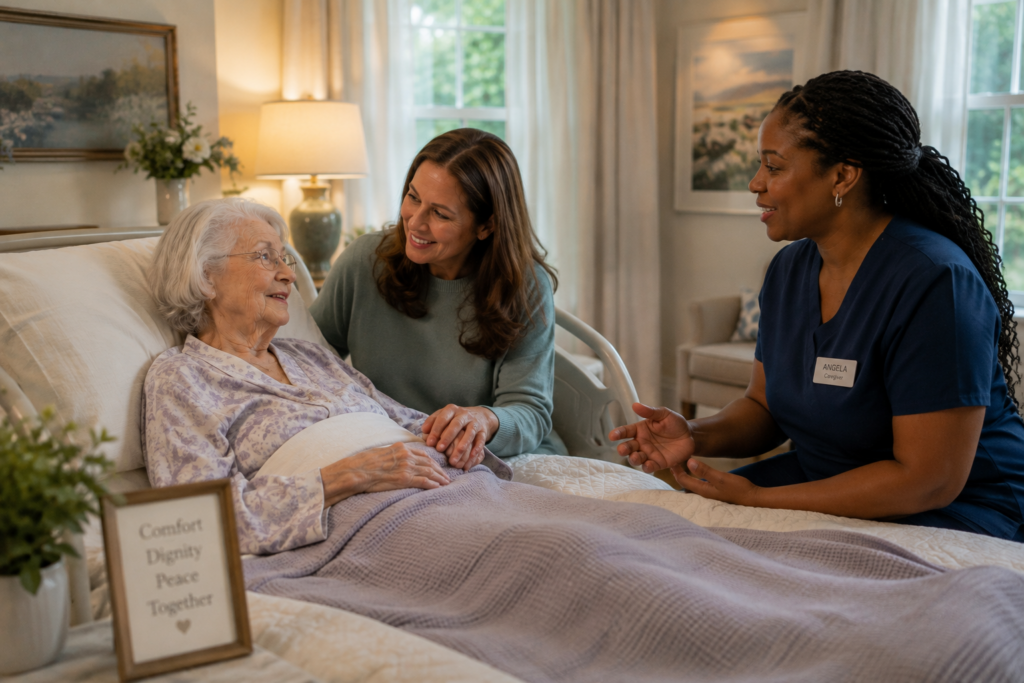
Hospice for dementia conversation between a caregiver, an elderly woman resting comfortably in bed, and her daughter inside a luxury residential assisted living home.

You Can’t Optimize for Everything When Choosing Dementia Care

One of the most common questions families ask me when choosing dementia care is some version of this: “How do I know I’m making the right decision?” It sounds like a simple question, but underneath it are usually ten others. Is Mom safer at home or in residential care? Should we choose the place closest to family, the place with the largest room, or the place where the care feels most personal? Should we move now, or wait until the need is unmistakable? Families want to get every part of the decision right because the stakes feel so high.

I understand that instinct. But after years of talking with families, I’ve come to believe that the search for a decision with no downside can actually make a difficult situation harder. There is rarely one option that wins on every dimension. At some point, the work becomes less about finding a perfect answer and more about deciding which things matter most.

Choosing Dementia Care Means Accepting Trade-Offs

Every meaningful care option comes with advantages and compromises. Home may offer familiarity, but it can also mean increasing isolation, a complicated patchwork of caregivers, or a spouse carrying more responsibility than is sustainable. A larger community may offer an impressive activity calendar, but the size and pace may be overwhelming for someone who does better with fewer people and more consistent caregivers.

A community close to one adult child may make visits easier, while another setting farther away may be a better fit for the person actually living there. A large room may feel important during a tour, while day-to-day life may ultimately depend much more on who notices that Dad has barely eaten, who knows how Mom takes her coffee, and who can tell that a change in behavior probably means she is uncomfortable rather than “difficult.”

None of those trade-offs means you are choosing badly. It means you are making a real decision rather than an imaginary one.

Start by Deciding What You Are Actually Optimizing For

When families feel stuck, I often think the most useful question is not, “Which option is best?” It is, “What are we most trying to protect?”

·        Safety and reliable supervision?

·        A calmer, more predictable daily environment?

·        Meaningful social interaction and engagement?

·        Consistency of caregivers?

·        Nutrition, medication management, or help with personal care?

·        The health and sustainability of a spouse or family caregiver?

·        The ability to respond as dementia progresses without another disruptive move?

Your answer may change over time. That is important. A priority that made sense six months ago may no longer be the most important one today. Dementia changes, and a good care plan has to be allowed to change with it.

The Question That Often Brings Clarity

When a family is unsure whether the current arrangement is still working, one question can be surprisingly clarifying: If nothing changed over the next six months, would you be comfortable with life continuing exactly as it is?

Not the version of the situation you hope to create. Not the version that works on the best day. The actual version you are living now.

If the answer is yes, that may be a reasonable sign that the current plan is still serving your loved one and your family. But if the honest answer is, “No, we cannot keep doing this,” then continuing to wait is not really preserving the status quo. It is choosing more of a situation you already know is becoming unsustainable.

The Alzheimer’s Association notes that dementia care needs change over time and that there is no one-size-fits-all formula for care. That is exactly why reassessment matters. The right question is not whether one setting is universally better than another. It is whether the current setting still matches the person’s needs.

Waiting Is Also a Choice

Families sometimes think of waiting as the neutral option. It can feel safer because no major decision has been made yet. But dementia continues to progress while we are waiting.

Sometimes waiting is absolutely appropriate. A person may still be safe, engaged, well supported, and enjoying a good daily life at home. The problem is not waiting itself. The problem is waiting because making a decision feels frightening, even after the reasons for change have become clear.

This is why I often encourage families to learn about their options before they are forced to make a decision in a crisis. Waiting Too Long to Move a Loved One With Dementia can turn a thoughtful care decision into an emergency, when choices are narrower and emotions are even higher.

Look Beyond the Things That Are Easiest to Compare

Tours naturally draw our attention to visible things: room size, finishes, dining rooms, courtyards, calendars, and amenities. Those things are not irrelevant. But they are also some of the easiest things to compare, which can make them feel more important than they really are.

For a person living with dementia, I would look closely at the less measurable parts of the day. How well do caregivers know the residents? How much staff turnover is there? What happens when someone refuses a shower, becomes anxious in the evening, stops eating, or starts asking repeatedly to go home? Is the environment calm enough for someone who is easily overstimulated? Does the care model depend on the resident initiating activities, or are people actively invited and supported throughout the day?

Those questions often tell you more about daily life than the square footage of a bedroom.

The Caregiver’s Life Belongs in the Equation Too

Families sometimes evaluate care as though the only legitimate needs are the needs of the person with dementia. But a plan that requires a spouse or adult child to become exhausted, isolated, physically unsafe, or constantly on call is not necessarily a successful plan.

Caregiver capacity is part of the care environment. If a spouse is no longer sleeping, an adult child is missing work constantly, or the family is spending every day coordinating gaps in coverage, that matters. It does not mean anyone has failed. It means the system has a limit.

A sustainable plan should protect the person living with dementia while also recognizing the human beings providing the support.

What Matters Most in a Dementia Care Setting?

When I think about the things that tend to matter most over time, I come back to a few fundamentals: safety, consistency, responsiveness, meaningful human interaction, good nutrition, dignity, and a team that understands dementia well enough to interpret behavior rather than simply react to it.

The best-looking option is not automatically the best care option. The option with the longest list of amenities is not automatically the best fit. And the setting that works beautifully for one person may be completely wrong for another.

That is why choosing well requires prioritizing the person in front of you: their personality, routines, stage of dementia, medical needs, tolerance for stimulation, social preferences, mobility, behaviors, and the things that still make them feel like themselves.

How We Think About Choosing Dementia Care at The Sanctuary

At The Sanctuary, we operate small residential assisted living homes specializing in dementia care in Charlotte. Our model is intentionally personal because we believe many people living with dementia benefit from a familiar residential rhythm, a small number of residents, and caregivers who have the opportunity to know them well.

But I would never tell a family that our model is automatically right for everyone. Some people need a different level of medical care. Some families have an excellent home-care arrangement that is still working. Some residents may thrive in a larger setting. The goal is not to make every family arrive at the same answer.

The goal is to help families become clear about what matters most, look honestly at the trade-offs, and choose a setting that fits the person’s needs now—not an abstract idea of what care is supposed to look like.

A Practical Way to Compare Your Options

If you are comparing several choices, try narrowing your decision to five priorities. Rank them before your next tour or family discussion. For example:

1.        Safety and supervision

2.        Caregiver consistency and responsiveness

3.        Dementia expertise

4.        Daily engagement and quality of life

5.        Location and family access

Then evaluate each option against those priorities. You may discover that the place with the biggest room ranks lower on the things you said mattered most. Or you may realize that being ten minutes closer to home genuinely is one of your highest priorities. There is no universally correct ranking. The value is in making the ranking explicit.

This approach also helps when family members disagree. Instead of arguing about which community “feels best,” you can talk about which priorities each person is protecting and why.

The Goal Is Not Certainty

Families often hope they will reach a moment when the right answer becomes obvious and the guilt disappears. Sometimes clarity does come. But certainty is a much higher bar, and dementia rarely gives families that luxury.

A thoughtful decision can still feel sad. A necessary move can still involve grief. A good care setting can still have compromises. Those feelings do not prove the decision is wrong.

The standard I would use is simpler: Have we gathered good information? Have we looked honestly at the current situation? Do we understand the most important needs? Are we choosing based on those priorities rather than waiting for an option with no downside?

If the answer is yes, you are probably much closer to the right decision than it feels.

Key Takeaways

·        Choosing dementia care almost always involves trade-offs; the goal is not to eliminate every downside.

·        Decide what you are actually optimizing for: safety, consistency, engagement, caregiver sustainability, location, or another priority.

·        Waiting can be appropriate, but waiting is still an active decision and should be reassessed as dementia progresses.

·        Look beyond room size and amenities to the quality of daily care, caregiver consistency, responsiveness, and dementia expertise.

·        The health and capacity of the family caregiver belong in the decision.

·        A good decision does not have to feel perfect. It should reflect the person’s most important needs at this point in time.

Frequently Asked Questions

How do I know which dementia care option is best?

Start by identifying the needs that matter most right now. Safety, supervision, social interaction, caregiver consistency, medical needs, location, and caregiver sustainability may carry different weight for different families. Compare options against those priorities rather than looking for one setting that is best at everything.

Should I keep my parent at home as long as possible?

Home can be an excellent option when the person is safe, supported, engaged, and the caregiving plan is sustainable. The important question is not simply whether someone can remain at home, but what daily life at home actually looks like and whether the arrangement continues to meet changing needs.

Is a larger memory care community better because it offers more activities?

Not necessarily. A large activity calendar can be valuable for some people, while others do better with smaller groups, familiar routines, and more individualized invitations to participate. Consider how your loved one actually engages rather than simply counting the number of scheduled activities.

What if my siblings and I disagree about dementia care?

Try agreeing first on the five most important priorities for your loved one. Family disagreements often become more manageable when everyone can see which need each person is trying to protect.

You May Also Find These Helpful

Waiting Too Long to Move a Loved One With Dementia: The Biggest Mistake Families Make — Why waiting for a crisis can reduce choices and make an already emotional transition harder.

Memory Care vs. Skilled Nursing: What’s the Difference? — A practical explanation of two levels of care families often confuse as dementia progresses.

Hospice for Dementia: What Hospice Really Means for Families — What hospice actually provides, when it may be appropriate, and why comfort-focused care is not the same as giving up.

Wondering What’s Right for Your Family?

If you are sorting through competing priorities, you do not have to have every answer before you start asking questions. Contact The Sanctuary if you would like to talk through your loved one’s situation or learn more about our residential approach to dementia care.


You Can't Optimize for Everything When Choosing Dementia Care

Why a Small Boutique Memory Care Facility is Better for People with Dementia

Choosing the right memory care facility is one of the most important decisions a family can make when a loved one begins experiencing cognitive decline. While larger, institutional settings may seem like a convenient option, they often fall short in providing the personalized care that dementia patients truly need. In a small boutique memory care facility like ours, the difference is clear. Dementia, by its very nature, is a highly individualized condition. Each resident has unique needs, preferences, and challenges that require a tailored approach. In larger facilities, with caregiver ratios of

Read More »

The Biggest Mistake Families Make: Waiting Too Long to Move a Loved One with Dementia

The Biggest Mistake Families Make: Waiting Too Long to Move a Loved One with Dementia

I understand why families wait.

Moving a loved one with dementia is emotional. It can feel like crossing a line you cannot uncross. Families worry that Mom will be angry, that Dad will feel abandoned, or that they are taking away independence before they absolutely have to.

So they tell themselves: “We’re not there yet.”

Sometimes they’re right. But after years of talking with families, I have come to believe that one of the biggest mistakes families make is waiting too long to move a loved one with dementia—not because there is a perfect moment to move, but because waiting until there is no other choice often means waiting for a crisis.

The goal is not to move someone earlier than necessary. The goal is to recognize when “waiting” has stopped preserving a good life and started increasing risk.

Why Families Wait Too Long to Move a Loved One with Dementia

Most families aren’t ignoring the problem. They’re trying very hard to do the loving thing.

Home is familiar. A move feels disruptive. A spouse may have promised years ago, “I’ll never put you somewhere.” An adult child may feel guilty because Mom insists she is fine. And dementia itself makes the decision harder because the person who needs more support may genuinely believe nothing is wrong.

Then there is the hope that one more intervention will buy more time: another caregiver, a few more hours of home care, a camera by the door, meals delivered, a neighbor checking in, a medication adjustment.

Sometimes those things help. But families can also become remarkably good at building an increasingly complicated system around a situation that is no longer working.

The question isn’t whether you can keep the system going another month. The question is whether the system is still safe, sustainable, and giving your loved one a good daily life.

The Problem With Waiting for a Crisis

The moment families finally feel 100% certain is often the moment something has already happened.

·        Mom wanders outside at night.

·        Dad falls and ends up in the hospital.

·        A spouse becomes physically unable to manage transfers or toileting.

·        Someone leaves the stove on or gets lost.

·        Weight loss becomes impossible to ignore.

·        A family caregiver becomes exhausted or ill.

·        A behavior escalates to the point that the current setting can no longer manage it.

At that point, the family isn’t thoughtfully comparing options anymore. They’re solving an emergency.

And emergencies have a way of making choices for us.

You may have fewer communities to choose from, less time to prepare your loved one, and less ability to wait for the setting you actually believe is the best fit.

That is one reason I encourage families to learn about care before they desperately need it. Researching early is not the same thing as deciding to move tomorrow.

Safety Usually Changes Before Families Feel Ready

I recently spoke with a daughter whose mother clearly needed more support. Her dementia had progressed, and one night she wandered outside into the backyard. Thankfully, her caregiver found her.

That kind of event changes the conversation.

It doesn’t mean the family failed. It means the balance has changed.

The difficult part is that Mom may still look like Mom. She may still have wonderful conversations. She may still dress herself some days, laugh at a joke, recognize her daughter, and insist that she does not need help.

Dementia is rarely a clean line between “independent” and “needs care.”

Someone can be capable in many ways and still be unsafe in one way that matters enormously.

Families sometimes wait because they are unconsciously looking for global incapacity: the point when their loved one can no longer do anything independently. But that is not the standard I would use.

I would ask whether the areas that are changing—judgment, orientation, medication management, nutrition, mobility, nighttime behavior, or safety awareness—have become significant enough that the current environment no longer reliably protects the person.

Earlier Doesn’t Mean Premature

Families sometimes hear “don’t wait too long” and imagine that the alternative is moving someone at the first sign of memory loss.

That’s not what I mean.

There is a wide space between an early diagnosis and a crisis.

The better time to move is often when the need for support has become clear but there is still enough stability to make the transition thoughtfully.

That can have real advantages. A person may still be able to participate in parts of the decision. Families can choose a community based on fit rather than immediate availability. Familiar belongings can be prepared. The care team can learn routines, preferences, favorite foods, interests, and triggers before a crisis complicates everything.

Moving before a crisis can actually preserve more dignity and choice—not less.

“But What If She Doesn’t Want to Move?”

This is often the hardest part.

A person with dementia may sincerely say, “I don’t need help. I want to stay home.”

Their feelings matter. Their dignity matters. Their preferences matter.

But there may come a point when the family member with legal and practical responsibility has to weigh those preferences alongside risks the person with dementia can no longer fully evaluate.

I often tell families to preserve meaningful choices wherever they can. Let Mom tour if doing so will not create unnecessary distress and she wants to participate. Ask which room she likes. Let her choose what photographs to bring, what chair goes by the window, or what she wants for breakfast.

But preserving autonomy does not always mean handing someone with impaired judgment responsibility for a decision whose consequences they may no longer understand.

Sometimes the loving role of a family member is to preserve as much choice as possible while still making the larger decision necessary for safety.

The Transition Families Fear Is Often Worse in Their Imagination

Another reason families wait is fear of the move itself.

They imagine their loved one sitting alone in an unfamiliar room, thinking all day about being homesick.

That image is emotionally powerful. It also isn’t necessarily what daily life looks like.

A good transition should be active and personal. There are meals, conversations, familiar music, time outside, activities, caregivers getting to know the person, and other people moving through the rhythms of an ordinary day.

A resident may absolutely ask to go home, particularly during the first days. But “I want to go home” in dementia can mean many things: I am tired. I am confused. I want something familiar. I don’t understand where I am. I want to feel safe.

It does not necessarily mean the move was a mistake.

For many families, the anticipation of the transition becomes more painful than the resident’s actual experience of settling in.

Look at the Whole Day, Not Just the Address

Staying at home sounds like preserving the status quo. But the status quo may already have changed.

Ask what your loved one’s actual day looks like.

·        How many hours is she alone or effectively alone?

·        Is she eating adequately without someone cueing or assisting her?

·        Is she still safely managing medications?

·        Is she sleeping at night or becoming disoriented?

·        Is she getting meaningful social interaction?

·        Is she bathing and changing clothes reliably?

·        Is she leaving the house or becoming lost?

·        Is her spouse or family caregiver exhausted?

·        Are you relying on an increasingly fragile patchwork of people and technology to keep things working?

Home can be wonderful when it is working.

But familiarity alone is not the same thing as quality of life.

Sometimes families are protecting the place their loved one lives while the life happening inside that place has become smaller, lonelier, or less safe.

A Question I Often Ask Families

When a family feels stuck, I sometimes ask:

“If nothing changes over the next six months, would you feel comfortable with that?”

It is a deceptively simple question.

If the answer is yes, perhaps waiting is reasonable.

But if the honest answer is, “No, I don’t think we can keep doing this,” then the family may already have more clarity than they realize.

Dementia is progressive. Waiting should be an active decision based on a situation that is still working—not simply the default because making a change feels painful.

How We Think About This at The Sanctuary

We never believe every person with dementia should move into residential care at a particular stage. Families, diagnoses, homes, support systems, and individual needs are too different for that.

What we do encourage is planning before desperation.

When someone is considering The Sanctuary, our RN assesses whether the person is appropriate for our setting. We also spend time learning the things that make that person an individual: routines, foods, drinks, interests, habits, communication style, what calms them, and what makes a day feel familiar.

That information matters because a move is not simply about changing an address. It is about helping someone build familiarity in a new environment.

And when families have time to make that decision thoughtfully, we can focus on the person rather than the emergency.

Signs It May Be Time to Stop Waiting

There is no single checklist that determines the right moment, but I would take these changes seriously:

·        Wandering, getting lost, or unsafe nighttime activity

·        Repeated falls or increasing mobility concerns

·        Significant weight loss, dehydration, or difficulty eating without cueing

·        Medication errors or inability to manage medications safely

·        Increasing difficulty with bathing, toileting, dressing, or transfers

·        Frequent anxiety, agitation, or confusion that the current environment cannot adequately support

·        Social isolation or spending most of the day alone

·        A spouse or family caregiver whose physical or emotional health is deteriorating

·        A home-care arrangement that requires constant last-minute coordination to remain viable

·        A family that realizes the current situation would be unacceptable if it remained unchanged for another six months

One sign alone does not automatically mean someone must move. But patterns matter, and waiting for every category to become a crisis is rarely necessary.

One Thing I’d Tell My Own Family

If I ever have dementia, I hope you won’t move me simply because caring for me becomes inconvenient.

But I also hope you won’t wait for something terrible to happen just so you can feel completely certain.

If my world at home has become unsafe, isolated, confusing, or dependent on a system that is barely holding together, please look at what my life actually is—not only at what I say I want in a moment of fear.

Include me where you can. Preserve my choices where they still matter. Bring my photographs, my favorite coffee mug, my music, and the things that make me feel like myself.

But if you know I need more help than I can understand, I hope you’ll love me enough to make the hard decision before a crisis makes it for you.

Key Takeaways

·        Waiting too long to move a loved one with dementia can turn a thoughtful care decision into an emergency.

·        The goal is not to move someone prematurely; it is to recognize when the current situation is no longer safe, sustainable, or providing a good daily life.

·        A person can retain many abilities and still have specific safety or judgment problems that make living at home risky.

·        Moving before a crisis can preserve more choice, dignity, and time to create a thoughtful transition.

·        Wanting to go home or resisting a move does not automatically mean the move is wrong.

·        Evaluate what daily life actually looks like—not simply whether your loved one is still living at home.

Frequently Asked Questions

When is it time to move a loved one with dementia to memory care?

There is no single stage that determines the right time. Families should look at safety, wandering, nutrition, medication management, personal care needs, social isolation, caregiver exhaustion, and whether the current support system is sustainable.

Can you move someone with dementia too early?

Yes, a move should be based on actual needs rather than diagnosis alone. But families should distinguish between moving prematurely and moving before a crisis. Once support needs are clearly increasing, planning early can preserve more options and make the transition more thoughtful.

Should I wait until my parent agrees to memory care?

Whenever possible, include your parent in meaningful choices. However, dementia can impair insight and judgment. If a person can no longer understand significant safety risks, the responsible family member may eventually need to make the larger care decision while preserving autonomy in smaller, meaningful ways.

What are warning signs that living at home may no longer be safe with dementia?

Warning signs can include wandering, getting lost, falls, medication errors, weight loss, unsafe cooking, nighttime confusion, increasing personal-care needs, social isolation, or a caregiver who can no longer safely sustain the level of support required.

Is it better to move to memory care before a crisis?

Often, yes. A planned move can give families more choice, allow the care team to learn the person’s routines and preferences, and avoid making a major decision during a hospitalization, fall, wandering event, or caregiver emergency.

You May Also Find These Helpful

What If Mom Doesn’t Want to Move—but You Know It’s the Right Thing?

A loved one’s resistance can make an already difficult decision feel impossible. Read this for a practical way to balance safety, dignity, autonomy, and the responsibility families sometimes have to make decisions someone with dementia can no longer fully evaluate.

The First 72 Hours: Helping Someone with Dementia Adjust to a New Home

Families often fear the transition more than anything that comes after it. This article explains what those first days can actually look like and how familiar routines, people, food, activities, and belongings can help a new environment begin to feel safe.

You Can’t Optimize for Everything When Choosing Dementia Care

Every care decision comes with trade-offs, and searching for a perfect answer can become its own form of waiting. Read this if fear of making the wrong choice is keeping your family stuck.

Have Questions About Your Loved One?

If you’re wondering whether the current situation is still working or beginning to explore dementia care in Charlotte, contact The Sanctuary. We’re happy to talk through what you’re seeing and the questions worth considering.


  •  

dementia care home south charlotte
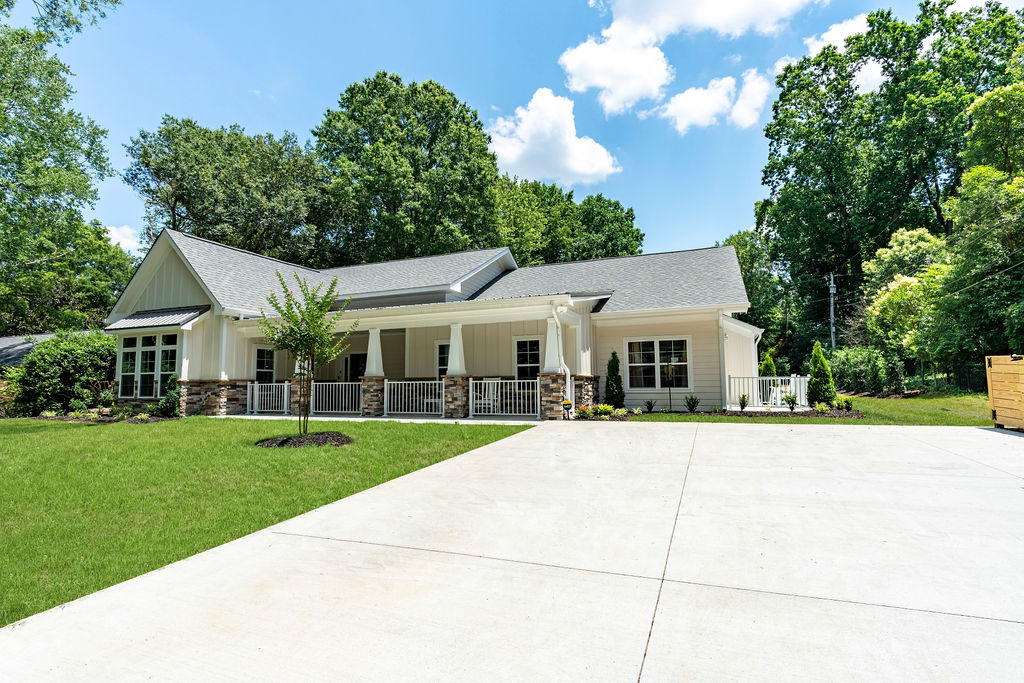
back covered porch Charlotte care home

Memory Care vs. Skilled Nursing: What’s the Difference?

One of the most common questions families ask me is:

“As my mom’s dementia progresses, will she eventually have to move to a skilled nursing facility?”

It makes complete sense that families assume the answer is yes. We tend to picture senior care as a ladder: home, then assisted living or memory care, then skilled nursing, as though skilled nursing is simply the final stage of dementia.

But that is not how dementia care necessarily works.

Understanding memory care vs. skilled nursing is less about how advanced someone’s dementia is and more about what kind of care that person actually needs. Many people living with dementia need increasing help with bathing, dressing, toileting, eating, mobility, transfers, medications, safety, and supervision without necessarily needing the type of daily skilled nursing or rehabilitation services associated with a skilled nursing facility.

That distinction can bring families a tremendous amount of relief. It also helps them ask a much better question: not “What comes after memory care?” but “What setting can safely meet Mom’s needs now?”

Memory Care vs. Skilled Nursing: The Simplest Way to Think About It

At a high level, memory care is designed around the daily needs of someone living with cognitive impairment. Skilled nursing is centered on medical or rehabilitative needs that require skilled nursing or therapy services.

That sounds simple, but the terminology gets confusing because people often use “skilled nursing,” “nursing home,” “rehab,” and “long-term care” interchangeably.

Medicare describes skilled care as nursing or therapy care that must be safely and effectively performed by, or under the supervision of, professional or technical personnel. Medicare-covered skilled nursing facility care is generally short-term and may follow a hospitalization when someone needs daily skilled nursing or rehabilitation. Medicare’s skilled nursing facility guidance is a helpful resource for understanding the federal coverage rules.

Nursing homes can also provide long-term custodial care, which is different from a Medicare-covered short-term skilled nursing stay. That is why families should ask exactly what someone means when they recommend “skilled nursing.” Are they talking about short-term rehabilitation after a hospitalization? A specific skilled medical need? Or long-term nursing-home care?

The label matters less than the actual need.

Dementia Does Not Automatically Mean Skilled Nursing

This is the misconception I most want families to understand.

Dementia can become very advanced without automatically creating a need for skilled nursing.

Someone may eventually need extensive hands-on help. They may need assistance getting out of bed, transferring to a wheelchair, bathing, dressing, toileting, eating, or taking medications. They may need someone nearby because they no longer understand their own safety limitations.

Those are substantial care needs. But substantial does not always mean skilled.

Needing more help with daily life is not the same thing as needing a medical setting.

I think this distinction matters because families sometimes begin searching for a nursing home simply because Mom can no longer walk independently or Dad needs help with almost every activity of daily living. Depending on the person’s complete clinical picture and the capabilities and licensing of the setting, those needs may still be manageable in assisted living specializing in dementia care.

What If My Loved One Uses a Wheelchair or Needs Help With Transfers?

Wheelchairs are one of the most common sources of confusion.

A family will say, “Mom is becoming wheelchair-dependent, so I assume we’re getting close to skilled nursing.”

Not necessarily.

A wheelchair tells me something important about mobility. It does not, by itself, tell me that someone requires skilled nursing.

The same is true of needing help with:

·        walking or mobility

·        bathing and grooming

·        dressing

·        toileting

·        eating and cueing at meals

·        transfers

·        medication management

·        supervision because of dementia-related safety risks

These needs can be significant and labor-intensive. The real question is whether the care setting has the staffing, training, equipment, licensing, and clinical oversight to manage them safely.

This is one reason I encourage families to ask communities what they can actually handle rather than assuming that a particular diagnosis, wheelchair, or level of assistance automatically determines the setting.

When Skilled Nursing May Be the Right Choice

There are absolutely situations in which skilled nursing is appropriate.

A person may need a skilled nursing facility for short-term rehabilitation or daily skilled services after a hospitalization. Depending on the situation, examples can include:

·        skilled rehabilitation after an illness, injury, or surgery

·        IV medications or other skilled treatments

·        complex wound care

·        skilled nursing observation and management of a medical condition

·        physical, occupational, or speech therapy that requires skilled services

Some people also live in nursing facilities long-term because their overall medical and functional needs exceed what can safely be supported in an assisted living environment.

The important point is that the decision should be driven by the person’s actual medical, nursing, rehabilitative, functional, and safety needs—not by dementia alone.

And because state licensing rules and individual facility capabilities vary, families should always ask the person’s physician and the prospective care setting whether the specific needs can safely be managed there.

What About Hospice?

This is where another misconception often appears.

Families sometimes assume there is a predictable progression:

Memory care → skilled nursing → hospice.

But hospice is not a building or a required next level of residential care. Hospice is a specialized service focused on comfort and quality of life for people who meet eligibility criteria.

When appropriate, hospice can often come to a resident where they already live, including an assisted living setting. Hospice nurses and other hospice professionals can work alongside the existing caregiving team.

That can be incredibly meaningful for someone with dementia. Instead of introducing another major move at the end of life, the person may be able to remain in a familiar room, with familiar routines and caregivers who already know how they take their coffee, what music calms them, how they communicate discomfort, and what makes them feel safe.

End of life does not automatically mean a person with dementia has to leave the place that has become home.

A Question Families Often Ask Me: “Can You Keep Mom Through the End of Her Life?”

When families ask me this, I understand what they are really asking.

They are not usually asking for a technical explanation of licensing categories. They are asking, “If Mom gets weaker, stops walking, needs more help, or eventually goes on hospice, are we going to have to uproot her again?”

My answer is that our goal is continuity whenever we can safely provide it.

Dementia is progressive. We expect care needs to change. A person should not become a surprise to us simply because she needs more help six months or two years after moving in.

There can always be a medical development that changes what is appropriate, and no responsible care provider should promise that every conceivable medical need can be managed in an assisted living setting.

But becoming more dependent because dementia has progressed is not, by itself, the same thing as developing a skilled nursing need.

How We Think About This at The Sanctuary

At The Sanctuary, we are licensed assisted living homes specializing in dementia care. We are not skilled nursing facilities.

That distinction is important, and we are very transparent about it.

At the same time, our model is built around the reality that dementia care needs change. Residents do not stay at exactly the same level forever. Our team expects to assist with increasing personal care needs, mobility changes, cueing, medication management, eating, toileting, transfers, and the behavioral and communication changes that can accompany dementia.

When someone is considering a move to The Sanctuary, our RN conducts an assessment to determine whether we are an appropriate fit. If needs change later, we look at the actual change and ask whether we can continue to care for the person safely within our setting and license.

If hospice becomes appropriate, hospice can often add another layer of clinical and comfort-focused support while our caregivers continue providing the familiar daily care and relationships the resident already knows.

To me, the goal is not to keep someone in a particular setting at all costs. The goal is to avoid unnecessary moves while also being honest about what level of care the person truly needs.

How to Know Which Setting Your Loved One Needs

If you are trying to decide between memory care and skilled nursing, start with needs rather than labels.

Ask:

·        What specific care does my loved one need today?

·        Which of those needs are personal care needs, and which require skilled nursing or skilled therapy?

·        Is this a short-term need after a hospitalization or a long-term change?

·        Can the assisted living or memory care setting safely manage mobility, transfers, toileting, eating, medications, and dementia-related behaviors?

·        What would cause the community to say my loved one needs a higher level of care?

·        If hospice becomes appropriate, can hospice services be provided in the current setting?

·        Who will reassess my loved one as needs change?

Those questions will usually tell you far more than asking whether Mom is “advanced enough” for skilled nursing.

One Thing I’d Tell My Own Family

If I ever have dementia, I hope you won’t move me simply because I’ve become more dependent.

If I need help getting dressed, help eating, a wheelchair, or someone beside me when I walk, please don’t assume that means I need to live in a medical environment.

Look at what I actually need.

And if I do develop a medical need that truly requires skilled nursing, then choose it because it is the right care for me—not because you thought skilled nursing was simply the inevitable final stop after memory care.

I would want the fewest unnecessary transitions possible, especially once familiar people and routines become more important to me than ever.

Key Takeaways

·        Memory care and skilled nursing serve different needs: dementia-focused daily support versus skilled medical or rehabilitative care.

·        Advanced dementia does not automatically mean someone needs skilled nursing.

·        Using a wheelchair or needing extensive help with bathing, dressing, toileting, eating, or transfers does not by itself determine the need for skilled nursing.

·        Skilled nursing may be appropriate when a person needs daily skilled nursing, skilled therapy, rehabilitation, or medical services that cannot safely be provided in assisted living.

·        Hospice can often provide services where a person already lives, allowing continuity of familiar caregivers and surroundings.

·        The right setting should be based on the person’s actual needs and the capabilities and licensing of the care provider—not on a presumed progression from memory care to skilled nursing.

Frequently Asked Questions

Does everyone with dementia eventually need skilled nursing?

No. Dementia can become advanced without automatically creating a skilled nursing need. Some people remain in assisted living or memory care through the end of life, sometimes with hospice support, as long as the setting can safely meet their needs.

What is the main difference between memory care and skilled nursing?

Memory care focuses on supporting people with cognitive impairment through personal care, supervision, structure, safety, dementia-informed communication, and daily routines. Skilled nursing provides nursing or rehabilitative services that require skilled clinical personnel or supervision.

Does using a wheelchair mean my parent needs skilled nursing?

Not by itself. A wheelchair is a mobility need. The appropriate setting depends on the person’s complete care needs and whether the community can safely assist with transfers, mobility, personal care, and other needs within its licensing and capabilities.

Can someone receive hospice in memory care or assisted living?

Often, yes. Hospice providers can frequently come into an assisted living or memory care setting and work alongside the existing caregiving team when the resident is eligible and the setting can continue to meet the person’s needs.

Is a skilled nursing facility the same thing as a nursing home?

The terms overlap but are not identical. Skilled nursing facility care often refers to skilled nursing or rehabilitation, frequently on a short-term basis after hospitalization. Nursing homes can also provide long-term custodial care. Ask exactly what type of care is being recommended and why.

Will Medicare pay for skilled nursing?

Medicare Part A may cover eligible skilled nursing facility care for a limited time when specific requirements are met. Medicare does not generally cover long-term custodial nursing-home care when that is the only care needed. Families should confirm coverage for their individual situation directly with Medicare or their health plan.

You May Also Find These Helpful

Helping New Residents with Dementia Adjust to Their New Home

The transition into dementia care is often more frightening for families in anticipation than it is for the resident once familiar routines and relationships begin to form. Read this for practical ways a thoughtful care team can make a new environment feel safe and familiar.

How We Approach Challenging Behaviors

Behaviors such as agitation, wandering, resistance to care, and anxiety do not automatically mean someone needs a more medical setting. Read this to understand why looking for triggers, unmet needs, and individualized responses can change the care experience.

Why a Small Boutique Memory Care Facility Is Better for People with Dementia

The size of a building tells you very little about how much care a resident actually receives. Read this for a closer look at how staffing, consistency, familiarity, and a residential environment can shape daily life for someone with dementia.

Have Questions About Your Loved One?

If you’re trying to understand whether assisted living specializing in dementia care or skilled nursing is appropriate for your loved one, contact The Sanctuary. We’re happy to talk through what you’re seeing and the questions worth asking.

Memory Care vs. Skilled Nursing: What’s the Difference?

How We Approach Challenging Behaviors

“They keep telling me my dad is problematic.”

I hear some version of that sentence surprisingly often from families looking for dementia care.

Sometimes the behavior is wandering. Sometimes it is agitation, resistance to showering, repeatedly asking to go home, entering another resident’s room, yelling, or refusing a meal.

But before I decide that a person has a “challenging behavior,” I want to know something much more useful:

What actually happened?

That question is at the heart of how we approach challenging behaviors in dementia. Because behavior is rarely random. Very often, it is communication from someone who may no longer have the language, memory, judgment, or ability to tell us clearly what is wrong.

Challenging Behaviors in Dementia Are Often Communication

Imagine someone you do not recognize walks into your bedroom and tells you it is time to take off your clothes and get into the shower.

If you have dementia, you may not remember that this person helped you yesterday. You may not understand why they are in your room. You may genuinely believe a stranger is trying to undress you.

If you push the person away, is that aggression? Or are you frightened?

The answer matters.

The same is true when someone refuses food, paces the house, calls repeatedly for a spouse who died years ago, or insists that they need to leave for work.

When language and reasoning change, behavior can become one of the clearest ways a person communicates discomfort, fear, boredom, pain, hunger, overstimulation, loneliness, or a need for purpose.

The Alzheimer’s Association notes that behavioral changes can have many causes, including physical discomfort, environmental factors, and communication problems. That is why a sudden or significant change should never simply be dismissed as “the dementia.”

Start With the Story, Not the Label

I recently spoke with a son whose father was being described as wandering and exit-seeking in a larger facility.

When I asked what that actually meant, the story became much more interesting.

His father sometimes walked into other residents’ rooms because he was confused about where he was. And when staff called him “exit-seeking,” what he was actually doing was walking to the front desk and saying he was ready to check out and go home.

He believed he was in a hotel.

Within his reality, his behavior made perfect sense.

That does not mean we ignore safety. It means the response should begin with understanding.

Instead of simply documenting “exit-seeking,” I want to know: What does he believe is happening? What time of day does this occur? What happened immediately before it? What does he seem to be trying to accomplish? What response helps?

Those details turn a label into information we can actually use.

Before Asking “How Do We Stop It?” Ask “Why Is It Happening?”

Families naturally want difficult behaviors to stop. Caregivers do too.

But the fastest route to a calmer resident is often not controlling the behavior. It is identifying the need underneath it.

A few possibilities we think about include:

·        Pain or physical discomfort

·        Hunger or thirst

·        Needing the bathroom

·        Fatigue or disrupted sleep

·        Fear or confusion

·        Too much noise or stimulation

·        Boredom or lack of purpose

·        A change in routine

·        An unfamiliar caregiver

·        Medication effects or a new medical problem

·        Trying to follow an old lifelong routine

If someone who is normally calm suddenly becomes agitated or confused, that deserves particular attention. A new behavior can sometimes signal pain, infection, medication effects, constipation, dehydration, or another medical issue that needs evaluation.

Not every behavior has a simple answer. But “Why?” is almost always a better starting point than “How do we make this stop?”

Why Correcting Someone With Dementia Often Makes Things Worse

Suppose Dad believes he needs to leave because he has to pick his children up from school.

You can tell him his children are adults. You can remind him that he is 88. You can explain that he no longer drives.

You may be factually correct.

But you have not solved the problem he believes he has.

In his mind, his children are waiting.

That is why validation and redirection can be so effective. A caregiver might acknowledge the urgency—“You want to make sure the kids are okay”—and then walk with him, offer a snack, ask him about his children, or gently redirect him toward something familiar.

We are not trying to win an argument. We are trying to reduce distress while preserving dignity.

Resistance to Care Is Often About Trust

Personal care is another area where families frequently hear that a loved one is “refusing.”

But imagine how intimate a shower, toileting, dressing, or changing clothes becomes when you do not recognize the person helping you.

This is one reason caregiver consistency matters so much in dementia care.

The caregiver who knows that Helen prefers her shower after breakfast, likes the bathroom warm, becomes embarrassed if she feels rushed, and responds better when given a choice between two outfits has a tremendous advantage over someone meeting Helen for the first time.

Sometimes the answer is simply to try again later.

Sometimes a different caregiver has better rapport. Sometimes the resident needs reassurance, privacy, music, a warmer room, or more time.

“She refused” should not automatically be the end of the conversation.

Environment Can Create—or Reduce—Behavior

We also have to look at what we are asking the person with dementia to navigate.

A large building with long hallways, elevators, unfamiliar faces, alarms, crowded dining rooms, and constant activity may be manageable for many people. For someone with dementia, it can also create confusion and overstimulation.

A quieter residential environment does not eliminate dementia behaviors. Nothing does.

But when the physical environment is intuitive, the routine is predictable, and the people are familiar, there are fewer things for the brain to constantly interpret.

Sometimes what looks like a resident problem is partly an environment problem.

Enough Caregivers Changes What Is Possible

A compassionate approach to challenging behaviors also requires time.

If a resident refuses a shower at 8:00 a.m., can someone come back at 9:30? If Dad is pacing because he thinks he needs to leave, can a caregiver walk with him for ten minutes and figure out where he believes he is going? If Mom will eat when someone sits beside her and cues each bite, is there actually someone available to do that?

Those are not just training questions. They are staffing questions.

You can have a wonderful caregiver with excellent instincts, but if that person is responsible for too many residents at once, patience and individualized redirection become much harder.

Good dementia care requires both knowing what to do and having enough time to do it.

Medication Has a Role—but It Shouldn’t Replace Understanding

Medication can be appropriate and important in dementia care. There are situations where anxiety, depression, psychosis, agitation, sleep disturbance, or another condition needs clinical treatment.

But medication should not become a substitute for asking what is causing distress.

If someone is agitated because she is in pain, frightened by an unfamiliar caregiver, desperately needs the bathroom, or is overwhelmed by noise, sedation does not address the underlying problem.

We believe behavioral changes should be considered in context, with the care team, family, nurses, and medical providers sharing what they are seeing. Medication decisions belong with the appropriate prescribing clinician, while caregivers provide the day-to-day observations that make those decisions more informed.

How We Think About Challenging Behaviors at The Sanctuary

Families sometimes come to us after being told their loved one is “too difficult.”

That phrase always makes me curious.

It does not mean every person will be appropriate for our homes. Our RN assesses prospective residents carefully, and safety matters for everyone living and working in the home.

But before we decide a behavior defines someone, we want to understand it.

Our approach is usually some combination of:

·        Learn the resident’s history, routines, preferences, and triggers.

·        Use consistent caregivers so trust has time to develop.

·        Look for physical or medical causes when behavior changes.

·        Reduce unnecessary stimulation and confusion.

·        Validate emotion rather than repeatedly correcting facts.

·        Redirect toward something familiar, purposeful, or comforting.

·        Adjust the timing or approach to personal care when possible.

·        Keep families involved because they often know what a behavior means better than anyone.

·        Use medication thoughtfully with the resident’s clinical providers when it is truly indicated.

And sometimes the most useful intervention is remarkably ordinary: sit down. Have coffee. Walk outside. Fold towels together. Put on a favorite song. Give the person a few minutes and try again.

The goal is not a perfectly compliant resident. The goal is a person who feels as safe, understood, comfortable, and dignified as possible.

What Families Should Ask When a Facility Reports a Behavior

If you are told that your parent is having challenging behaviors, ask for specifics:

·        What exactly happened?

·        What was happening immediately before it?

·        Is this new, or is there a pattern?

·        Does it happen at a particular time of day?

·        Could pain, hunger, toileting, fatigue, illness, or medication be contributing?

·        Who was providing care at the time?

·        What did the caregiver try?

·        What helped?

·        What made it worse?

·        What is the plan if it happens again?

Those questions are not about blaming caregivers. Dementia can be genuinely difficult, unpredictable, and sometimes unsafe.

They are about making sure everyone is learning from what happened instead of simply adding another label to the chart.

One Thing I’d Tell My Own Family

If I ever have dementia and someone tells you I’m being difficult, please ask them what I actually did.

If I suddenly refuse a shower, wonder whether I am scared.

If I keep trying to leave, ask where I think I need to go.

If I become agitated, make sure I am not hurting.

If I say no, remember that there may still be a reason—even if I can no longer explain it.

Please don’t reduce me to my hardest moment.

And please find people who are willing to be curious about me before they decide I am the problem.

Key Takeaways

·        Challenging behaviors in dementia are often a form of communication rather than random misbehavior.

·        Specific descriptions are more useful than labels such as “aggressive,” “difficult,” “wandering,” or “refusing care.”

·        Pain, illness, hunger, toileting needs, fear, fatigue, overstimulation, boredom, routine changes, and unfamiliar caregivers can all contribute to behavior.

·        Validation and gentle redirection are often more effective than arguing about facts.

·        Consistent caregivers, adequate staffing, and a calm environment make individualized responses more possible.

·        Sudden behavioral changes deserve attention because a medical or physical issue may be contributing.

·        The goal is not perfect compliance. It is safety, dignity, comfort, and understanding.

Frequently Asked Questions

What are challenging behaviors in dementia?

The term can include agitation, aggression, wandering, exit seeking, resistance to personal care, repetitive questions, yelling, sleep disruption, or other actions that create distress or safety concerns. The most useful next step is to describe exactly what is happening rather than relying on the label.

Why do people with dementia become agitated or aggressive?

There is no single cause. Fear, confusion, pain, illness, hunger, fatigue, overstimulation, communication difficulty, medication effects, or an unmet need can all contribute. A sudden change should be discussed with the person’s clinical team.

What should you do when someone with dementia refuses care?

First consider why the person may be resisting. Slow down, reduce pressure, offer simple choices, use a familiar caregiver when possible, and consider trying again at a different time. If resistance is new or severe, look for pain, illness, or another change.

Should you correct someone with dementia when they are confused?

Not always. Repeated factual correction can increase distress when the person cannot retain or accept the information. Acknowledging the emotion and gently redirecting is often more helpful.

Does wandering mean someone is trying to escape?

No. Wandering and exit seeking are not always the same. A person may be walking because of habit, restlessness, boredom, anxiety, or because they believe they need to accomplish something.

Can medication help challenging dementia behaviors?

Sometimes. Medication may be appropriate for certain symptoms or conditions, but decisions should be made by the person’s qualified clinician. Non-medication factors such as pain, environment, routine, communication, and unmet needs should also be considered.

You May Also Find These Helpful

Why People with Dementia Wander (and Why It Isn’t the Same as Exit Seeking)

Walking often has a purpose that makes complete sense to the person with dementia. Read this to understand the difference between wandering and exit seeking and why the distinction changes how caregivers respond.

Helping New Residents with Dementia Adjust to Their New Home

A new environment can temporarily increase confusion, anxiety, resistance, or attempts to leave. Read this for practical ways familiarity, consistent caregivers, routines, and personalized attention can make a transition easier.

10 Questions to Ask When Touring a Memory Care Facility

The way a community responds to difficult moments tells you far more than a beautiful lobby. Read this for the questions that help reveal staffing, consistency, personalization, communication, and the reality of daily dementia care.

Have Questions About Your Loved One?


If you’re trying to understand a change in behavior or looking for dementia care in Charlotte, contact The Sanctuary. We’re happy to talk through what you’re seeing and the questions worth asking.

The Reality of Dementia Home Care: When Staying Home Stops Working

One of the most common things families tell me is, “We want to keep Mom at home as long as possible.” I understand that completely. Home is familiar. It holds routines, memories, favorite chairs, neighbors, and a sense of independence. And for many families, dementia home care can work very well for a period of time. But as dementia progresses, the question eventually has to become more specific: Is home still providing the safest, most consistent, and most meaningful daily life—or are we preserving the address after the care arrangement itself has stopped working?

That distinction matters because dementia care at home is not simply a matter of hiring someone to sit with a parent or spouse. As needs increase, families can find themselves managing staffing, supervision, medications, meals, personal care, safety modifications, activities, nighttime needs, and backup coverage. In practice, the family often becomes the care manager.

This is not an argument that everyone with dementia should move into residential care. It is an argument for looking honestly at what the person’s day actually looks like—and at whether the system supporting that day is still sustainable.

Dementia Home Care Can Work—Until the Needs Outgrow the System

There are real advantages to remaining at home. The environment is familiar, routines can be highly individualized, and one-on-one care may be possible. The Alzheimer’s Association notes that in-home services can include companionship, personal care, homemaking help, and skilled services, depending on what a person needs.

For families considering this route, the Alzheimer’s Association’s guide to in-home care is a useful starting point for understanding the different kinds of support available.

The difficulty is that dementia is progressive. A care arrangement that worked beautifully when someone needed a few hours of help may become fragile when that person begins wandering, needs hands-on toileting assistance, wakes repeatedly at night, resists care, stops eating without cueing, or can no longer safely be left alone.

The question is not whether home care is good or bad. The question is whether the version of home care you can realistically provide still matches the person’s current needs.

Caregiver Consistency Is Harder Than It Looks

Consistency matters enormously in dementia care. A familiar caregiver learns much more than a task list. She learns how your mother likes to be approached in the morning, which words make a shower feel less threatening, what foods she will accept when she says she is not hungry, and how to tell the difference between fatigue, pain, anxiety, and simple frustration.

At home, maintaining that consistency can be difficult. A caregiver gets sick. Someone goes on vacation. An aide quits. An agency sends a substitute who has never met your parent. For a cognitively intact person, that may be an inconvenience. For someone with dementia, an unfamiliar person suddenly entering the home and attempting intimate personal care can be confusing or frightening.

When evaluating a provider, the Alzheimer’s Association specifically recommends asking what happens if a caregiver is sick, on vacation, or quits. That backup plan is not a minor operational detail; it is part of the care plan.

The Family Often Becomes the Staffing Department

This is one of the least discussed parts of dementia home care. Even when a family uses an agency, someone still has to notice that the Tuesday caregiver did not arrive, communicate changes in medications, explain new behaviors, arrange coverage, stock groceries, coordinate appointments, and decide what to do when the existing schedule is no longer enough.

If there are gaps in coverage, the responsibility usually falls back to a spouse or adult child. Families sometimes tell themselves they have “24-hour care” when what they really have is a combination of paid caregivers, family members, cameras, neighbors, and hope that nothing goes wrong during the uncovered periods.

That arrangement may be workable. But it should be named accurately. A care plan is only as strong as its weakest shift.

Safety at Home Changes as Dementia Changes

Familiarity does not automatically make a home safe. Dementia can affect judgment, balance, depth perception, sense of time and place, medication management, and the ability to recognize hazards. A staircase that was never a problem may become one. A stove may be left on. A person may walk out a familiar front door and become unable to find the way back.

The Alzheimer’s Association home-safety guidance recommends reassessing the environment as abilities change, including lighting, locks, medications, tripping hazards, bathrooms, kitchens, and other areas of the home.

Families who want to extend the time at home can often do a great deal to improve safety: remove tripping hazards, add grab bars and better lighting, secure medications, rethink door access, reduce clutter, and create more predictable routines. But environmental changes do not replace supervision when supervision has become necessary.

Meaningful Engagement Is Part of Care

A person can be clean, fed, medicated, and physically safe—and still have a very empty day. This is one of the reasons I encourage families to look beyond the checklist of physical tasks.

What happens between breakfast and dinner? Who initiates conversation? Who gets Dad outside? Who notices that Mom lights up when music comes on? Who invites her to fold towels, water plants, look through photographs, walk to the mailbox, help prepare lunch, or simply sit with another person?

The Alzheimer’s Association recommends planned daily routines and activities that provide meaning and enjoyment. That kind of engagement does not need to look like nonstop entertainment. In fact, it should not. People need rest and quiet too. The goal is a day with human connection, movement, purpose, and opportunities to participate—not a schedule packed from morning to night.

At home, a wonderful caregiver may create that kind of day naturally. But not every paid caregiver is trained or inclined to do so. Some understandably focus on the required tasks. If most of the day has gradually become television and waiting, it is worth asking whether the care plan is meeting the whole person’s needs.

The Cost of Dementia Home Care Is More Than the Hourly Rate

Families often begin home care with a manageable number of paid hours. The financial picture changes as supervision needs expand. Rather than relying on a single hourly-rate estimate—which varies substantially by market, agency, shift length, and level of care—I think families should calculate the actual monthly cost of the schedule they are likely to need six or twelve months from now.

Include more than the agency invoice:

·        Paid caregiver hours, including nights and weekends if needed

·        Backup coverage when the regular caregiver is unavailable

·        Home modifications and safety equipment

·        Transportation and appointment support

·        Household management and meal preparation

·        Supplies related to incontinence or mobility

·        The unpaid time provided by family members

·        Lost work time or other responsibilities absorbed by the primary family caregiver

This does not mean residential care is inexpensive. It means the comparison should be apples to apples. Compare the full care system required in each setting, not a few hours of home care against the monthly price of comprehensive residential care.

Caregiver Capacity Is Part of the Care Plan

Sometimes the person with dementia is doing reasonably well at home, but the spouse providing the care is not. That matters.

A spouse who is no longer sleeping, cannot safely assist with transfers, is afraid to leave the house, or has become socially isolated is giving us important information about the sustainability of the plan. The same is true for an adult child whose work, marriage, health, or parenting responsibilities are being consumed by constant care coordination.

The caregiver’s well-being is not a selfish consideration added after the “real” needs are addressed. Caregiver capacity is one of the resources the entire home-care system depends upon.

How to Know When Dementia Home Care May No Longer Be Enough

There is rarely one dramatic sign. More often, families see a pattern. Consider reassessing the arrangement when:

·        The person can no longer safely be left alone for meaningful periods of time.

·        Wandering, falls, unsafe cooking, medication errors, or nighttime activity are increasing.

·        Personal-care needs are becoming physically difficult for family or caregivers to manage.

·        Caregiver call-outs or turnover are creating frequent gaps and unfamiliar substitutes.

·        The person is increasingly isolated or spends most of the day passively watching television.

·        Nutrition or hydration depends on more cueing and supervision than the current plan provides.

·        A spouse or adult child is becoming exhausted, frightened, resentful, or physically unable to continue.

·        The family is repeatedly adding more pieces to the system but the overall arrangement still feels fragile.

The Alzheimer’s Association notes that there may come a time when a person needs more care than can be provided at home and recommends considering safety, caregiver health, physical care demands, and whether greater structure and social interaction would help. Its long-term care guidance provides a useful framework for that decision.

How We Think About Dementia Home Care at The Sanctuary

At The Sanctuary, our assisted living homes in Charlotte specialize in caring for people living with dementia. We intentionally use a small residential model because we believe many people benefit from the familiarity of a home-like environment while also having a consistent care team, structured support, meals, medication management, activities, and supervision built into the day.

But our view is not that home care is inherently inferior. If someone is safe, engaged, well supported, and the family has a sustainable care system, staying at home may be exactly the right choice.

The point at which families often struggle is when the desire to remain home becomes the goal in itself. At that point, it can help to replace “Can we keep doing this?” with a better question: “Is this still the best daily life we can reasonably create?”

If You Want to Keep a Loved One at Home Longer

A few practical steps can make dementia home care stronger and help families evaluate it more objectively:

1.        Write down the actual supervision and personal-care needs rather than relying on a general sense that things are “mostly okay.”

2.        Create a backup staffing plan before the regular caregiver calls out.

3.        Conduct a dementia-specific home-safety review and repeat it as abilities change.

4.        Build predictable daily routines around waking, meals, personal care, movement, rest, and bedtime.

5.        Plan meaningful engagement and social contact rather than assuming it will happen spontaneously.

6.        Track nutrition, hydration, falls, nighttime waking, wandering, and other changes that may signal increasing needs.

7.        Be candid about the primary caregiver’s physical and emotional capacity.

8.        Set a date to reassess the arrangement—even if there is no crisis.

That last step is especially important. Without a planned reassessment, families can adapt to one small decline after another until a care arrangement that once made sense has become unrecognizable.

Key Takeaways

·        Dementia home care can be an excellent option when the person is safe, engaged, well supported, and the care system is sustainable.

·        As dementia progresses, families often take on the hidden role of staffing coordinator and care manager.

·        Consistency matters; backup coverage and caregiver turnover can have an outsized impact on a person with dementia.

·        Home safety must be reassessed as judgment, mobility, wandering risk, and supervision needs change.

·        Meaningful engagement and human connection are part of quality dementia care, not optional extras.

·        Compare the full cost and workload of the care system—not just an hourly home-care rate.

·        The health and capacity of the family caregiver are legitimate parts of the decision.

·        The goal should not be staying home at all costs. The goal should be the best realistic daily life for the person and family.

Frequently Asked Questions

Is home care good for someone with dementia?

It can be. Home care may work very well when the person is safe, has reliable supervision, receives appropriate personal and medical support, remains meaningfully engaged, and the family can sustain the arrangement. The fit should be reassessed as dementia progresses.

When does someone with dementia need 24-hour supervision?

There is no single stage or symptom that applies to everyone. Families should look at whether the person can safely be alone, manage basic needs, respond appropriately in an emergency, avoid wandering or other hazards, and reliably take medications. A clinician or dementia-care professional can help assess changing supervision needs.

How can I make dementia care at home safer?

Start with a dementia-specific safety assessment. Common areas to review include medications, kitchens, bathrooms, lighting, stairs, tripping hazards, door security, emergency planning, and wandering risk. Reassess regularly because abilities change over time.

How do I know when home care is no longer working?

Look for patterns rather than waiting for one dramatic event: increasing safety incidents, caregiver gaps, nighttime needs, poor nutrition, isolation, repeated crises, or a family caregiver who is becoming physically or emotionally unable to continue. If the system feels increasingly fragile despite adding more support, it is reasonable to explore alternatives.

You May Also Find These Helpful

Being at Home Is Not the Same as Having Quality of Life — A closer look at why the location of care does not tell us what someone’s day actually feels like.

You Can’t Optimize for Everything When Choosing Dementia Care — How to identify the priorities that matter most when every care option involves trade-offs.

Waiting Too Long to Move a Loved One With Dementia: The Biggest Mistake Families Make — Why waiting for a crisis can narrow choices and make a difficult transition harder.

Wondering Whether Home Care Is Still Working?

If you are trying to decide whether your current care arrangement is still meeting your loved one’s needs, you do not have to wait for a crisis to start asking questions. Contact The Sanctuary if you would like to talk through your situation or learn more about our small residential approach to dementia care.


10 Questions to Ask When Touring a Memory Care Facility

Families often walk into a memory care tour looking at the wrong things.

They notice the chandelier. The dining room. The size of the apartment. The activity calendar. Maybe they ask what time meals are served or whether there is transportation to appointments.

Those things aren’t irrelevant. But after years of talking with families – including many who are looking for a new community because the first one didn’t work – I’ve learned that the questions that matter most are usually much less glamorous.

Who will actually be with Mom at 7:30 in the morning when she refuses to shower?

Who notices that Dad’s lunch is still sitting untouched in front of him?

If Mom says no the first time a caregiver offers help, does someone have enough time to come back 20 minutes later and try a different approach?

And when something changes, will you know about it?

If you’re wondering what questions to ask when touring a memory care facility, I would focus less on what the community promises and more on what daily life actually looks like. A beautiful building can tell you very little about the quality of dementia care happening inside it.

Here are the 10 questions I would ask – and, just as importantly, what I would watch for while the person answering them is talking.

1. What Is the Caregiver-to-Resident Ratio?

If I could ask only one question on a memory care tour, this would probably be it.

Staffing affects almost everything else: whether someone can sit with your mother while she eats, whether a caregiver has time to redirect your father instead of rushing him, whether someone notices a subtle change, and whether personal care can happen according to the resident’s needs rather than the facility’s schedule.

But don’t stop when someone gives you a number. Ask what that ratio looks like during the hours your loved one will actually be awake. Ask whether the number includes nurses, administrators or activity staff who are not providing hands-on care. Ask about evenings, weekends and overnight staffing.

Then look around.

Are caregivers sitting with residents? Are they talking with them? Do they seem to have enough time to slow down? Or do they look like they are moving constantly from one task to the next?

At The Sanctuary, our six-resident homes generally have two caregivers during most waking hours – a 1:3 caregiver-to-resident ratio – and one caregiver overnight while residents are primarily sleeping. We designed the model this way because individualized dementia care requires time.

A ratio isn’t just a staffing statistic. It determines what care is actually possible.

2. Will My Parent See the Same Caregivers Consistently?

The second question I would ask is about consistency.

A facility can technically be fully staffed and still have residents encountering a revolving door of unfamiliar people. Ask whether caregivers are employees of the community, how frequently agency staff are used, how caregivers are assigned, and whether the same people routinely care for the same residents.

This matters tremendously in dementia.

Imagine waking up confused and having a stranger enter your bedroom and tell you it is time to take off your clothes and shower. Even without dementia, that would feel intrusive. With dementia, an unfamiliar caregiver can easily create fear, resistance or agitation.

The opposite is also true. A familiar caregiver learns that Dad showers more easily after breakfast. She knows which joke makes him laugh. She recognizes the look on his face before he becomes anxious. She knows how Mom takes her coffee and that mentioning her grandchildren will usually get her talking.

That relationship is not incidental to the care. It is part of the care.

We do not use staffing-agency caregivers at The Sanctuary. Our caregivers become deeply familiar with the residents they support. Over time, those relationships can become extraordinarily close. We have had caregivers attend residents’ funerals on their own time because the person they cared for had genuinely become part of their lives.

3. What Happens When My Loved One Doesn’t Follow the Schedule?

This question tells you a great deal about whether care is truly personalized.

People with dementia do not conveniently organize their needs around a staffing schedule.

One person may wake at 6:30 a.m. Another may sleep until 10. Someone may happily shower in the evening but become resistant when approached first thing in the morning. A resident may refuse breakfast at 8:00 and be hungry at 9:15.

So ask specific questions.

If Mom sleeps late, can she still get a hot breakfast? If Dad refuses his shower, what happens next? Does the caregiver document a refusal and move on, or does someone come back later, build rapport, change the approach and try again?

I hear versions of this complaint constantly from families: “They tell me Mom refused.”

Sometimes she did. But with dementia, a refusal at 8:05 does not necessarily mean a refusal at 8:30. It may mean the approach was wrong, the timing was wrong, the person was unfamiliar, or Mom simply needed a few minutes.

Personalized care requires flexibility. Flexibility requires enough staff to provide it.

4. What Dementia-Specific Training Do Caregivers Receive?

Memory care is not simply assisted living behind a secured door.

Ask what dementia-specific training caregivers receive initially and on an ongoing basis. More importantly, ask how that training changes what caregivers actually do.

How do they respond to someone who believes she needs to go home? What do they do when someone becomes frightened during personal care? How do they approach wandering, agitation, repeated questions or resistance?

The answer should involve more than “redirection.”

Good dementia care requires understanding that behavior often communicates something: fear, discomfort, confusion, boredom, hunger, overstimulation, a need for purpose, or a reality that makes perfect sense to the person experiencing it.

Caregivers need the skill – and the time – to figure out what may be underneath the behavior rather than simply trying to stop it.

5. What Does Engagement Look Like Outside the Activity Calendar?

I would absolutely look at the activity calendar. Then I would stop looking at it and watch the residents.

This is one of the most important things to observe when touring a memory care facility.

Are residents actually engaged?

Or are most people sitting alone while an impressive calendar hangs on the wall?

Many people with mid- to late-stage dementia no longer independently walk into an activity room, choose an activity and sustain their own participation. They need another person to initiate, cue, encourage and often stay beside them.

Meaningful engagement also shouldn’t exist only at 10:00 a.m. and 2:00 p.m.

It can be helping prepare vegetables at the kitchen counter. Folding towels. Watering plants. Sitting outside with a caregiver. Baking cookies. Listening to a favorite song. Looking through family photographs. Setting the table.

Some of the richest moments I’ve seen aren’t “activities” at all. They’re ordinary household life.

When you tour, ask yourself: If there were no scheduled activity happening right now, would these residents still have people spending meaningful time with them?

6. How Will I Know What’s Really Happening Day to Day?

Families often don’t think to ask this until communication has already become a problem.

Ask who you call when you have a concern. Ask whether you can speak directly with the people who know your parent. Ask how changes in eating, sleep, behavior, mobility or personal care are communicated.

And ask whether communication is only reactive.

Families should not have to discover a 15- or 20-pound weight loss before anyone can explain whether Mom is actually eating. They shouldn’t feel as though asking what happened during the week makes them “difficult.”

You cannot advocate effectively for someone when you don’t know what’s going on.

At The Sanctuary, families have direct access to our team, including management and nurses. We also believe communication should happen when things are going well – not only when there is an incident. Caring for someone with dementia works best when family and caregivers are sharing information in both directions.

7. How Are Care Plans Updated as Dementia Progresses?

Dementia changes.

A care plan that accurately described someone six months ago may not describe that person today.

Ask how often residents are reassessed and, more importantly, what triggers a change between formal assessments. Who notices that Dad is now having trouble using utensils? What happens when Mom starts waking at night? How is a new fall risk communicated? What if someone who once dressed independently now needs cueing?

The best answer is not simply, “We update the care plan quarterly.”

You want to understand how the team notices changes in real time and how those observations turn into different care.

At The Sanctuary, our nurses, caregivers, activity team and management all contribute observations because different people may notice different things. Formal care planning matters, but so does a culture in which a caregiver feels responsible for saying, “Something is different with Mary today.”

8. Does This Environment Actually Make Sense for Someone With Dementia?

Look beyond whether the building is beautiful.

Ask yourself whether it is intuitive.

Can your loved one understand where to go? Are there long corridors, elevators, multiple floors or enormous dining spaces to navigate? Does the environment feel noisy and stimulating? Is there a comfortable place to sit outside? Can someone naturally see the kitchen, living room and other people?

Over the years, we’ve cared for residents who were described as highly anxious or behaviorally difficult in larger settings and became dramatically calmer after moving into a smaller residential home.

I would never claim that the building alone explains that change. More attention, familiar caregivers, better communication and individualized routines all matter.

But environment matters too.

A person with dementia may not understand that she is in a “beautiful senior living community.” She may simply experience a confusing hallway, an elevator she doesn’t understand and a dining room full of unfamiliar faces.

We all intuitively know what a home feels like. For someone whose world is becoming harder to interpret, simplicity and familiarity can be incredibly valuable.

9. How Does Socialization Really Happen Here?

Families understandably worry about whether their loved one will have enough people around.

But more people do not automatically mean more connection.

Because dementia affects everyone differently, residents may not naturally develop deep friendships simply because dozens of other residents live in the same building. Some have aphasia. Some are physically limited. Some are socially outgoing but cannot follow a long conversation. Others prefer quieter interaction.

So ask who your parent will actually spend time with.

Watch whether caregivers know residents personally. Listen to how they speak to them. Notice whether family members seem comfortable in the space. Ask whether musicians, volunteers and other regular visitors get to know residents over time.

Meaningful socialization may be Mom talking with a caregiver over coffee, helping someone make lunch, singing with a musician who remembers her favorite song, or sitting beside another resident working on a puzzle.

Connection is not measured by how many people are in the building. It is measured by whether someone is known.

10. How Do You Manage Safety Without Making Life Feel Institutional?

Safety matters enormously in dementia care, but the answer should be more thoughtful than locked doors.

Ask how the community approaches falls, wandering, nighttime supervision, transfers and changes in mobility. Ask what happens when someone becomes a higher fall risk. Ask how quickly caregivers can respond when someone begins to stand or walk without assistance.

Then look at the environment itself. Are pathways clear? Are bathrooms designed with mobility and fall risk in mind? Can caregivers easily see residents in the common areas?

The best dementia care balances safety with dignity and ordinary life.

You want your loved one protected, but you also want her to live – to walk outside when appropriate, sit at the kitchen table, help bake something, listen to music, laugh with a caregiver and remain part of a household rather than feeling managed by a system.

The Most Important Part of a Memory Care Tour: Watch What Happens When Nobody Is Performing for You

After you’ve asked your 10 questions, stop talking for a few minutes.

Look around.

Sometimes what you observe tells you more than the answers.

·        Watch the caregivers. Are they sitting with residents, or constantly rushing? Do they speak warmly and naturally? Do they appear to know the residents?

·        Watch the residents. Are they engaged? Are people spending long stretches alone? Does anyone notice when a resident needs help?

·        Watch mealtime. Is food simply placed in front of residents, or does someone notice who needs cueing, encouragement or physical assistance?

·        Watch the environment. Does it feel calm and understandable, or noisy and confusing?

·        Watch how you feel. Could you imagine sitting here for several hours with someone you love, or do you immediately want to leave?

Trust your instincts – but give your instincts something substantive to observe.

How We Think About This at The Sanctuary

When families tour our homes in Charlotte, I don’t want them to choose us because the house is pretty.

I want them to understand what the care model makes possible.

Our small homes, high caregiver-to-resident ratio, consistent staff, dementia-specific experience and residential environment are all connected. You cannot promise truly individualized care if the caregiver responsible for providing it is stretched too thin. You cannot build deep trust if residents constantly encounter unfamiliar caregivers. You cannot personalize someone’s day if the entire operation depends on everyone doing the same thing at the same time.

That is why I think the best questions to ask when touring a memory care facility are really questions about ordinary moments.

Who notices?

Who has time?

Who knows my mother?

And what happens when her needs don’t fit neatly into the schedule?

Those answers tell you far more about the life your loved one will actually live than the brochure ever will.

Key Takeaways

·        The caregiver-to-resident ratio affects nearly every part of dementia care, but ask exactly who is included in the ratio and how staffing changes by shift.

·        Caregiver consistency matters because familiar people can reduce fear, improve communication and make intimate personal care easier.

·        Ask what happens when a resident refuses care or doesn’t follow the facility’s schedule; truly personalized care requires flexibility.

·        An activity calendar is not the same thing as engagement. Watch what residents are actually doing during your tour.

·        Families need direct, ongoing communication so they can understand changes and advocate for their loved one.

·        Look for an environment that is intuitive and calming for someone with dementia, not simply impressive to a visitor.

·        During a memory care tour, pay as much attention to what you observe as to what you’re told.

Frequently Asked Questions

What are the most important questions to ask when touring a memory care facility?

The most important questions cover caregiver-to-resident ratios, caregiver consistency, dementia-specific training, personalized schedules, engagement, communication with families, changing care needs, environment, socialization and safety. Ask for specific examples rather than accepting broad assurances.

What should I look for during a memory care tour?

Watch how caregivers interact with residents, whether residents are engaged, what happens during meals, whether staff appear rushed, and whether the environment feels calm and intuitive. The ordinary interactions happening around you can be more revealing than the formal tour.

What is a good caregiver-to-resident ratio in memory care?

There is no single number that guarantees good care, and staffing requirements vary by setting and jurisdiction. Ask for the actual hands-on caregiver ratio during waking hours, evenings, weekends and overnight, and ask whether the quoted number includes staff who are not routinely providing direct care.

Why does caregiver consistency matter in dementia care?

People with dementia can become confused or frightened by unfamiliar caregivers, particularly during intimate tasks such as bathing, dressing and toileting. Consistent caregivers also learn a resident’s routines, preferences, triggers and subtle changes over time.

How can I tell whether activities are truly personalized?

Don’t rely only on the calendar. Look for one-on-one cueing and spontaneous engagement throughout the day. Ask what happens if your parent cannot participate in a group activity or prefers cooking, gardening, music, walking or another familiar activity instead.

Should I bring my loved one with dementia on a memory care tour?

It depends on the person. If being included would feel reassuring and meaningful, bringing your loved one can preserve dignity and participation. If the tour is likely to cause significant anxiety or confusion before a decision has even been made, families may choose to tour first and involve the person later in a way that is less distressing.

You May Also Find These Helpful

How We Approach Challenging Behaviors

Behaviors such as wandering, agitation and resistance often make more sense when we stop viewing them simply as problems to control.

Read this to understand what a dementia-care team’s response to difficult moments can tell you about the quality of its care.

Helping New Residents with Dementia Adjust to Their New Home

The transition families fear is often made easier by familiar routines, favorite foods, consistent caregivers and purposeful engagement.

Read this if you’re wondering what good dementia care should look like during the first days and weeks after a move.

Preventing Falls in Memory Care: How We Keep Our Residents Safe

Fall prevention is not one piece of equipment or one policy; it depends on supervision, environment, individual risk and timely response.

Read this if falls are one of the reasons your family is beginning to consider memory care.

Have Questions About Choosing Memory Care?

If you’re comparing dementia-care options and want help thinking through what matters most for your loved one, contact The Sanctuary. We’re always happy to answer questions, even if you’re still early in your search.