Test

The Biggest Mistake Families Make: Waiting Too Long to Move a Loved One with Dementia

The Biggest Mistake Families Make: Waiting Too Long to Move a Loved One with Dementia

I understand why families wait.

Moving a loved one with dementia is emotional. It can feel like crossing a line you cannot uncross. Families worry that Mom will be angry, that Dad will feel abandoned, or that they are taking away independence before they absolutely have to.

So they tell themselves: “We’re not there yet.”

Sometimes they’re right. But after years of talking with families, I have come to believe that one of the biggest mistakes families make is waiting too long to move a loved one with dementia—not because there is a perfect moment to move, but because waiting until there is no other choice often means waiting for a crisis.

The goal is not to move someone earlier than necessary. The goal is to recognize when “waiting” has stopped preserving a good life and started increasing risk.

Why Families Wait Too Long to Move a Loved One with Dementia

Most families aren’t ignoring the problem. They’re trying very hard to do the loving thing.

Home is familiar. A move feels disruptive. A spouse may have promised years ago, “I’ll never put you somewhere.” An adult child may feel guilty because Mom insists she is fine. And dementia itself makes the decision harder because the person who needs more support may genuinely believe nothing is wrong.

Then there is the hope that one more intervention will buy more time: another caregiver, a few more hours of home care, a camera by the door, meals delivered, a neighbor checking in, a medication adjustment.

Sometimes those things help. But families can also become remarkably good at building an increasingly complicated system around a situation that is no longer working.

The question isn’t whether you can keep the system going another month. The question is whether the system is still safe, sustainable, and giving your loved one a good daily life.

The Problem With Waiting for a Crisis

The moment families finally feel 100% certain is often the moment something has already happened.

·        Mom wanders outside at night.

·        Dad falls and ends up in the hospital.

·        A spouse becomes physically unable to manage transfers or toileting.

·        Someone leaves the stove on or gets lost.

·        Weight loss becomes impossible to ignore.

·        A family caregiver becomes exhausted or ill.

·        A behavior escalates to the point that the current setting can no longer manage it.

At that point, the family isn’t thoughtfully comparing options anymore. They’re solving an emergency.

And emergencies have a way of making choices for us.

You may have fewer communities to choose from, less time to prepare your loved one, and less ability to wait for the setting you actually believe is the best fit.

That is one reason I encourage families to learn about care before they desperately need it. Researching early is not the same thing as deciding to move tomorrow.

Safety Usually Changes Before Families Feel Ready

I recently spoke with a daughter whose mother clearly needed more support. Her dementia had progressed, and one night she wandered outside into the backyard. Thankfully, her caregiver found her.

That kind of event changes the conversation.

It doesn’t mean the family failed. It means the balance has changed.

The difficult part is that Mom may still look like Mom. She may still have wonderful conversations. She may still dress herself some days, laugh at a joke, recognize her daughter, and insist that she does not need help.

Dementia is rarely a clean line between “independent” and “needs care.”

Someone can be capable in many ways and still be unsafe in one way that matters enormously.

Families sometimes wait because they are unconsciously looking for global incapacity: the point when their loved one can no longer do anything independently. But that is not the standard I would use.

I would ask whether the areas that are changing—judgment, orientation, medication management, nutrition, mobility, nighttime behavior, or safety awareness—have become significant enough that the current environment no longer reliably protects the person.

Earlier Doesn’t Mean Premature

Families sometimes hear “don’t wait too long” and imagine that the alternative is moving someone at the first sign of memory loss.

That’s not what I mean.

There is a wide space between an early diagnosis and a crisis.

The better time to move is often when the need for support has become clear but there is still enough stability to make the transition thoughtfully.

That can have real advantages. A person may still be able to participate in parts of the decision. Families can choose a community based on fit rather than immediate availability. Familiar belongings can be prepared. The care team can learn routines, preferences, favorite foods, interests, and triggers before a crisis complicates everything.

Moving before a crisis can actually preserve more dignity and choice—not less.

“But What If She Doesn’t Want to Move?”

This is often the hardest part.

A person with dementia may sincerely say, “I don’t need help. I want to stay home.”

Their feelings matter. Their dignity matters. Their preferences matter.

But there may come a point when the family member with legal and practical responsibility has to weigh those preferences alongside risks the person with dementia can no longer fully evaluate.

I often tell families to preserve meaningful choices wherever they can. Let Mom tour if doing so will not create unnecessary distress and she wants to participate. Ask which room she likes. Let her choose what photographs to bring, what chair goes by the window, or what she wants for breakfast.

But preserving autonomy does not always mean handing someone with impaired judgment responsibility for a decision whose consequences they may no longer understand.

Sometimes the loving role of a family member is to preserve as much choice as possible while still making the larger decision necessary for safety.

The Transition Families Fear Is Often Worse in Their Imagination

Another reason families wait is fear of the move itself.

They imagine their loved one sitting alone in an unfamiliar room, thinking all day about being homesick.

That image is emotionally powerful. It also isn’t necessarily what daily life looks like.

A good transition should be active and personal. There are meals, conversations, familiar music, time outside, activities, caregivers getting to know the person, and other people moving through the rhythms of an ordinary day.

A resident may absolutely ask to go home, particularly during the first days. But “I want to go home” in dementia can mean many things: I am tired. I am confused. I want something familiar. I don’t understand where I am. I want to feel safe.

It does not necessarily mean the move was a mistake.

For many families, the anticipation of the transition becomes more painful than the resident’s actual experience of settling in.

Look at the Whole Day, Not Just the Address

Staying at home sounds like preserving the status quo. But the status quo may already have changed.

Ask what your loved one’s actual day looks like.

·        How many hours is she alone or effectively alone?

·        Is she eating adequately without someone cueing or assisting her?

·        Is she still safely managing medications?

·        Is she sleeping at night or becoming disoriented?

·        Is she getting meaningful social interaction?

·        Is she bathing and changing clothes reliably?

·        Is she leaving the house or becoming lost?

·        Is her spouse or family caregiver exhausted?

·        Are you relying on an increasingly fragile patchwork of people and technology to keep things working?

Home can be wonderful when it is working.

But familiarity alone is not the same thing as quality of life.

Sometimes families are protecting the place their loved one lives while the life happening inside that place has become smaller, lonelier, or less safe.

A Question I Often Ask Families

When a family feels stuck, I sometimes ask:

“If nothing changes over the next six months, would you feel comfortable with that?”

It is a deceptively simple question.

If the answer is yes, perhaps waiting is reasonable.

But if the honest answer is, “No, I don’t think we can keep doing this,” then the family may already have more clarity than they realize.

Dementia is progressive. Waiting should be an active decision based on a situation that is still working—not simply the default because making a change feels painful.

How We Think About This at The Sanctuary

We never believe every person with dementia should move into residential care at a particular stage. Families, diagnoses, homes, support systems, and individual needs are too different for that.

What we do encourage is planning before desperation.

When someone is considering The Sanctuary, our RN assesses whether the person is appropriate for our setting. We also spend time learning the things that make that person an individual: routines, foods, drinks, interests, habits, communication style, what calms them, and what makes a day feel familiar.

That information matters because a move is not simply about changing an address. It is about helping someone build familiarity in a new environment.

And when families have time to make that decision thoughtfully, we can focus on the person rather than the emergency.

Signs It May Be Time to Stop Waiting

There is no single checklist that determines the right moment, but I would take these changes seriously:

·        Wandering, getting lost, or unsafe nighttime activity

·        Repeated falls or increasing mobility concerns

·        Significant weight loss, dehydration, or difficulty eating without cueing

·        Medication errors or inability to manage medications safely

·        Increasing difficulty with bathing, toileting, dressing, or transfers

·        Frequent anxiety, agitation, or confusion that the current environment cannot adequately support

·        Social isolation or spending most of the day alone

·        A spouse or family caregiver whose physical or emotional health is deteriorating

·        A home-care arrangement that requires constant last-minute coordination to remain viable

·        A family that realizes the current situation would be unacceptable if it remained unchanged for another six months

One sign alone does not automatically mean someone must move. But patterns matter, and waiting for every category to become a crisis is rarely necessary.

One Thing I’d Tell My Own Family

If I ever have dementia, I hope you won’t move me simply because caring for me becomes inconvenient.

But I also hope you won’t wait for something terrible to happen just so you can feel completely certain.

If my world at home has become unsafe, isolated, confusing, or dependent on a system that is barely holding together, please look at what my life actually is—not only at what I say I want in a moment of fear.

Include me where you can. Preserve my choices where they still matter. Bring my photographs, my favorite coffee mug, my music, and the things that make me feel like myself.

But if you know I need more help than I can understand, I hope you’ll love me enough to make the hard decision before a crisis makes it for you.

Key Takeaways

·        Waiting too long to move a loved one with dementia can turn a thoughtful care decision into an emergency.

·        The goal is not to move someone prematurely; it is to recognize when the current situation is no longer safe, sustainable, or providing a good daily life.

·        A person can retain many abilities and still have specific safety or judgment problems that make living at home risky.

·        Moving before a crisis can preserve more choice, dignity, and time to create a thoughtful transition.

·        Wanting to go home or resisting a move does not automatically mean the move is wrong.

·        Evaluate what daily life actually looks like—not simply whether your loved one is still living at home.

Frequently Asked Questions

When is it time to move a loved one with dementia to memory care?

There is no single stage that determines the right time. Families should look at safety, wandering, nutrition, medication management, personal care needs, social isolation, caregiver exhaustion, and whether the current support system is sustainable.

Can you move someone with dementia too early?

Yes, a move should be based on actual needs rather than diagnosis alone. But families should distinguish between moving prematurely and moving before a crisis. Once support needs are clearly increasing, planning early can preserve more options and make the transition more thoughtful.

Should I wait until my parent agrees to memory care?

Whenever possible, include your parent in meaningful choices. However, dementia can impair insight and judgment. If a person can no longer understand significant safety risks, the responsible family member may eventually need to make the larger care decision while preserving autonomy in smaller, meaningful ways.

What are warning signs that living at home may no longer be safe with dementia?

Warning signs can include wandering, getting lost, falls, medication errors, weight loss, unsafe cooking, nighttime confusion, increasing personal-care needs, social isolation, or a caregiver who can no longer safely sustain the level of support required.

Is it better to move to memory care before a crisis?

Often, yes. A planned move can give families more choice, allow the care team to learn the person’s routines and preferences, and avoid making a major decision during a hospitalization, fall, wandering event, or caregiver emergency.

You May Also Find These Helpful

What If Mom Doesn’t Want to Move—but You Know It’s the Right Thing?

A loved one’s resistance can make an already difficult decision feel impossible. Read this for a practical way to balance safety, dignity, autonomy, and the responsibility families sometimes have to make decisions someone with dementia can no longer fully evaluate.

The First 72 Hours: Helping Someone with Dementia Adjust to a New Home

Families often fear the transition more than anything that comes after it. This article explains what those first days can actually look like and how familiar routines, people, food, activities, and belongings can help a new environment begin to feel safe.

You Can’t Optimize for Everything When Choosing Dementia Care

Every care decision comes with trade-offs, and searching for a perfect answer can become its own form of waiting. Read this if fear of making the wrong choice is keeping your family stuck.

Have Questions About Your Loved One?

If you’re wondering whether the current situation is still working or beginning to explore dementia care in Charlotte, contact The Sanctuary. We’re happy to talk through what you’re seeing and the questions worth considering.



  •  

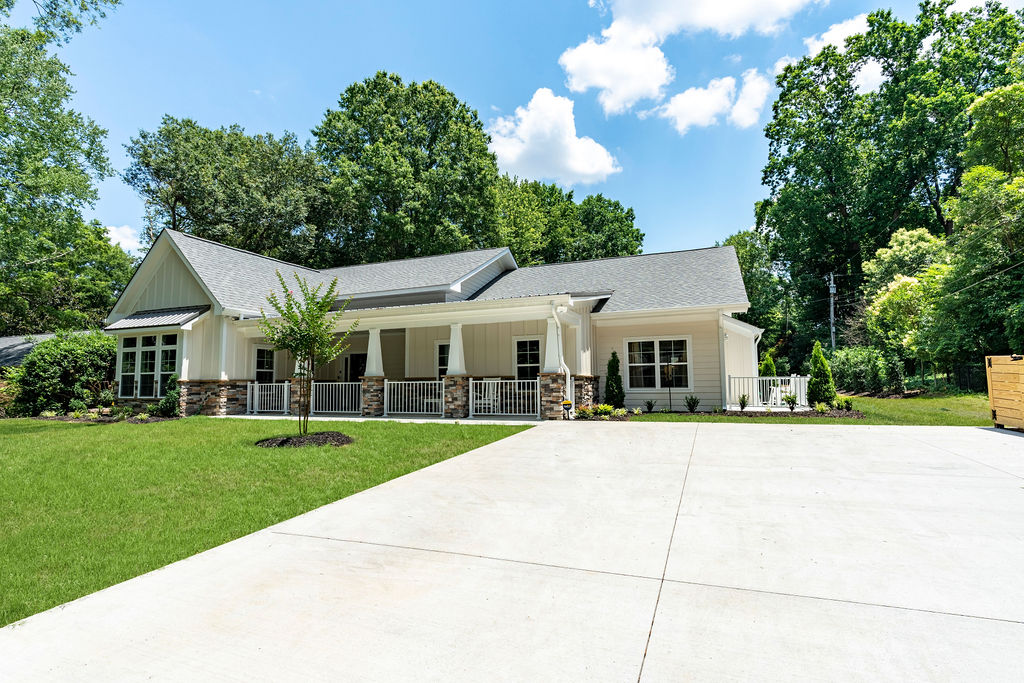
dementia care home south charlotte
back covered porch Charlotte care home

Memory Care vs. Skilled Nursing: What’s the Difference?

One of the most common questions families ask me is:

“As my mom’s dementia progresses, will she eventually have to move to a skilled nursing facility?”

It makes complete sense that families assume the answer is yes. We tend to picture senior care as a ladder: home, then assisted living or memory care, then skilled nursing, as though skilled nursing is simply the final stage of dementia.

But that is not how dementia care necessarily works.

Understanding memory care vs. skilled nursing is less about how advanced someone’s dementia is and more about what kind of care that person actually needs. Many people living with dementia need increasing help with bathing, dressing, toileting, eating, mobility, transfers, medications, safety, and supervision without necessarily needing the type of daily skilled nursing or rehabilitation services associated with a skilled nursing facility.

That distinction can bring families a tremendous amount of relief. It also helps them ask a much better question: not “What comes after memory care?” but “What setting can safely meet Mom’s needs now?”

Memory Care vs. Skilled Nursing: The Simplest Way to Think About It

At a high level, memory care is designed around the daily needs of someone living with cognitive impairment. Skilled nursing is centered on medical or rehabilitative needs that require skilled nursing or therapy services.

That sounds simple, but the terminology gets confusing because people often use “skilled nursing,” “nursing home,” “rehab,” and “long-term care” interchangeably.

Medicare describes skilled care as nursing or therapy care that must be safely and effectively performed by, or under the supervision of, professional or technical personnel. Medicare-covered skilled nursing facility care is generally short-term and may follow a hospitalization when someone needs daily skilled nursing or rehabilitation. Medicare’s skilled nursing facility guidance is a helpful resource for understanding the federal coverage rules.

Nursing homes can also provide long-term custodial care, which is different from a Medicare-covered short-term skilled nursing stay. That is why families should ask exactly what someone means when they recommend “skilled nursing.” Are they talking about short-term rehabilitation after a hospitalization? A specific skilled medical need? Or long-term nursing-home care?

The label matters less than the actual need.

Dementia Does Not Automatically Mean Skilled Nursing

This is the misconception I most want families to understand.

Dementia can become very advanced without automatically creating a need for skilled nursing.

Someone may eventually need extensive hands-on help. They may need assistance getting out of bed, transferring to a wheelchair, bathing, dressing, toileting, eating, or taking medications. They may need someone nearby because they no longer understand their own safety limitations.

Those are substantial care needs. But substantial does not always mean skilled.

Needing more help with daily life is not the same thing as needing a medical setting.

I think this distinction matters because families sometimes begin searching for a nursing home simply because Mom can no longer walk independently or Dad needs help with almost every activity of daily living. Depending on the person’s complete clinical picture and the capabilities and licensing of the setting, those needs may still be manageable in assisted living specializing in dementia care.

What If My Loved One Uses a Wheelchair or Needs Help With Transfers?

Wheelchairs are one of the most common sources of confusion.

A family will say, “Mom is becoming wheelchair-dependent, so I assume we’re getting close to skilled nursing.”

Not necessarily.

A wheelchair tells me something important about mobility. It does not, by itself, tell me that someone requires skilled nursing.

The same is true of needing help with:

·        walking or mobility

·        bathing and grooming

·        dressing

·        toileting

·        eating and cueing at meals

·        transfers

·        medication management

·        supervision because of dementia-related safety risks

These needs can be significant and labor-intensive. The real question is whether the care setting has the staffing, training, equipment, licensing, and clinical oversight to manage them safely.

This is one reason I encourage families to ask communities what they can actually handle rather than assuming that a particular diagnosis, wheelchair, or level of assistance automatically determines the setting.

When Skilled Nursing May Be the Right Choice

There are absolutely situations in which skilled nursing is appropriate.

A person may need a skilled nursing facility for short-term rehabilitation or daily skilled services after a hospitalization. Depending on the situation, examples can include:

·        skilled rehabilitation after an illness, injury, or surgery

·        IV medications or other skilled treatments

·        complex wound care

·        skilled nursing observation and management of a medical condition

·        physical, occupational, or speech therapy that requires skilled services

Some people also live in nursing facilities long-term because their overall medical and functional needs exceed what can safely be supported in an assisted living environment.

The important point is that the decision should be driven by the person’s actual medical, nursing, rehabilitative, functional, and safety needs—not by dementia alone.

And because state licensing rules and individual facility capabilities vary, families should always ask the person’s physician and the prospective care setting whether the specific needs can safely be managed there.

What About Hospice?

This is where another misconception often appears.

Families sometimes assume there is a predictable progression:

Memory care → skilled nursing → hospice.

But hospice is not a building or a required next level of residential care. Hospice is a specialized service focused on comfort and quality of life for people who meet eligibility criteria.

When appropriate, hospice can often come to a resident where they already live, including an assisted living setting. Hospice nurses and other hospice professionals can work alongside the existing caregiving team.

That can be incredibly meaningful for someone with dementia. Instead of introducing another major move at the end of life, the person may be able to remain in a familiar room, with familiar routines and caregivers who already know how they take their coffee, what music calms them, how they communicate discomfort, and what makes them feel safe.

End of life does not automatically mean a person with dementia has to leave the place that has become home.

A Question Families Often Ask Me: “Can You Keep Mom Through the End of Her Life?”

When families ask me this, I understand what they are really asking.

They are not usually asking for a technical explanation of licensing categories. They are asking, “If Mom gets weaker, stops walking, needs more help, or eventually goes on hospice, are we going to have to uproot her again?”

My answer is that our goal is continuity whenever we can safely provide it.

Dementia is progressive. We expect care needs to change. A person should not become a surprise to us simply because she needs more help six months or two years after moving in.

There can always be a medical development that changes what is appropriate, and no responsible care provider should promise that every conceivable medical need can be managed in an assisted living setting.

But becoming more dependent because dementia has progressed is not, by itself, the same thing as developing a skilled nursing need.

How We Think About This at The Sanctuary

At The Sanctuary, we are licensed assisted living homes specializing in dementia care. We are not skilled nursing facilities.

That distinction is important, and we are very transparent about it.

At the same time, our model is built around the reality that dementia care needs change. Residents do not stay at exactly the same level forever. Our team expects to assist with increasing personal care needs, mobility changes, cueing, medication management, eating, toileting, transfers, and the behavioral and communication changes that can accompany dementia.

When someone is considering a move to The Sanctuary, our RN conducts an assessment to determine whether we are an appropriate fit. If needs change later, we look at the actual change and ask whether we can continue to care for the person safely within our setting and license.

If hospice becomes appropriate, hospice can often add another layer of clinical and comfort-focused support while our caregivers continue providing the familiar daily care and relationships the resident already knows.

To me, the goal is not to keep someone in a particular setting at all costs. The goal is to avoid unnecessary moves while also being honest about what level of care the person truly needs.

How to Know Which Setting Your Loved One Needs

If you are trying to decide between memory care and skilled nursing, start with needs rather than labels.

Ask:

·        What specific care does my loved one need today?

·        Which of those needs are personal care needs, and which require skilled nursing or skilled therapy?

·        Is this a short-term need after a hospitalization or a long-term change?

·        Can the assisted living or memory care setting safely manage mobility, transfers, toileting, eating, medications, and dementia-related behaviors?

·        What would cause the community to say my loved one needs a higher level of care?

·        If hospice becomes appropriate, can hospice services be provided in the current setting?

·        Who will reassess my loved one as needs change?

Those questions will usually tell you far more than asking whether Mom is “advanced enough” for skilled nursing.

One Thing I’d Tell My Own Family

If I ever have dementia, I hope you won’t move me simply because I’ve become more dependent.

If I need help getting dressed, help eating, a wheelchair, or someone beside me when I walk, please don’t assume that means I need to live in a medical environment.

Look at what I actually need.

And if I do develop a medical need that truly requires skilled nursing, then choose it because it is the right care for me—not because you thought skilled nursing was simply the inevitable final stop after memory care.

I would want the fewest unnecessary transitions possible, especially once familiar people and routines become more important to me than ever.

Key Takeaways

·        Memory care and skilled nursing serve different needs: dementia-focused daily support versus skilled medical or rehabilitative care.

·        Advanced dementia does not automatically mean someone needs skilled nursing.

·        Using a wheelchair or needing extensive help with bathing, dressing, toileting, eating, or transfers does not by itself determine the need for skilled nursing.

·        Skilled nursing may be appropriate when a person needs daily skilled nursing, skilled therapy, rehabilitation, or medical services that cannot safely be provided in assisted living.

·        Hospice can often provide services where a person already lives, allowing continuity of familiar caregivers and surroundings.

·        The right setting should be based on the person’s actual needs and the capabilities and licensing of the care provider—not on a presumed progression from memory care to skilled nursing.

Frequently Asked Questions

Does everyone with dementia eventually need skilled nursing?

No. Dementia can become advanced without automatically creating a skilled nursing need. Some people remain in assisted living or memory care through the end of life, sometimes with hospice support, as long as the setting can safely meet their needs.

What is the main difference between memory care and skilled nursing?

Memory care focuses on supporting people with cognitive impairment through personal care, supervision, structure, safety, dementia-informed communication, and daily routines. Skilled nursing provides nursing or rehabilitative services that require skilled clinical personnel or supervision.

Does using a wheelchair mean my parent needs skilled nursing?

Not by itself. A wheelchair is a mobility need. The appropriate setting depends on the person’s complete care needs and whether the community can safely assist with transfers, mobility, personal care, and other needs within its licensing and capabilities.

Can someone receive hospice in memory care or assisted living?

Often, yes. Hospice providers can frequently come into an assisted living or memory care setting and work alongside the existing caregiving team when the resident is eligible and the setting can continue to meet the person’s needs.

Is a skilled nursing facility the same thing as a nursing home?

The terms overlap but are not identical. Skilled nursing facility care often refers to skilled nursing or rehabilitation, frequently on a short-term basis after hospitalization. Nursing homes can also provide long-term custodial care. Ask exactly what type of care is being recommended and why.

Will Medicare pay for skilled nursing?

Medicare Part A may cover eligible skilled nursing facility care for a limited time when specific requirements are met. Medicare does not generally cover long-term custodial nursing-home care when that is the only care needed. Families should confirm coverage for their individual situation directly with Medicare or their health plan.

You May Also Find These Helpful

Helping New Residents with Dementia Adjust to Their New Home

The transition into dementia care is often more frightening for families in anticipation than it is for the resident once familiar routines and relationships begin to form. Read this for practical ways a thoughtful care team can make a new environment feel safe and familiar.

How We Approach Challenging Behaviors

Behaviors such as agitation, wandering, resistance to care, and anxiety do not automatically mean someone needs a more medical setting. Read this to understand why looking for triggers, unmet needs, and individualized responses can change the care experience.

Why a Small Boutique Memory Care Facility Is Better for People with Dementia

The size of a building tells you very little about how much care a resident actually receives. Read this for a closer look at how staffing, consistency, familiarity, and a residential environment can shape daily life for someone with dementia.

Have Questions About Your Loved One?

If you’re trying to understand whether assisted living specializing in dementia care or skilled nursing is appropriate for your loved one, contact The Sanctuary. We’re happy to talk through what you’re seeing and the questions worth asking.

Memory Care vs. Skilled Nursing: What’s the Difference?

How We Approach Challenging Behaviors

“They keep telling me my dad is problematic.”

I hear some version of that sentence surprisingly often from families looking for dementia care.

Sometimes the behavior is wandering. Sometimes it is agitation, resistance to showering, repeatedly asking to go home, entering another resident’s room, yelling, or refusing a meal.

But before I decide that a person has a “challenging behavior,” I want to know something much more useful:

What actually happened?

That question is at the heart of how we approach challenging behaviors in dementia. Because behavior is rarely random. Very often, it is communication from someone who may no longer have the language, memory, judgment, or ability to tell us clearly what is wrong.

Challenging Behaviors in Dementia Are Often Communication

Imagine someone you do not recognize walks into your bedroom and tells you it is time to take off your clothes and get into the shower.

If you have dementia, you may not remember that this person helped you yesterday. You may not understand why they are in your room. You may genuinely believe a stranger is trying to undress you.

If you push the person away, is that aggression? Or are you frightened?

The answer matters.

The same is true when someone refuses food, paces the house, calls repeatedly for a spouse who died years ago, or insists that they need to leave for work.

When language and reasoning change, behavior can become one of the clearest ways a person communicates discomfort, fear, boredom, pain, hunger, overstimulation, loneliness, or a need for purpose.

The Alzheimer’s Association notes that behavioral changes can have many causes, including physical discomfort, environmental factors, and communication problems. That is why a sudden or significant change should never simply be dismissed as “the dementia.”

Start With the Story, Not the Label

I recently spoke with a son whose father was being described as wandering and exit-seeking in a larger facility.

When I asked what that actually meant, the story became much more interesting.

His father sometimes walked into other residents’ rooms because he was confused about where he was. And when staff called him “exit-seeking,” what he was actually doing was walking to the front desk and saying he was ready to check out and go home.

He believed he was in a hotel.

Within his reality, his behavior made perfect sense.

That does not mean we ignore safety. It means the response should begin with understanding.

Instead of simply documenting “exit-seeking,” I want to know: What does he believe is happening? What time of day does this occur? What happened immediately before it? What does he seem to be trying to accomplish? What response helps?

Those details turn a label into information we can actually use.

Before Asking “How Do We Stop It?” Ask “Why Is It Happening?”

Families naturally want difficult behaviors to stop. Caregivers do too.

But the fastest route to a calmer resident is often not controlling the behavior. It is identifying the need underneath it.

A few possibilities we think about include:

·        Pain or physical discomfort

·        Hunger or thirst

·        Needing the bathroom

·        Fatigue or disrupted sleep

·        Fear or confusion

·        Too much noise or stimulation

·        Boredom or lack of purpose

·        A change in routine

·        An unfamiliar caregiver

·        Medication effects or a new medical problem

·        Trying to follow an old lifelong routine

If someone who is normally calm suddenly becomes agitated or confused, that deserves particular attention. A new behavior can sometimes signal pain, infection, medication effects, constipation, dehydration, or another medical issue that needs evaluation.

Not every behavior has a simple answer. But “Why?” is almost always a better starting point than “How do we make this stop?”

Why Correcting Someone With Dementia Often Makes Things Worse

Suppose Dad believes he needs to leave because he has to pick his children up from school.

You can tell him his children are adults. You can remind him that he is 88. You can explain that he no longer drives.

You may be factually correct.

But you have not solved the problem he believes he has.

In his mind, his children are waiting.

That is why validation and redirection can be so effective. A caregiver might acknowledge the urgency—“You want to make sure the kids are okay”—and then walk with him, offer a snack, ask him about his children, or gently redirect him toward something familiar.

We are not trying to win an argument. We are trying to reduce distress while preserving dignity.

Resistance to Care Is Often About Trust

Personal care is another area where families frequently hear that a loved one is “refusing.”

But imagine how intimate a shower, toileting, dressing, or changing clothes becomes when you do not recognize the person helping you.

This is one reason caregiver consistency matters so much in dementia care.

The caregiver who knows that Helen prefers her shower after breakfast, likes the bathroom warm, becomes embarrassed if she feels rushed, and responds better when given a choice between two outfits has a tremendous advantage over someone meeting Helen for the first time.

Sometimes the answer is simply to try again later.

Sometimes a different caregiver has better rapport. Sometimes the resident needs reassurance, privacy, music, a warmer room, or more time.

“She refused” should not automatically be the end of the conversation.

Environment Can Create—or Reduce—Behavior

We also have to look at what we are asking the person with dementia to navigate.

A large building with long hallways, elevators, unfamiliar faces, alarms, crowded dining rooms, and constant activity may be manageable for many people. For someone with dementia, it can also create confusion and overstimulation.

A quieter residential environment does not eliminate dementia behaviors. Nothing does.

But when the physical environment is intuitive, the routine is predictable, and the people are familiar, there are fewer things for the brain to constantly interpret.

Sometimes what looks like a resident problem is partly an environment problem.

Enough Caregivers Changes What Is Possible

A compassionate approach to challenging behaviors also requires time.

If a resident refuses a shower at 8:00 a.m., can someone come back at 9:30? If Dad is pacing because he thinks he needs to leave, can a caregiver walk with him for ten minutes and figure out where he believes he is going? If Mom will eat when someone sits beside her and cues each bite, is there actually someone available to do that?

Those are not just training questions. They are staffing questions.

You can have a wonderful caregiver with excellent instincts, but if that person is responsible for too many residents at once, patience and individualized redirection become much harder.

Good dementia care requires both knowing what to do and having enough time to do it.

Medication Has a Role—but It Shouldn’t Replace Understanding

Medication can be appropriate and important in dementia care. There are situations where anxiety, depression, psychosis, agitation, sleep disturbance, or another condition needs clinical treatment.

But medication should not become a substitute for asking what is causing distress.

If someone is agitated because she is in pain, frightened by an unfamiliar caregiver, desperately needs the bathroom, or is overwhelmed by noise, sedation does not address the underlying problem.

We believe behavioral changes should be considered in context, with the care team, family, nurses, and medical providers sharing what they are seeing. Medication decisions belong with the appropriate prescribing clinician, while caregivers provide the day-to-day observations that make those decisions more informed.

How We Think About Challenging Behaviors at The Sanctuary

Families sometimes come to us after being told their loved one is “too difficult.”

That phrase always makes me curious.

It does not mean every person will be appropriate for our homes. Our RN assesses prospective residents carefully, and safety matters for everyone living and working in the home.

But before we decide a behavior defines someone, we want to understand it.

Our approach is usually some combination of:

·        Learn the resident’s history, routines, preferences, and triggers.

·        Use consistent caregivers so trust has time to develop.

·        Look for physical or medical causes when behavior changes.

·        Reduce unnecessary stimulation and confusion.

·        Validate emotion rather than repeatedly correcting facts.

·        Redirect toward something familiar, purposeful, or comforting.

·        Adjust the timing or approach to personal care when possible.

·        Keep families involved because they often know what a behavior means better than anyone.

·        Use medication thoughtfully with the resident’s clinical providers when it is truly indicated.

And sometimes the most useful intervention is remarkably ordinary: sit down. Have coffee. Walk outside. Fold towels together. Put on a favorite song. Give the person a few minutes and try again.

The goal is not a perfectly compliant resident. The goal is a person who feels as safe, understood, comfortable, and dignified as possible.

What Families Should Ask When a Facility Reports a Behavior

If you are told that your parent is having challenging behaviors, ask for specifics:

·        What exactly happened?

·        What was happening immediately before it?

·        Is this new, or is there a pattern?

·        Does it happen at a particular time of day?

·        Could pain, hunger, toileting, fatigue, illness, or medication be contributing?

·        Who was providing care at the time?

·        What did the caregiver try?

·        What helped?

·        What made it worse?

·        What is the plan if it happens again?

Those questions are not about blaming caregivers. Dementia can be genuinely difficult, unpredictable, and sometimes unsafe.

They are about making sure everyone is learning from what happened instead of simply adding another label to the chart.

One Thing I’d Tell My Own Family

If I ever have dementia and someone tells you I’m being difficult, please ask them what I actually did.

If I suddenly refuse a shower, wonder whether I am scared.

If I keep trying to leave, ask where I think I need to go.

If I become agitated, make sure I am not hurting.

If I say no, remember that there may still be a reason—even if I can no longer explain it.

Please don’t reduce me to my hardest moment.

And please find people who are willing to be curious about me before they decide I am the problem.

Key Takeaways

·        Challenging behaviors in dementia are often a form of communication rather than random misbehavior.

·        Specific descriptions are more useful than labels such as “aggressive,” “difficult,” “wandering,” or “refusing care.”

·        Pain, illness, hunger, toileting needs, fear, fatigue, overstimulation, boredom, routine changes, and unfamiliar caregivers can all contribute to behavior.

·        Validation and gentle redirection are often more effective than arguing about facts.

·        Consistent caregivers, adequate staffing, and a calm environment make individualized responses more possible.

·        Sudden behavioral changes deserve attention because a medical or physical issue may be contributing.

·        The goal is not perfect compliance. It is safety, dignity, comfort, and understanding.

Frequently Asked Questions

What are challenging behaviors in dementia?

The term can include agitation, aggression, wandering, exit seeking, resistance to personal care, repetitive questions, yelling, sleep disruption, or other actions that create distress or safety concerns. The most useful next step is to describe exactly what is happening rather than relying on the label.

Why do people with dementia become agitated or aggressive?

There is no single cause. Fear, confusion, pain, illness, hunger, fatigue, overstimulation, communication difficulty, medication effects, or an unmet need can all contribute. A sudden change should be discussed with the person’s clinical team.

What should you do when someone with dementia refuses care?

First consider why the person may be resisting. Slow down, reduce pressure, offer simple choices, use a familiar caregiver when possible, and consider trying again at a different time. If resistance is new or severe, look for pain, illness, or another change.

Should you correct someone with dementia when they are confused?

Not always. Repeated factual correction can increase distress when the person cannot retain or accept the information. Acknowledging the emotion and gently redirecting is often more helpful.

Does wandering mean someone is trying to escape?

No. Wandering and exit seeking are not always the same. A person may be walking because of habit, restlessness, boredom, anxiety, or because they believe they need to accomplish something.

Can medication help challenging dementia behaviors?

Sometimes. Medication may be appropriate for certain symptoms or conditions, but decisions should be made by the person’s qualified clinician. Non-medication factors such as pain, environment, routine, communication, and unmet needs should also be considered.

You May Also Find These Helpful

Why People with Dementia Wander (and Why It Isn’t the Same as Exit Seeking)

Walking often has a purpose that makes complete sense to the person with dementia. Read this to understand the difference between wandering and exit seeking and why the distinction changes how caregivers respond.

Helping New Residents with Dementia Adjust to Their New Home

A new environment can temporarily increase confusion, anxiety, resistance, or attempts to leave. Read this for practical ways familiarity, consistent caregivers, routines, and personalized attention can make a transition easier.

10 Questions to Ask When Touring a Memory Care Facility

The way a community responds to difficult moments tells you far more than a beautiful lobby. Read this for the questions that help reveal staffing, consistency, personalization, communication, and the reality of daily dementia care.

Have Questions About Your Loved One?


If you’re trying to understand a change in behavior or looking for dementia care in Charlotte, contact The Sanctuary. We’re happy to talk through what you’re seeing and the questions worth asking.

How We Approach Challenging Behaviors

Why a Small Boutique Memory Care Facility is Better for People with Dementia

Choosing the right memory care facility is one of the most important decisions a family can make when a loved one begins experiencing cognitive decline. While larger, institutional settings may seem like a convenient option, they often fall short in providing the personalized care that dementia patients truly need. In a small boutique memory care facility like ours, the difference is clear. Dementia, by its very nature, is a highly individualized condition. Each resident has unique needs, preferences, and challenges that require a tailored approach. In larger facilities, with caregiver ratios of one to twelve or even

Read More »

The Reality of Dementia Home Care: When Staying Home Stops Working

One of the most common things families tell me is, “We want to keep Mom at home as long as possible.” I understand that completely. Home is familiar. It holds routines, memories, favorite chairs, neighbors, and a sense of independence. And for many families, dementia home care can work very well for a period of time. But as dementia progresses, the question eventually has to become more specific: Is home still providing the safest, most consistent, and most meaningful daily life—or are we preserving the address after the care arrangement itself has stopped working?

That distinction matters because dementia care at home is not simply a matter of hiring someone to sit with a parent or spouse. As needs increase, families can find themselves managing staffing, supervision, medications, meals, personal care, safety modifications, activities, nighttime needs, and backup coverage. In practice, the family often becomes the care manager.

This is not an argument that everyone with dementia should move into residential care. It is an argument for looking honestly at what the person’s day actually looks like—and at whether the system supporting that day is still sustainable.

Dementia Home Care Can Work—Until the Needs Outgrow the System

There are real advantages to remaining at home. The environment is familiar, routines can be highly individualized, and one-on-one care may be possible. The Alzheimer’s Association notes that in-home services can include companionship, personal care, homemaking help, and skilled services, depending on what a person needs.

For families considering this route, the Alzheimer’s Association’s guide to in-home care is a useful starting point for understanding the different kinds of support available.

The difficulty is that dementia is progressive. A care arrangement that worked beautifully when someone needed a few hours of help may become fragile when that person begins wandering, needs hands-on toileting assistance, wakes repeatedly at night, resists care, stops eating without cueing, or can no longer safely be left alone.

The question is not whether home care is good or bad. The question is whether the version of home care you can realistically provide still matches the person’s current needs.

Caregiver Consistency Is Harder Than It Looks

Consistency matters enormously in dementia care. A familiar caregiver learns much more than a task list. She learns how your mother likes to be approached in the morning, which words make a shower feel less threatening, what foods she will accept when she says she is not hungry, and how to tell the difference between fatigue, pain, anxiety, and simple frustration.

At home, maintaining that consistency can be difficult. A caregiver gets sick. Someone goes on vacation. An aide quits. An agency sends a substitute who has never met your parent. For a cognitively intact person, that may be an inconvenience. For someone with dementia, an unfamiliar person suddenly entering the home and attempting intimate personal care can be confusing or frightening.

When evaluating a provider, the Alzheimer’s Association specifically recommends asking what happens if a caregiver is sick, on vacation, or quits. That backup plan is not a minor operational detail; it is part of the care plan.

The Family Often Becomes the Staffing Department

This is one of the least discussed parts of dementia home care. Even when a family uses an agency, someone still has to notice that the Tuesday caregiver did not arrive, communicate changes in medications, explain new behaviors, arrange coverage, stock groceries, coordinate appointments, and decide what to do when the existing schedule is no longer enough.

If there are gaps in coverage, the responsibility usually falls back to a spouse or adult child. Families sometimes tell themselves they have “24-hour care” when what they really have is a combination of paid caregivers, family members, cameras, neighbors, and hope that nothing goes wrong during the uncovered periods.

That arrangement may be workable. But it should be named accurately. A care plan is only as strong as its weakest shift.

Safety at Home Changes as Dementia Changes

Familiarity does not automatically make a home safe. Dementia can affect judgment, balance, depth perception, sense of time and place, medication management, and the ability to recognize hazards. A staircase that was never a problem may become one. A stove may be left on. A person may walk out a familiar front door and become unable to find the way back.

The Alzheimer’s Association home-safety guidance recommends reassessing the environment as abilities change, including lighting, locks, medications, tripping hazards, bathrooms, kitchens, and other areas of the home.

Families who want to extend the time at home can often do a great deal to improve safety: remove tripping hazards, add grab bars and better lighting, secure medications, rethink door access, reduce clutter, and create more predictable routines. But environmental changes do not replace supervision when supervision has become necessary.

Meaningful Engagement Is Part of Care

A person can be clean, fed, medicated, and physically safe—and still have a very empty day. This is one of the reasons I encourage families to look beyond the checklist of physical tasks.

What happens between breakfast and dinner? Who initiates conversation? Who gets Dad outside? Who notices that Mom lights up when music comes on? Who invites her to fold towels, water plants, look through photographs, walk to the mailbox, help prepare lunch, or simply sit with another person?

The Alzheimer’s Association recommends planned daily routines and activities that provide meaning and enjoyment. That kind of engagement does not need to look like nonstop entertainment. In fact, it should not. People need rest and quiet too. The goal is a day with human connection, movement, purpose, and opportunities to participate—not a schedule packed from morning to night.

At home, a wonderful caregiver may create that kind of day naturally. But not every paid caregiver is trained or inclined to do so. Some understandably focus on the required tasks. If most of the day has gradually become television and waiting, it is worth asking whether the care plan is meeting the whole person’s needs.

The Cost of Dementia Home Care Is More Than the Hourly Rate

Families often begin home care with a manageable number of paid hours. The financial picture changes as supervision needs expand. Rather than relying on a single hourly-rate estimate—which varies substantially by market, agency, shift length, and level of care—I think families should calculate the actual monthly cost of the schedule they are likely to need six or twelve months from now.

Include more than the agency invoice:

·        Paid caregiver hours, including nights and weekends if needed

·        Backup coverage when the regular caregiver is unavailable

·        Home modifications and safety equipment

·        Transportation and appointment support

·        Household management and meal preparation

·        Supplies related to incontinence or mobility

·        The unpaid time provided by family members

·        Lost work time or other responsibilities absorbed by the primary family caregiver

This does not mean residential care is inexpensive. It means the comparison should be apples to apples. Compare the full care system required in each setting, not a few hours of home care against the monthly price of comprehensive residential care.

Caregiver Capacity Is Part of the Care Plan

Sometimes the person with dementia is doing reasonably well at home, but the spouse providing the care is not. That matters.

A spouse who is no longer sleeping, cannot safely assist with transfers, is afraid to leave the house, or has become socially isolated is giving us important information about the sustainability of the plan. The same is true for an adult child whose work, marriage, health, or parenting responsibilities are being consumed by constant care coordination.

The caregiver’s well-being is not a selfish consideration added after the “real” needs are addressed. Caregiver capacity is one of the resources the entire home-care system depends upon.

How to Know When Dementia Home Care May No Longer Be Enough

There is rarely one dramatic sign. More often, families see a pattern. Consider reassessing the arrangement when:

·        The person can no longer safely be left alone for meaningful periods of time.

·        Wandering, falls, unsafe cooking, medication errors, or nighttime activity are increasing.

·        Personal-care needs are becoming physically difficult for family or caregivers to manage.

·        Caregiver call-outs or turnover are creating frequent gaps and unfamiliar substitutes.

·        The person is increasingly isolated or spends most of the day passively watching television.

·        Nutrition or hydration depends on more cueing and supervision than the current plan provides.

·        A spouse or adult child is becoming exhausted, frightened, resentful, or physically unable to continue.

·        The family is repeatedly adding more pieces to the system but the overall arrangement still feels fragile.

The Alzheimer’s Association notes that there may come a time when a person needs more care than can be provided at home and recommends considering safety, caregiver health, physical care demands, and whether greater structure and social interaction would help. Its long-term care guidance provides a useful framework for that decision.

How We Think About Dementia Home Care at The Sanctuary

At The Sanctuary, our assisted living homes in Charlotte specialize in caring for people living with dementia. We intentionally use a small residential model because we believe many people benefit from the familiarity of a home-like environment while also having a consistent care team, structured support, meals, medication management, activities, and supervision built into the day.

But our view is not that home care is inherently inferior. If someone is safe, engaged, well supported, and the family has a sustainable care system, staying at home may be exactly the right choice.

The point at which families often struggle is when the desire to remain home becomes the goal in itself. At that point, it can help to replace “Can we keep doing this?” with a better question: “Is this still the best daily life we can reasonably create?”

If You Want to Keep a Loved One at Home Longer

A few practical steps can make dementia home care stronger and help families evaluate it more objectively:

1.        Write down the actual supervision and personal-care needs rather than relying on a general sense that things are “mostly okay.”

2.        Create a backup staffing plan before the regular caregiver calls out.

3.        Conduct a dementia-specific home-safety review and repeat it as abilities change.

4.        Build predictable daily routines around waking, meals, personal care, movement, rest, and bedtime.

5.        Plan meaningful engagement and social contact rather than assuming it will happen spontaneously.

6.        Track nutrition, hydration, falls, nighttime waking, wandering, and other changes that may signal increasing needs.

7.        Be candid about the primary caregiver’s physical and emotional capacity.

8.        Set a date to reassess the arrangement—even if there is no crisis.

That last step is especially important. Without a planned reassessment, families can adapt to one small decline after another until a care arrangement that once made sense has become unrecognizable.

Key Takeaways

·        Dementia home care can be an excellent option when the person is safe, engaged, well supported, and the care system is sustainable.

·        As dementia progresses, families often take on the hidden role of staffing coordinator and care manager.

·        Consistency matters; backup coverage and caregiver turnover can have an outsized impact on a person with dementia.

·        Home safety must be reassessed as judgment, mobility, wandering risk, and supervision needs change.

·        Meaningful engagement and human connection are part of quality dementia care, not optional extras.

·        Compare the full cost and workload of the care system—not just an hourly home-care rate.

·        The health and capacity of the family caregiver are legitimate parts of the decision.

·        The goal should not be staying home at all costs. The goal should be the best realistic daily life for the person and family.

Frequently Asked Questions

Is home care good for someone with dementia?

It can be. Home care may work very well when the person is safe, has reliable supervision, receives appropriate personal and medical support, remains meaningfully engaged, and the family can sustain the arrangement. The fit should be reassessed as dementia progresses.

When does someone with dementia need 24-hour supervision?

There is no single stage or symptom that applies to everyone. Families should look at whether the person can safely be alone, manage basic needs, respond appropriately in an emergency, avoid wandering or other hazards, and reliably take medications. A clinician or dementia-care professional can help assess changing supervision needs.

How can I make dementia care at home safer?

Start with a dementia-specific safety assessment. Common areas to review include medications, kitchens, bathrooms, lighting, stairs, tripping hazards, door security, emergency planning, and wandering risk. Reassess regularly because abilities change over time.

How do I know when home care is no longer working?

Look for patterns rather than waiting for one dramatic event: increasing safety incidents, caregiver gaps, nighttime needs, poor nutrition, isolation, repeated crises, or a family caregiver who is becoming physically or emotionally unable to continue. If the system feels increasingly fragile despite adding more support, it is reasonable to explore alternatives.

You May Also Find These Helpful

Being at Home Is Not the Same as Having Quality of Life — A closer look at why the location of care does not tell us what someone’s day actually feels like.

You Can’t Optimize for Everything When Choosing Dementia Care — How to identify the priorities that matter most when every care option involves trade-offs.

Waiting Too Long to Move a Loved One With Dementia: The Biggest Mistake Families Make — Why waiting for a crisis can narrow choices and make a difficult transition harder.

Wondering Whether Home Care Is Still Working?

If you are trying to decide whether your current care arrangement is still meeting your loved one’s needs, you do not have to wait for a crisis to start asking questions. Contact The Sanctuary if you would like to talk through your situation or learn more about our small residential approach to dementia care.


10 Questions to Ask When Touring a Memory Care Facility

Families often walk into a memory care tour looking at the wrong things.

They notice the chandelier. The dining room. The size of the apartment. The activity calendar. Maybe they ask what time meals are served or whether there is transportation to appointments.

Those things aren’t irrelevant. But after years of talking with families – including many who are looking for a new community because the first one didn’t work – I’ve learned that the questions that matter most are usually much less glamorous.

Who will actually be with Mom at 7:30 in the morning when she refuses to shower?

Who notices that Dad’s lunch is still sitting untouched in front of him?

If Mom says no the first time a caregiver offers help, does someone have enough time to come back 20 minutes later and try a different approach?

And when something changes, will you know about it?

If you’re wondering what questions to ask when touring a memory care facility, I would focus less on what the community promises and more on what daily life actually looks like. A beautiful building can tell you very little about the quality of dementia care happening inside it.

Here are the 10 questions I would ask – and, just as importantly, what I would watch for while the person answering them is talking.

1. What Is the Caregiver-to-Resident Ratio?

If I could ask only one question on a memory care tour, this would probably be it.

Staffing affects almost everything else: whether someone can sit with your mother while she eats, whether a caregiver has time to redirect your father instead of rushing him, whether someone notices a subtle change, and whether personal care can happen according to the resident’s needs rather than the facility’s schedule.

But don’t stop when someone gives you a number. Ask what that ratio looks like during the hours your loved one will actually be awake. Ask whether the number includes nurses, administrators or activity staff who are not providing hands-on care. Ask about evenings, weekends and overnight staffing.

Then look around.

Are caregivers sitting with residents? Are they talking with them? Do they seem to have enough time to slow down? Or do they look like they are moving constantly from one task to the next?

At The Sanctuary, our six-resident homes generally have two caregivers during most waking hours – a 1:3 caregiver-to-resident ratio – and one caregiver overnight while residents are primarily sleeping. We designed the model this way because individualized dementia care requires time.

A ratio isn’t just a staffing statistic. It determines what care is actually possible.

2. Will My Parent See the Same Caregivers Consistently?

The second question I would ask is about consistency.

A facility can technically be fully staffed and still have residents encountering a revolving door of unfamiliar people. Ask whether caregivers are employees of the community, how frequently agency staff are used, how caregivers are assigned, and whether the same people routinely care for the same residents.

This matters tremendously in dementia.

Imagine waking up confused and having a stranger enter your bedroom and tell you it is time to take off your clothes and shower. Even without dementia, that would feel intrusive. With dementia, an unfamiliar caregiver can easily create fear, resistance or agitation.

The opposite is also true. A familiar caregiver learns that Dad showers more easily after breakfast. She knows which joke makes him laugh. She recognizes the look on his face before he becomes anxious. She knows how Mom takes her coffee and that mentioning her grandchildren will usually get her talking.

That relationship is not incidental to the care. It is part of the care.

We do not use staffing-agency caregivers at The Sanctuary. Our caregivers become deeply familiar with the residents they support. Over time, those relationships can become extraordinarily close. We have had caregivers attend residents’ funerals on their own time because the person they cared for had genuinely become part of their lives.

3. What Happens When My Loved One Doesn’t Follow the Schedule?

This question tells you a great deal about whether care is truly personalized.

People with dementia do not conveniently organize their needs around a staffing schedule.

One person may wake at 6:30 a.m. Another may sleep until 10. Someone may happily shower in the evening but become resistant when approached first thing in the morning. A resident may refuse breakfast at 8:00 and be hungry at 9:15.

So ask specific questions.

If Mom sleeps late, can she still get a hot breakfast? If Dad refuses his shower, what happens next? Does the caregiver document a refusal and move on, or does someone come back later, build rapport, change the approach and try again?

I hear versions of this complaint constantly from families: “They tell me Mom refused.”

Sometimes she did. But with dementia, a refusal at 8:05 does not necessarily mean a refusal at 8:30. It may mean the approach was wrong, the timing was wrong, the person was unfamiliar, or Mom simply needed a few minutes.

Personalized care requires flexibility. Flexibility requires enough staff to provide it.

4. What Dementia-Specific Training Do Caregivers Receive?

Memory care is not simply assisted living behind a secured door.

Ask what dementia-specific training caregivers receive initially and on an ongoing basis. More importantly, ask how that training changes what caregivers actually do.

How do they respond to someone who believes she needs to go home? What do they do when someone becomes frightened during personal care? How do they approach wandering, agitation, repeated questions or resistance?

The answer should involve more than “redirection.”

Good dementia care requires understanding that behavior often communicates something: fear, discomfort, confusion, boredom, hunger, overstimulation, a need for purpose, or a reality that makes perfect sense to the person experiencing it.

Caregivers need the skill – and the time – to figure out what may be underneath the behavior rather than simply trying to stop it.

5. What Does Engagement Look Like Outside the Activity Calendar?

I would absolutely look at the activity calendar. Then I would stop looking at it and watch the residents.

This is one of the most important things to observe when touring a memory care facility.

Are residents actually engaged?

Or are most people sitting alone while an impressive calendar hangs on the wall?

Many people with mid- to late-stage dementia no longer independently walk into an activity room, choose an activity and sustain their own participation. They need another person to initiate, cue, encourage and often stay beside them.

Meaningful engagement also shouldn’t exist only at 10:00 a.m. and 2:00 p.m.

It can be helping prepare vegetables at the kitchen counter. Folding towels. Watering plants. Sitting outside with a caregiver. Baking cookies. Listening to a favorite song. Looking through family photographs. Setting the table.

Some of the richest moments I’ve seen aren’t “activities” at all. They’re ordinary household life.

When you tour, ask yourself: If there were no scheduled activity happening right now, would these residents still have people spending meaningful time with them?

6. How Will I Know What’s Really Happening Day to Day?

Families often don’t think to ask this until communication has already become a problem.

Ask who you call when you have a concern. Ask whether you can speak directly with the people who know your parent. Ask how changes in eating, sleep, behavior, mobility or personal care are communicated.

And ask whether communication is only reactive.

Families should not have to discover a 15- or 20-pound weight loss before anyone can explain whether Mom is actually eating. They shouldn’t feel as though asking what happened during the week makes them “difficult.”

You cannot advocate effectively for someone when you don’t know what’s going on.

At The Sanctuary, families have direct access to our team, including management and nurses. We also believe communication should happen when things are going well – not only when there is an incident. Caring for someone with dementia works best when family and caregivers are sharing information in both directions.

7. How Are Care Plans Updated as Dementia Progresses?

Dementia changes.

A care plan that accurately described someone six months ago may not describe that person today.

Ask how often residents are reassessed and, more importantly, what triggers a change between formal assessments. Who notices that Dad is now having trouble using utensils? What happens when Mom starts waking at night? How is a new fall risk communicated? What if someone who once dressed independently now needs cueing?

The best answer is not simply, “We update the care plan quarterly.”

You want to understand how the team notices changes in real time and how those observations turn into different care.

At The Sanctuary, our nurses, caregivers, activity team and management all contribute observations because different people may notice different things. Formal care planning matters, but so does a culture in which a caregiver feels responsible for saying, “Something is different with Mary today.”

8. Does This Environment Actually Make Sense for Someone With Dementia?

Look beyond whether the building is beautiful.

Ask yourself whether it is intuitive.

Can your loved one understand where to go? Are there long corridors, elevators, multiple floors or enormous dining spaces to navigate? Does the environment feel noisy and stimulating? Is there a comfortable place to sit outside? Can someone naturally see the kitchen, living room and other people?

Over the years, we’ve cared for residents who were described as highly anxious or behaviorally difficult in larger settings and became dramatically calmer after moving into a smaller residential home.

I would never claim that the building alone explains that change. More attention, familiar caregivers, better communication and individualized routines all matter.

But environment matters too.

A person with dementia may not understand that she is in a “beautiful senior living community.” She may simply experience a confusing hallway, an elevator she doesn’t understand and a dining room full of unfamiliar faces.

We all intuitively know what a home feels like. For someone whose world is becoming harder to interpret, simplicity and familiarity can be incredibly valuable.

9. How Does Socialization Really Happen Here?

Families understandably worry about whether their loved one will have enough people around.

But more people do not automatically mean more connection.

Because dementia affects everyone differently, residents may not naturally develop deep friendships simply because dozens of other residents live in the same building. Some have aphasia. Some are physically limited. Some are socially outgoing but cannot follow a long conversation. Others prefer quieter interaction.

So ask who your parent will actually spend time with.

Watch whether caregivers know residents personally. Listen to how they speak to them. Notice whether family members seem comfortable in the space. Ask whether musicians, volunteers and other regular visitors get to know residents over time.

Meaningful socialization may be Mom talking with a caregiver over coffee, helping someone make lunch, singing with a musician who remembers her favorite song, or sitting beside another resident working on a puzzle.

Connection is not measured by how many people are in the building. It is measured by whether someone is known.

10. How Do You Manage Safety Without Making Life Feel Institutional?

Safety matters enormously in dementia care, but the answer should be more thoughtful than locked doors.

Ask how the community approaches falls, wandering, nighttime supervision, transfers and changes in mobility. Ask what happens when someone becomes a higher fall risk. Ask how quickly caregivers can respond when someone begins to stand or walk without assistance.

Then look at the environment itself. Are pathways clear? Are bathrooms designed with mobility and fall risk in mind? Can caregivers easily see residents in the common areas?

The best dementia care balances safety with dignity and ordinary life.

You want your loved one protected, but you also want her to live – to walk outside when appropriate, sit at the kitchen table, help bake something, listen to music, laugh with a caregiver and remain part of a household rather than feeling managed by a system.

The Most Important Part of a Memory Care Tour: Watch What Happens When Nobody Is Performing for You

After you’ve asked your 10 questions, stop talking for a few minutes.

Look around.

Sometimes what you observe tells you more than the answers.

·        Watch the caregivers. Are they sitting with residents, or constantly rushing? Do they speak warmly and naturally? Do they appear to know the residents?

·        Watch the residents. Are they engaged? Are people spending long stretches alone? Does anyone notice when a resident needs help?

·        Watch mealtime. Is food simply placed in front of residents, or does someone notice who needs cueing, encouragement or physical assistance?

·        Watch the environment. Does it feel calm and understandable, or noisy and confusing?

·        Watch how you feel. Could you imagine sitting here for several hours with someone you love, or do you immediately want to leave?

Trust your instincts – but give your instincts something substantive to observe.

How We Think About This at The Sanctuary

When families tour our homes in Charlotte, I don’t want them to choose us because the house is pretty.

I want them to understand what the care model makes possible.

Our small homes, high caregiver-to-resident ratio, consistent staff, dementia-specific experience and residential environment are all connected. You cannot promise truly individualized care if the caregiver responsible for providing it is stretched too thin. You cannot build deep trust if residents constantly encounter unfamiliar caregivers. You cannot personalize someone’s day if the entire operation depends on everyone doing the same thing at the same time.

That is why I think the best questions to ask when touring a memory care facility are really questions about ordinary moments.

Who notices?

Who has time?

Who knows my mother?

And what happens when her needs don’t fit neatly into the schedule?

Those answers tell you far more about the life your loved one will actually live than the brochure ever will.

Key Takeaways

·        The caregiver-to-resident ratio affects nearly every part of dementia care, but ask exactly who is included in the ratio and how staffing changes by shift.

·        Caregiver consistency matters because familiar people can reduce fear, improve communication and make intimate personal care easier.

·        Ask what happens when a resident refuses care or doesn’t follow the facility’s schedule; truly personalized care requires flexibility.

·        An activity calendar is not the same thing as engagement. Watch what residents are actually doing during your tour.

·        Families need direct, ongoing communication so they can understand changes and advocate for their loved one.

·        Look for an environment that is intuitive and calming for someone with dementia, not simply impressive to a visitor.

·        During a memory care tour, pay as much attention to what you observe as to what you’re told.

Frequently Asked Questions

What are the most important questions to ask when touring a memory care facility?

The most important questions cover caregiver-to-resident ratios, caregiver consistency, dementia-specific training, personalized schedules, engagement, communication with families, changing care needs, environment, socialization and safety. Ask for specific examples rather than accepting broad assurances.

What should I look for during a memory care tour?

Watch how caregivers interact with residents, whether residents are engaged, what happens during meals, whether staff appear rushed, and whether the environment feels calm and intuitive. The ordinary interactions happening around you can be more revealing than the formal tour.

What is a good caregiver-to-resident ratio in memory care?

There is no single number that guarantees good care, and staffing requirements vary by setting and jurisdiction. Ask for the actual hands-on caregiver ratio during waking hours, evenings, weekends and overnight, and ask whether the quoted number includes staff who are not routinely providing direct care.

Why does caregiver consistency matter in dementia care?

People with dementia can become confused or frightened by unfamiliar caregivers, particularly during intimate tasks such as bathing, dressing and toileting. Consistent caregivers also learn a resident’s routines, preferences, triggers and subtle changes over time.

How can I tell whether activities are truly personalized?

Don’t rely only on the calendar. Look for one-on-one cueing and spontaneous engagement throughout the day. Ask what happens if your parent cannot participate in a group activity or prefers cooking, gardening, music, walking or another familiar activity instead.

Should I bring my loved one with dementia on a memory care tour?

It depends on the person. If being included would feel reassuring and meaningful, bringing your loved one can preserve dignity and participation. If the tour is likely to cause significant anxiety or confusion before a decision has even been made, families may choose to tour first and involve the person later in a way that is less distressing.

You May Also Find These Helpful

How We Approach Challenging Behaviors

Behaviors such as wandering, agitation and resistance often make more sense when we stop viewing them simply as problems to control.

Read this to understand what a dementia-care team’s response to difficult moments can tell you about the quality of its care.

Helping New Residents with Dementia Adjust to Their New Home

The transition families fear is often made easier by familiar routines, favorite foods, consistent caregivers and purposeful engagement.

Read this if you’re wondering what good dementia care should look like during the first days and weeks after a move.

Preventing Falls in Memory Care: How We Keep Our Residents Safe

Fall prevention is not one piece of equipment or one policy; it depends on supervision, environment, individual risk and timely response.

Read this if falls are one of the reasons your family is beginning to consider memory care.

Have Questions About Choosing Memory Care?

If you’re comparing dementia-care options and want help thinking through what matters most for your loved one, contact The Sanctuary. We’re always happy to answer questions, even if you’re still early in your search.


Helping a Loved One With Dementia Adjust to a New Home

One of the most common questions families ask me before a move is, “How do I help Mom adjust to a new home with dementia?” Families often imagine the first few days in vivid detail: Mom asking to go home, Dad refusing a shower, a spouse becoming upset after a visit, or a loved one standing by the door because nothing feels familiar yet. Those fears are understandable. A dementia care transition can be emotional and disorienting—but a difficult moment during the adjustment period does not automatically mean the move was a mistake.

The goal is not to convince someone on day one that this is now “home.” The goal is to create enough familiarity, safety, routine, and human connection that the new environment gradually begins to feel less new.

That process looks different for every person. Some residents settle surprisingly quickly. Others need more time. Some ask to go home repeatedly at first and then become comfortable once they recognize caregivers, routines, favorite foods, and the rhythm of the day. What matters most is how the family and care team respond during that period.

A Dementia Care Transition Takes Time

Moving is disruptive even when someone fully understands why it is happening. For a person living with dementia, the experience can be much harder to interpret. They may not remember choosing the community, may not understand why their belongings are in a different room, or may wake up expecting to be somewhere else.

The Alzheimer’s Association notes that it takes time for a person with dementia to adjust to a new home and that temporary changes such as sleep problems, wandering, falls, or appetite changes can occur after a move. That is one reason I encourage families to think of adjustment as a process rather than a verdict delivered in the first few days.

A resident asking “When are we going home?” on the second evening is not necessarily telling us that the setting is wrong. They may be tired, confused, looking for familiarity, missing a spouse, or expressing a broader desire to feel safe.

Before the Move: Give the Care Team the Person, Not Just the Diagnosis

One of the most useful things a family can do before move-in is tell the care team who this person is beyond the medical record.

We want to know things such as:

·        What time does she usually wake up and go to bed?

·        What does he like for breakfast, and how does he take his coffee?

·        What music, television programs, sports, hobbies, or routines are familiar?

·        Does she prefer a shower in the morning or later in the day?

·        What topics make him light up?

·        What tends to make her anxious or frustrated?

·        How does the family usually respond when he asks to go home?

·        What foods are reliable favorites when appetite is poor?

·        What lifelong roles still matter—parent, teacher, gardener, executive, homemaker, veteran, musician?

These details give caregivers tools. A favorite snack can become a bridge during an anxious afternoon. A familiar song can change the mood of a room. Knowing that someone always showered after breakfast rather than before it may prevent an unnecessary struggle.

Personalized dementia care is often built from small pieces of information that would never appear on a standard medical form.

Bring Familiarity Into the New Home

A new room should not feel like a hotel room if we can help it. Familiar photographs, a favorite chair or blanket, meaningful artwork, a familiar bedspread, books, and other recognizable belongings can create continuity.

I would prioritize objects that carry emotional or sensory familiarity rather than trying to reproduce every detail of the previous house. Too much clutter can make a room harder to navigate. A few recognizable, useful things often matter more than filling every surface.

If possible, have the room largely set up before the resident arrives so the first experience is of a finished, welcoming space rather than boxes and commotion.

Routine Is One of the Strongest Forms of Reassurance

When memory is unreliable, predictable rhythms can do some of the work that explanation cannot. Breakfast happens. The same caregiver appears. There is a familiar chair at the table. After lunch comes a walk or rest. Dinner has its own rhythm. Bedtime begins to feel recognizable.

That does not mean forcing a rigid schedule. It means preserving useful habits where possible and allowing the resident to learn the new environment through repetition.

At The Sanctuary, we try to carry familiar routines forward rather than expecting a resident to conform immediately to an entirely new institutional schedule. The more we know about the person’s previous day, the more continuity we can create.

“I Want to Go Home” Does Not Always Mean What It Sounds Like

This is one of the hardest parts for families. A resident may ask to go home even when the move is necessary and the new setting is appropriate.

With dementia, “home” can represent much more than a physical address. It can mean familiarity, safety, a spouse, a childhood home, a previous stage of life, or simply the feeling that something is not quite right.

This is closely related to what we see with wandering and exit-seeking behaviors in dementia. Rather than immediately correcting the facts—“This is your home now”—it is often more useful to respond to the emotion underneath the statement.

A caregiver might say, “You’re thinking about home. Tell me about it,” or, “You miss your husband. Let’s sit together for a minute.” Then the caregiver can gently redirect toward something familiar or comforting.

The goal is not deception for its own sake. It is recognizing that arguing about facts rarely resolves the emotion a person is experiencing.

Resistance to Care Can Be Part of the Adjustment

A resident who accepted help from a spouse for years may initially resist a new caregiver helping with bathing, dressing, or toileting. That response makes sense. Personal care is intimate, and trust has not yet been established.

Sometimes the best response is not to push harder. It may be to try again later, change the caregiver’s approach, offer a choice, slow the interaction down, or move the task to a more familiar time of day.

Consistency helps because caregivers begin to learn the resident and the resident begins to recognize them. The same face, voice, manner, and routine can gradually reduce the feeling that a stranger is entering their personal space.

Should Families Visit Right Away?

There is no universal rule here, and I would be cautious of anyone who presents one.

Some residents benefit enormously from seeing a spouse or adult child during the first days. The familiar person is reassuring, visits go well, and the family’s presence helps the resident feel secure.

For others, visits repeatedly restart the transition. A resident may spend the entire visit focused on leaving with the family member, become highly distressed when the visit ends, and then need significant time to settle again. In those cases, a short pause or a different visiting pattern may help the resident begin forming relationships with caregivers and learning the new routine.

At The Sanctuary, we treat this as an individualized decision. We watch the resident’s response and talk with the family. The question is not, “What is the rule for the first week?” It is, “What seems to help this particular person feel safest and settle most successfully?”

Keep Visits Calm, Familiar, and Purposeful

When visits are helpful, they do not need to be long or elaborate. In the early adjustment period, a calm visit can be more useful than an emotionally intense one.

Families can try:

·        Visiting at a time of day when the resident is usually at their best.

·        Bringing a familiar snack, photograph, music, or simple activity.

·        Joining the resident in the new routine rather than repeatedly asking whether they like the new home.

·        Avoiding promises such as “You can come home soon” if that is not the plan.

·        Keeping departures warm but low-key rather than turning them into prolonged goodbyes.

·        Asking the care team how the resident behaves after visits, not only during them.

That last point is especially important. A visit may appear wonderful while the family is present but leave the resident distressed for hours afterward—or the opposite may be true. The care team sees the full arc and can help families adjust the approach.

Expect the Transition to Be Uneven

Adjustment is rarely a straight line. A resident may have three calm days followed by a difficult evening. A new caregiver, poor night of sleep, illness, constipation, a change in medication, or simply fatigue can temporarily make the environment feel unfamiliar again.

Try not to interpret every difficult day as evidence that the move is failing. Look for patterns over time: Is the resident beginning to recognize caregivers? Are meals becoming easier? Is sleep settling? Are there moments of enjoyment? Is anxiety becoming less frequent or easier to redirect? Is the resident participating in parts of the household routine?

Those small signs often tell us more about adjustment than whether someone has stopped asking about home entirely.

Families Are Adjusting Too

The resident is not the only person going through a transition. Families often experience relief and grief at the same time.

A spouse may finally sleep through the night and then feel guilty for enjoying the sleep. An adult child may know the move was necessary and still cry after leaving. Someone who spent years organizing medications, meals, appointments, bathing, and supervision may suddenly have space in the day—and not know what to do with it.

Those emotions can make the early days especially difficult because families are evaluating the move while they are also grieving the change in their own role.

If you are still deciding whether the time for a move has arrived, Waiting Too Long to Move a Loved One With Dementia explains why planning before a crisis can sometimes make the eventual transition more thoughtful and less disruptive.

How We Approach a Dementia Care Transition at The Sanctuary

At The Sanctuary, our Charlotte homes are intentionally small, with six residents in each house. That gives caregivers and the management team the opportunity to spend significant time learning a new resident rather than expecting the resident to learn a large, unfamiliar environment all at once.

Before and during move-in, we gather information about routines, preferences, food, interests, communication style, personal-care habits, and the things that bring comfort. During the early adjustment period, our caregivers and activity team can provide additional attention, companionship, gentle engagement, and redirection as the resident begins building familiarity.

We also communicate with families about what we are seeing. If visits seem to help, we want families involved. If a particular pattern appears to make the resident significantly more distressed, we can talk together about whether a temporary adjustment makes sense.

There is no magic script that eliminates every difficult moment. Our goal is simpler: know the person, reduce unnecessary stress, create predictable rhythms, and give trust enough time to develop.

What Families Can Do to Make the Move Easier

·        Share detailed information about routines, preferences, favorite foods, interests, triggers, and calming strategies before move-in.

·        Set up the room with a small number of meaningful, familiar belongings before the resident arrives.

·        Keep explanations simple; avoid repeatedly trying to persuade the person to agree that the move is necessary.

·        Let the care team know how your loved one usually responds when anxious, angry, tired, or asking to go home.

·        Work with the care team on the timing and frequency of visits rather than following a rigid rule.

·        Expect some difficult moments and evaluate the overall pattern of adjustment rather than a single day.

·        Tell staff promptly about changes in sleep, appetite, medications, pain, bowel habits, or health that could affect behavior.

·        Give yourself permission to adjust too. Relief, sadness, guilt, and uncertainty can coexist.

Key Takeaways

·        A dementia care transition is a process; distress in the first days does not automatically mean the move was wrong.

·        Familiar routines, belongings, foods, music, and personal history can make a new environment easier to understand.

·        “I want to go home” often expresses a need for familiarity or safety rather than a literal evaluation of the care setting.

·        Resistance to care may improve as trust develops with consistent caregivers.

·        There is no universal rule about family visits during the first week; use the resident’s response to guide the plan.

·        Look for trends in sleep, appetite, anxiety, relationships, engagement, and comfort rather than expecting a perfectly linear adjustment.

·        Families need time to adjust to the move too.

Frequently Asked Questions

How long does it take someone with dementia to adjust to a new home?

There is no fixed timeline. Some people settle quickly, while others need substantially more time. The Alzheimer’s Association advises families to expect an adjustment period after a move. Rather than focusing on a particular number of days or weeks, watch whether familiarity, trust, sleep, appetite, engagement, and comfort are gradually improving.

Is it normal for someone with dementia to ask to go home after moving?

Yes. “Home” may mean a familiar place, an earlier period of life, a person they miss, or simply a desire to feel safe. Repeatedly correcting the person may increase distress. Validation, reassurance, companionship, and gentle redirection are often more helpful.

Should I visit my parent during the first week after a dementia care move?

It depends on the person. Some residents are reassured by family visits; others become much more distressed when the family leaves. Work with the care team and pay attention to the resident’s behavior both during and after visits.

What should I bring when moving a loved one with dementia?

Prioritize a manageable number of familiar items: photographs, a favorite blanket or chair, meaningful artwork, familiar clothing, books, music, or other belongings tied to long-standing routines. Avoid creating unnecessary clutter that makes the room harder to navigate.

What if my loved one refuses care after moving?

Resistance can be part of the adjustment, especially when a new caregiver is providing intimate personal care. Slowing down, trying a different time, offering choices, using a familiar routine, and allowing consistent caregivers to build trust can help. Sudden or significant behavior changes should also be evaluated for possible medical or physical causes.

You May Also Find These Helpful

Why People with Dementia Wander (and Why It Isn’t the Same as Exit Seeking) — Understanding the need behind walking, searching, or trying to leave can make redirection more effective and more respectful.

Waiting Too Long to Move a Loved One With Dementia: The Biggest Mistake Families Make — Why planning before a crisis can preserve more choice and create a calmer transition.

You Can’t Optimize for Everything When Choosing Dementia Care — A practical way to prioritize what matters most when every care option involves trade-offs.

Have Questions About an Upcoming Move?

If your family is preparing for a dementia care transition in Charlotte—or trying to decide whether it is time to consider one—contact The Sanctuary. We are happy to talk through what you are seeing, what the transition may look like, and the questions worth considering before move-in.


Preventing Falls in Memory Care: How We Keep Our Residents Safe

One of the most frightening phone calls a family can receive is: “Your mom fell.”

And when someone has dementia, preventing falls in memory care is more complicated than adding a grab bar or telling someone to use a walker.

A person may forget that she needs help standing. She may no longer remember to press a call button. She may wake at 2:00 a.m. confused about where she is. She may be physically capable of walking but no longer have the judgment to recognize a hazard. Or she may insist she can do something she has done independently for 80 years even though her body has changed.

That is why I think about fall prevention less as a piece of equipment and more as a system.

The environment matters. Staffing matters. Knowing the resident matters. Medical changes matter. And perhaps most importantly, someone has to be close enough to notice what is happening before the fall occurs.

Falls can never be eliminated entirely. Any community that cares for older adults and promises otherwise is making a promise I don’t think anyone can responsibly make. But there is a great deal we can do to reduce risk while still allowing someone to move, participate and live like a person rather than treating her as a fall waiting to happen.

Why Dementia Makes Fall Prevention Different

Falls are a major risk for older adults generally. The CDC reports that more than one in four adults age 65 and older reports falling each year, and falls are the leading cause of injury-related death in this age group.

Dementia adds another layer because cognitive changes can interfere with the very strategies we normally use to keep someone safe.

A person without dementia may remember: “The physical therapist told me not to stand without my walker.” A person with dementia may agree with that instruction at breakfast and have no memory of it 20 minutes later.

That distinction matters.

·        forgetting to use a walker or other mobility aid

·        misjudging distance, depth or changes in flooring

·        standing impulsively without waiting for assistance

·        becoming disoriented at night

·        having difficulty following multi-step safety instructions

·        wandering or pacing when tired

·        being unable to explain dizziness, weakness, pain or another new symptom

So preventing falls in memory care cannot depend primarily on the resident remembering the rules. The care system has to compensate for what dementia has made harder.

Preventing Falls in Memory Care Starts With Someone Being Close Enough to Notice

This is the piece families don’t always think about when touring a community.

Imagine Mary is sitting in a living room and begins leaning forward in her chair. A caregiver who knows her recognizes the pattern immediately: Mary is about to stand, and today she has been unsteady.

If that caregiver is sitting nearby, she can walk over and offer an arm before Mary is fully upright.

If the caregiver is down a long hallway helping one of many other residents, the exact same situation can end very differently.

That is why caregiver ratios matter so much to fall prevention.

At The Sanctuary, our six-resident homes generally have two caregivers during most waking hours – a 1:3 caregiver-to-resident ratio – and one caregiver overnight while residents are primarily sleeping. The point isn’t that two people can physically prevent every fall. They cannot.

The point is that a smaller number of residents gives caregivers a much better chance of noticing the moments that come before a fall: someone getting restless, standing repeatedly, forgetting the walker, becoming weaker than usual, or trying to transfer without help.

Fall prevention is often about what happens 10 seconds before the fall.

The Environment Should Do Some of the Work

Good dementia care should not require residents to successfully navigate an obstacle course.

The physical environment can either reduce risk or create more opportunities for something to go wrong. This is particularly important when someone has changes in vision, depth perception, judgment or spatial awareness.

In our Charlotte homes, we intentionally favor a simple residential layout that is easy to understand and navigate. Safety features include:

·        flat flooring without unnecessary level changes

·        zero-entry showers that eliminate a step over a tub or shower ledge

·        grab bars and supports where residents need them

·        clear walking paths without loose rugs and unnecessary clutter

·        good lighting, particularly in areas residents use at night

·        common spaces where caregivers can naturally see and interact with residents

The National Institute on Aging similarly recommends reducing trip hazards, improving lighting and adding bathroom supports as part of fall prevention for older adults.

None of those changes is dramatic. That’s partly the point. The safest environment is often one that quietly removes opportunities for mistakes without constantly reminding a person that she is being supervised.

The Best Fall-Prevention Plan Is Individual

Two residents can both be labeled “fall risks” and need completely different interventions.

Richard may be strongest in the morning but become tired and unsteady late in the afternoon. Mary may walk beautifully once she is standing but forget that she needs help getting out of her chair. Someone else may become dizzy after a medication change. Another resident may wake frequently at night and try to find the bathroom.

A generic fall-risk label doesn’t tell us enough.

We want to know:

·        When is this person most likely to fall?

·        What was happening immediately before previous falls?

·        Does the resident forget a mobility aid?

·        Is transferring the greatest risk, or walking?

·        Are falls happening at night?

·        Has strength, balance or gait changed?

·        Is the resident rushing to the bathroom?

·        Could pain, illness, dehydration, vision changes or medication effects be contributing?

·        What kind of cueing or assistance actually works?

The CDC recommends a multifactorial approach to fall risk that can include clinical evaluation, medication review, strength and balance work and environmental changes. In dementia care, those clinical pieces need to be combined with close day-to-day observation because the resident may not reliably recognize or report the change herself.

Technology Can Help – But It Does Not Replace Caregivers

For residents at particularly high risk, monitoring tools can be useful.

Depending on an individual’s needs, we may use bed, chair or floor alert systems that notify caregivers when a high-risk resident begins moving or attempting to stand. The purpose is not to restrict movement. It is to give the caregiver an opportunity to get there quickly and assist.

But I think this distinction is important: an alarm doesn’t prevent a fall.

A person prevents a fall.

The technology simply tells that person where she is needed.

If the alert goes off and the caregiver is responsible for too many other people, the equipment has limited value. Technology works best when it supports an attentive care model rather than substitutes for one.

Sometimes a New Fall Is Telling You Something

When someone who has been relatively steady suddenly starts falling, I don’t like to assume, “Well, her dementia is getting worse.”

Maybe it is. But a change deserves curiosity.

Is she weaker? Is she sick? Is she dehydrated? Is she dizzy when she stands? Has a medication been added or changed? Is she in pain? Has her vision changed? Is she sleeping poorly? Has her gait changed?

Sometimes the fall is the first visible sign that something else is different.

This is one reason communication among caregivers, nurses, families and medical providers matters. The caregiver who says, “Richard isn’t walking the way he normally does today,” may be providing an extremely important piece of information.

Preventing falls in memory care requires noticing patterns, not simply documenting incidents.

What Happens After a Fall Matters Too

Even with excellent care, falls sometimes happen.

When they do, the response shouldn’t end with checking for an injury and completing an incident report.

We also need to ask: What can we learn from this?

Was the resident trying to reach the bathroom? Did she stand without her walker? Was this an unusual time of day? Was she more confused than normal? Did something change medically? Was there a preventable environmental factor?

Depending on the circumstances, a resident may need medical evaluation, and families should be informed appropriately. But once the immediate situation is addressed, the care plan should also be reconsidered.

The goal isn’t blame. It is to reduce the chance that the same set of circumstances produces the same outcome again.

Safety Shouldn’t Mean Keeping Someone in a Chair All Day

There is another side to this conversation that I think is just as important.

The safest possible resident, in a purely theoretical sense, might be one who never stands up.

But that is not a life.

Mobility, strength, socialization, independence and dignity matter too. Physical activity can help older adults maintain strength and balance, and unnecessarily limiting movement can create its own problems.

So good fall prevention isn’t about eliminating movement. It is about making movement as safe as reasonably possible.

That may mean walking beside someone. Cueing her to use her walker. Choosing an appropriate chair. Keeping pathways clear. Working with therapy when appropriate. Providing the right level of assistance with transfers. Or simply having enough people around that someone doesn’t have to choose between staying seated indefinitely and getting up alone.

To me, the goal is not zero freedom in exchange for zero risk.

The goal is the best balance we can create between safety and living.

How We Think About Fall Prevention at The Sanctuary

When a resident is at risk for falls, we don’t think there is one magic intervention.

We think in layers:

·        Know the resident’s individual pattern and history.

·        Keep the physical environment simple, visible and easy to navigate.

·        Maintain enough caregiver presence to notice risky moments early.

·        Use consistent caregivers who recognize changes in the resident.

·        Use monitoring tools selectively when they add meaningful protection.

·        Communicate changes among caregivers, nurses, family and clinical providers.

·        Reassess after a fall instead of assuming it was inevitable.

·        Preserve mobility and dignity while reducing unnecessary risk.

That layered approach is what preventing falls in memory care really means to me.

It isn’t a grab bar.

It isn’t an alarm.

It isn’t a policy binder.

It’s dozens of small decisions throughout the day made by people who know the resident well enough – and have enough time – to notice.

What Families Should Ask About Falls When Touring Memory Care

If falls are already a concern for your loved one, I would ask very specific questions during a tour:

·        What is the hands-on caregiver-to-resident ratio during waking hours and overnight?

·        How do caregivers know which residents need assistance standing or walking?

·        What happens when a resident repeatedly forgets to use a walker?

·        How are nighttime fall risks handled?

·        What environmental features reduce tripping and transfer risks?

·        Do you use bed, chair or floor alerts for selected residents?

·        What happens after a fall?

·        Who communicates with the family?

·        How does the team decide whether a new fall could reflect a medical or medication-related change?

·        How do you balance fall prevention with maintaining mobility?

The answers will tell you much more than simply asking, “Do you have a fall-prevention program?”

Key Takeaways

·        Preventing falls in memory care requires more than equipment because dementia can affect judgment, memory, perception and the ability to follow safety instructions.

·        Caregiver presence matters: many falls can only be interrupted if someone notices the risky moment early enough to help.

·        A simple, dementia-friendly environment can reduce unnecessary hazards and confusion.

·        Fall-prevention plans should be individualized around the resident’s patterns, mobility, medical risks and routines.

·        Bed, chair and floor alerts can support care for selected residents, but technology does not replace adequate staffing.

·        A sudden increase in falls may warrant evaluation for medical, medication, balance or other changes.

·        After a fall, the team should look for patterns and update the care approach rather than treating the event as inevitable.

·        Good fall prevention balances safety with mobility, dignity and quality of life.

Frequently Asked Questions

Why are people with dementia at higher risk for falls?

Dementia can affect judgment, memory, visual-spatial processing and the ability to follow safety instructions. A person may forget a walker, stand without assistance or become disoriented, while age-related changes in strength, balance, vision and medications can add further risk.

Can falls be completely prevented in memory care?

No responsible care setting can guarantee that an older adult will never fall. The goal is to identify individual risks, reduce preventable hazards, provide appropriate supervision and assistance, and respond to changes quickly.

How can memory care help prevent falls?

Effective fall prevention in memory care can combine caregiver supervision, an easy-to-navigate environment, individualized care planning, mobility assistance, appropriate monitoring technology, communication with families and clinicians, and reassessment when a resident’s condition changes.

Do bed and chair alarms prevent falls?

They can alert caregivers that a high-risk resident is beginning to move, which may allow someone to assist quickly. They are a tool, not a substitute for caregivers, and whether they are appropriate depends on the individual resident and care setting.

Should someone who falls frequently stop walking?

Not automatically. Mobility has important benefits, and excessive restriction can reduce strength and independence. A qualified clinical team should help determine the safest level of activity, assistance, therapy and mobility support for the individual.

What should families ask after a parent falls in memory care?

Ask what happened immediately before the fall, whether anything was different that day, whether injury or medical evaluation was needed, whether medications or illness could be contributing, and what changes will be made to the care plan to reduce similar risk.

You May Also Find These Helpful

10 Questions to Ask When Touring a Memory Care Facility

A beautiful building tells you very little about what happens in the ten seconds before a resident needs help.

Read this for the questions that reveal staffing, consistency, engagement, communication and the reality of day-to-day care.

How We Approach Challenging Behaviors

A sudden change in behavior – just like a sudden change in falls – can be communication that something else is wrong.

Read this to understand why curiosity about the cause often leads to better dementia care than simply labeling the behavior.

The Reality of Dementia Care: Why Home Care Often Isn’t the Best Option

Home can feel familiar, but familiarity alone doesn’t guarantee adequate supervision, safe design or consistent dementia-specific care.

Read this if you’re weighing whether remaining at home is still the safest and most supportive option.

Have Questions About Your Loved One’s Fall Risk?


If falls are becoming more frequent or you’re trying to understand whether a different care setting may be appropriate, contact The Sanctuary. We’re happy to talk through what you’re seeing and the questions worth asking.

Residential Dementia Care: What Makes a Small Home Truly Different?

One of the most common questions families ask me when comparing residential dementia care is, “Aren’t all of the small homes basically the same?” It is a fair question. From the outside, several options may look similar: a private house, a small number of residents, home-cooked meals, and a more intimate atmosphere than a large assisted living community. But the size of the building tells you surprisingly little about the depth of the care organization behind it.

A six-resident home can be supported by a mature clinical and operational team, established staffing systems, dedicated activity programming, maintenance resources, and years of experience—or it can depend heavily on one or two people to manage nearly everything. Both may feel warm and personal during a tour. The differences often become visible later, when a caregiver calls out, a resident’s needs change, a medication issue arises, or a family needs help navigating a difficult transition.

That is why I encourage families not to compare small dementia care homes by atmosphere alone. The more useful question is: What systems, people, and resources are behind the home when care becomes complicated?

Residential Dementia Care Is More Than a Beautiful Home

The home environment matters. For many people living with dementia, a smaller residential setting can feel more familiar and easier to navigate than a large institutional building. But a home-like environment is the setting for care; it is not the care itself.

When you tour, look beyond furnishings and finishes. Ask who is responsible for clinical oversight, who trains the caregivers, how staffing gaps are covered, who coordinates with physicians and hospice, how activities are planned, and what happens as mobility and personal-care needs increase.

Our care team at The Sanctuary includes caregivers and Medication Aides supported by registered nurses and dedicated activity leadership. The point is not that every provider must be structured exactly the same way. It is that families should understand who is actually responsible for each part of a resident’s care.

1. Experience Matters Most When Something Changes

Dementia care is rarely static. A resident who walks independently today may later need a walker, hands-on assistance, hospice support, or much more cueing with meals and personal care. Behaviors can change. Sleep can change. Medications change. Families need a provider that knows how to adapt rather than simply operate well when everything is routine.

The Sanctuary opened its first home in 2017. Over the years, operating multiple small residences has given our team repeated experience with the transitions that families often encounter as dementia progresses. That history matters less as a marketing milestone than as an operational one: experience creates opportunities to refine training, staffing, communication, safety protocols, and care coordination.

2. Ask What Happens When a Caregiver Calls Out

A small home can offer wonderful caregiver consistency, but small staffing models can also become vulnerable if there is no larger team behind them. If one caregiver is sick, who covers the shift? If someone leaves unexpectedly, is there an established pool of trained staff who already understand the organization’s standards?

At The Sanctuary, our scale across multiple residences gives us a broader staffing base while preserving the intimacy of six residents per home. That combination is important to us: residents still live in a small household, while the individual house is not operating as an island.

When touring any residential dementia care option, ask specifically about call-outs, turnover, overnight coverage, training, and how often residents are cared for by unfamiliar staff. The answer tells you a great deal about how resilient the care model will be on an imperfect day.

3. Look for Clinical Oversight Beyond Daily Caregiving

Excellent caregivers are the heart of dementia care, but caregiving and clinical oversight are not the same job. Families should understand who is monitoring changes in condition, communicating with medical providers, reviewing care needs, and helping the team respond when something seems different.

At The Sanctuary, registered nurses support our residents and staff, communicate with families and providers, and help monitor changing needs. That layer of oversight is especially valuable because dementia can make medical problems difficult to recognize. A resident may not be able to explain pain, infection, constipation, dehydration, or another source of distress in the way a cognitively intact adult would.

Families can learn more about the clinical and caregiving structure on our Charlotte dementia care page.

4. Activities Should Be a Real Function, Not an Afterthought

In a small home, it is tempting to assume that meaningful engagement will simply happen because the environment is intimate. Sometimes it does. A good caregiver may naturally invite a resident to bake, fold laundry, sit outside, listen to music, or work on a puzzle.

But caregivers also have essential responsibilities: bathing, toileting, dressing, meals, medications, laundry, documentation, and supervision. If no one owns the responsibility for engagement, activities can easily become whatever there is time for after everything else is finished.

The Sanctuary has dedicated activity leadership that creates personalized enrichment around residents’ interests and abilities. That does not mean every minute should be programmed. Quiet time is valuable too. It means engagement is treated as part of quality of life rather than an optional extra.

Our services and amenities overview explains how individualized activities, routines, social interaction, and one-on-one engagement fit into the larger care model.

5. A 1:3 Caregiver-to-Resident Ratio Changes What Is Possible

Staffing ratios are one of the most useful questions families can ask because they affect nearly everything else. At The Sanctuary, our homes maintain a 1:3 caregiver-to-resident ratio: two caregivers for six residents during most hours and a 1:6 ratio during the night when residents are asleep.

That ratio creates time for more than completing tasks. It makes it more realistic for a caregiver to notice subtle changes, spend time redirecting someone without rushing, assist with meals, provide one-on-one attention, and build the kind of familiarity that is especially important in dementia care.

Do not stop at the number, however. Ask who is included in the ratio, whether it changes overnight, what happens during call-outs, and whether the staff members providing hands-on care are consistent. A ratio is meaningful only when you understand how it works in practice.

6. Think About the Needs Your Loved One May Have Later

Families naturally choose care based on what a parent or spouse needs today. But one of the most important questions in residential dementia care is how much the setting can accommodate as those needs change.

Can the home safely support residents who use walkers or wheelchairs? Are bathrooms designed for hands-on assistance? What happens if a resident becomes non-ambulatory? Can hospice come into the home? Under what circumstances would a resident have to move again?

The Sanctuary’s residences include private, handicap-equipped bathrooms and safety features designed around changing mobility needs. Our goal is generally for residents to remain with us through the end of life when their needs remain appropriate for our licensed setting, and we work with hospice when that support becomes appropriate.

Our frequently asked questions include more information about hospice, move-in, and circumstances in which a higher level of skilled nursing care might eventually be necessary.

7. The Physical Home Needs Ongoing Attention Too

A residential care home is still a heavily used care environment. Bathrooms, flooring, furniture, lighting, safety equipment, outdoor areas, HVAC systems, and countless small details need regular attention.

At The Sanctuary, dedicated maintenance support allows us to address the physical environment as an ongoing operational responsibility rather than something handled only when there is time. We also refresh resident rooms between occupants so that a new resident arrives to a clean, welcoming space.

When touring, look closely. Do not just notice whether the house was beautiful when it opened. Look at how it is being maintained now.

8. Small Should Still Feel Personal

There is an important caution here: organizational depth should not come at the expense of intimacy. The reason many families seek a residential model in the first place is that they want their loved one to be known.

Our goal at The Sanctuary is to combine both: six residents in a true home environment, supported by the resources of a larger organization. We want caregivers to know how a resident likes to be approached, what foods she enjoys, what makes him laugh, what causes anxiety, and which routines make the day easier.

That is the standard I would use when comparing providers. You should not have to choose between a small home and a professionally supported care organization. Look for evidence of both.

What to Ask When Comparing Small Dementia Care Homes

If you are touring residential options in Charlotte or elsewhere, these questions can reveal much more than a brochure:

·        How many residents live in each home, and what is the caregiver-to-resident ratio?

·        Who provides clinical oversight, and how often are nurses involved?

·        What happens when a caregiver calls out or leaves unexpectedly?

·        How are caregivers trained specifically for dementia?

·        Who is responsible for planning and delivering meaningful activities?

·        Can the home support residents as mobility and personal-care needs increase?

·        Are bathrooms private and designed for accessibility and hands-on assistance?

·        Can hospice provide care in the home?

·        Under what circumstances would a resident need to move out?

·        Who is responsible for maintenance, safety systems, and ongoing improvements?

·        How does management communicate with families when a resident’s condition changes?

·        How long has the organization been operating this model?

For a broader touring checklist, see 10 Questions to Ask When Touring a Memory Care Facility.

How We Think About Residential Dementia Care at The Sanctuary

We built The Sanctuary around a simple idea: people living with dementia can benefit from the familiarity and intimacy of a real home without giving up the systems and professional support families expect from an established care organization.

That is why each Charlotte residence remains intentionally small while the organization behind the homes includes nursing oversight, activity leadership, staffing depth, management, maintenance, and established operating systems. The resident experiences a household. The family gets the support of a team.

We do not believe every small operator is the same, and we would not tell families to dismiss a newer or independently operated home simply because it is small. Some provide excellent care. The point is to look beneath the surface. A beautiful six-resident home is a beginning. What matters is the care infrastructure behind it.

Key Takeaways

·        Small residential dementia care homes can look similar while having very different staffing, clinical, activity, and operational resources behind them.

·        Ask how the provider handles caregiver call-outs, turnover, and backup coverage.

·        Clinical oversight matters because people with dementia may communicate illness or discomfort through behavior rather than words.

·        Meaningful engagement should have clear ownership rather than being left to whatever time remains after care tasks.

·        A 1:3 caregiver-to-resident ratio can support individualized attention, but families should ask how the ratio works in practice.

·        Consider future mobility, hospice, personal-care, and safety needs—not only what your loved one needs today.

·        Look for the combination of intimacy and infrastructure: a small home where residents are truly known, supported by a dependable organization.

Frequently Asked Questions

Are all small dementia care homes basically the same?

No. Two homes may each serve six residents and feel similarly residential, while differing substantially in staffing depth, nursing oversight, caregiver training, activity programming, backup coverage, maintenance resources, and experience. Ask about the organization behind the home, not just the home itself.

What caregiver-to-resident ratio should I look for?

There is no single number that answers every quality question, but the ratio is important because it affects how much individualized attention is realistically available. Ask who counts toward the ratio, how it changes by shift, and what happens when a staff member calls out.

Why does nursing oversight matter in assisted living specializing in dementia care?

Dementia can make changes in health difficult to recognize or describe. Nursing oversight can help identify changes, coordinate with providers, support caregivers, and communicate with families. It does not replace a physician or skilled nursing facility when that level of care is required.

Can someone stay in a small residential care home through the end of life?

That depends on the home’s license, the resident’s needs, and what services can safely be provided. At The Sanctuary, residents generally remain through the end of life when their needs remain appropriate for the setting, and hospice can provide services in the homes. Families should ask every provider this question before move-in.

You May Also Find These Helpful

10 Questions to Ask When Touring a Memory Care Facility — The practical questions that help reveal what daily care actually looks like.

You Can’t Optimize for Everything When Choosing Dementia Care — A framework for deciding which priorities matter most when no care option wins on every dimension.

The Reality of Dementia Home Care: When Staying Home Stops Working — How to evaluate whether a home-care arrangement is still safe, engaging, and sustainable.

Want to See What This Model Looks Like in Practice?

If you are comparing residential dementia care options in Charlotte, contact The Sanctuary to ask questions, learn about availability, or schedule a tour. A tour should help you understand not only what the home looks like, but how the care system behind it actually works.